


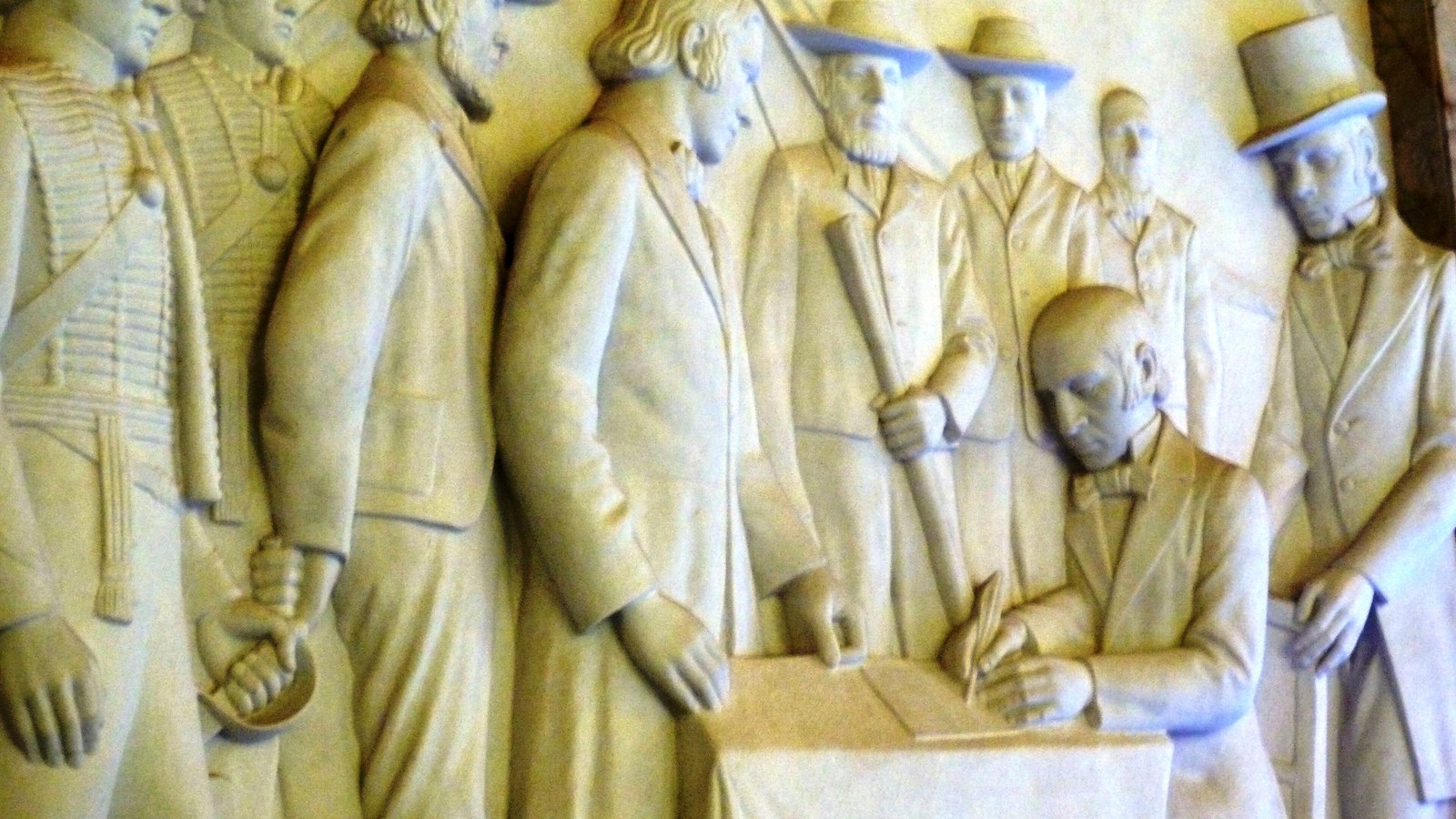
After the Great Trek, the farmers north of the Vaal asked for British recognition. Sir Harry Smith had annexed, in 1848, the Orange River Sovereignty and beaten Andries Pretorius at Boomplaats. London, however, did not want to hold the interior. Major William Hogge and Charles Mostyn Owen, Her Majesty’s assistant commissioners for the north-eastern bounds of the Cape, opened the minutes on Friday 16 January, at P. A. Venter’s farm near Ventersburg, with a deputation of emigrant farmers.
The Sand River Convention was signed on 17 January 1852, under a marquee on the bank. For the farmers: Pretorius, commandant-general, landdrost H. S. Lombard, W. F. Joubert, G. J. Kruger and the veldcornets on the list. For the Crown: Hogge and Owen. Witnesses: John Burnet, clerk to the civil commissioner of Winburg, and J. H. Visagie, secretary. The English text grants the farmers north of the Vaal the right to govern themselves by their own laws, without British interference, and binds non-interference on both sides. The Vaal line, from the source over the Drakensberg, was to be settled by commissioners if doubt arose.
The assistant commissioners disclaimed all alliances with “coloured nations” north of the river. Slavery was forbidden. Trade stayed open, but a wagon of arms and ammunition needed a British magistrate’s certificate; the sale of ammunition to tribes was barred on both sides. Criminals were to be given up, summonses for witnesses recognised, Boer marriage certificates valid in British colonies. Anyone holding land on one bank could sell and cross to the other, except debtors and wanted men.
In 1853 the authorities north of the Vaal accused the missionary David Livingstone, a British subject, of repairing weapons for tribes. Commandant Scholtz seized rifles and ammunition from his house. London answered that the Boers held African children under inboekstelsel, a forced apprenticeship. The Bloemfontein Convention, in 1854, recognised the Orange Free State, south of the Vaal. The South African Republic wrote its Grondwet later, with the capital at Pretoria, named for the commandant who had died in 1853.
On 12 April 1877 Theophilus Shepstone annexed the republic to the British Empire. A Boer delegation protested in Europe and the United States. After the First Boer War, the Pretoria Convention, in 1881, restored self-government under British suzerainty; the London Convention, in 1884, dropped the word suzerainty. Panel 27 of the Voortrekker Monument frieze, CC BY-SA 3.0, shows the tent on the Sand River, not the original minutes page.
The act took the Transvaal from under the Crown without settling de facto slavery, alliances with Africans, or the Vaal line. The January recognition held until the April 1877 annexation.
Sources: Sand River Convention; Wikisource, Sand River Convention.







0 Comments
No comments on this article yet. Be the first!