


A 15 mm round hole in the left scapula of a Neanderthal from about 75,000 years ago, at Shanidar in Iraqi Kurdistan, is read by Cambridge archaeologists as the mark of a sharpened wooden spear. A flint tip would leave a flat or angular hole. Wood, they say, leaves a circle. The study appeared on 15 October 2026 in Scientific Reports. Le Monde picked it up on the 17th. It is not a prehistoric court verdict. It is a wound reading.
The spear would have entered from the front, into the left chest, through lung and, likely, major arteries, then punched the scapula. Rapid death. Emma Pomeroy, lead author, speaks of a possible “heart shot.” Recreated spears of the period fit the hole. “That early technology absolutely works for this wound.” The wood did not survive. Nobody pulled a spear from the sediment.
Pomeroy also gives the hunting-accident version: mammoths, thrusting spears at close range. She also puts the hints of deliberate violence: the wound’s position and the force that went through the body. Sex was not clearly established in Le Figaro’s account; the paper calls the individual an older adult, Shanidar A. Graeme Barker, who leads the excavations: “All we can ever know about the end of this Neanderthal’s life is that it was violent, and came at the end of a wooden spear.”
The same individual had earlier facial trauma, survived at least a year, with a split tooth. Pomeroy: they would have needed care, perhaps soft food. The cave shows plant foods soaked before cooking, around the same time. The remains were lifted from 2020, under almost eight metres of rock, in the burial cluster Ralph Solecki found in the 1950s. Cambridge has raised the group to five: four adults and an infant, in 1.5 m by 1 m.
“The best explanation is intentional and symbolic funerary behaviour,” Pomeroy says. The body lies on its back, head east, deepest in the cluster. One above was placed before the bone below had fully decayed. That is a ritual reading, not footage.
The “earliest” projectile homicide remains a hypothesis. A hunting accident has not been ruled out. The hole is round. A wooden spear is the best fit. The rest is interpretation.
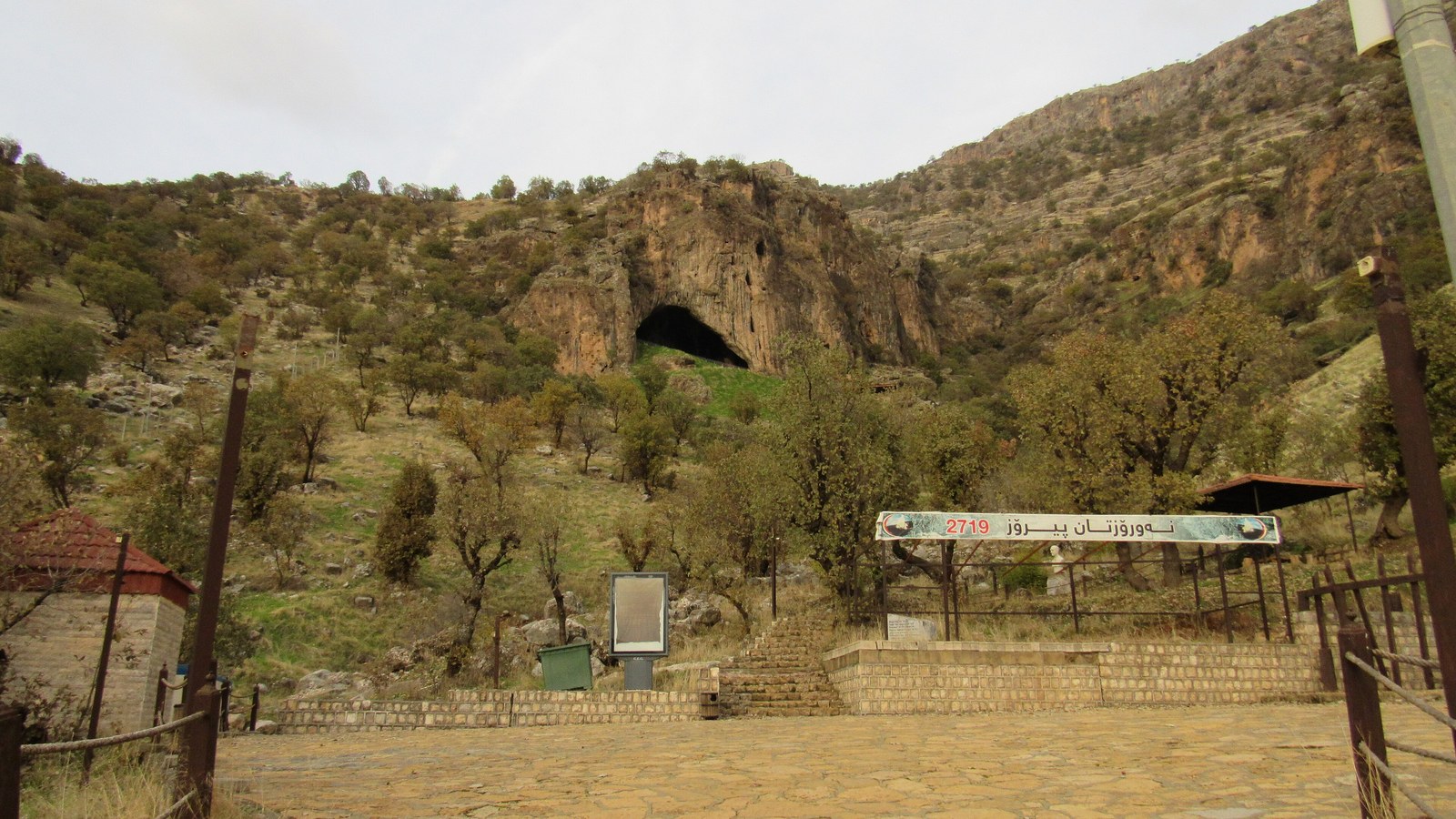
Image: Khoshhat, Shanidar Cave, Iraqi Kurdistan, 28 November 2020, CC BY-SA 4.0, Wikimedia Commons. The cave mouth, not the scapula in the lab.
Sources consulted: Une omoplate de Néandertalien perforée par un projectile de bois découverte — Le Monde; Fatal Neanderthal wound may be earliest evidence of a wooden spear attack — University of Cambridge.











0 Comments
No comments on this article yet. Be the first!