


The Treaty of Good-Neighborliness and Friendly Cooperation between the Russian Federation and the People’s Republic of China was signed in Moscow on 16 July 2001, in two copies, Russian and Chinese, both texts equally authentic. Signatories: Vladimir Putin and Jiang Zemin. Article 24: ratification; entry into force on the date of the exchange of instruments, to be effected in Beijing — 28 February 2002. Article 25: a term of twenty years, automatically extended for successive five-year periods unless either Party gives written notice of termination at least one year before expiry. It is not the 1950 Sino-Soviet treaty, nor the 1961 China–DPRK treaty.
The preamble invokes the joint declarations of 1992–2000, the UN Charter and an international order based on international law. Article 1: equal, trusting partnership and strategic interaction, on the principles of sovereignty, non-aggression, non-interference, equality and peaceful coexistence. Article 2: no force, threat of force or economic pressure; an undertaking not to be the first to use nuclear weapons against each other and not to target strategic nuclear missiles — at framework level, without a nuclear handbook.
Articles 4–5: mutual support for state unity and territorial integrity; the Russian side recognises that there is only one China, that the Government of the PRC is the sole legal government representing all China, and that Taiwan is an inalienable part of China, and opposes Taiwan independence in any form. Article 6: the Parties note the absence of mutual territorial claims; they continue talks on still-unagreed stretches of the boundary on the basis of the 16 May 1991 agreement on the eastern sector, observing the status quo until settlement.
Article 7: confidence-building and force reduction in the border area; military and military-technical cooperation is not directed against third states. Article 8: neither Party shall join alliances or conclude treaties with third states that harm the other’s sovereignty, nor allow its territory or organisations to be used to that end. Article 9: if a Party deems peace threatened, or if there is a threat of aggression, the Parties shall immediately enter into contact and hold consultations — consultations, not an operational defence pact.
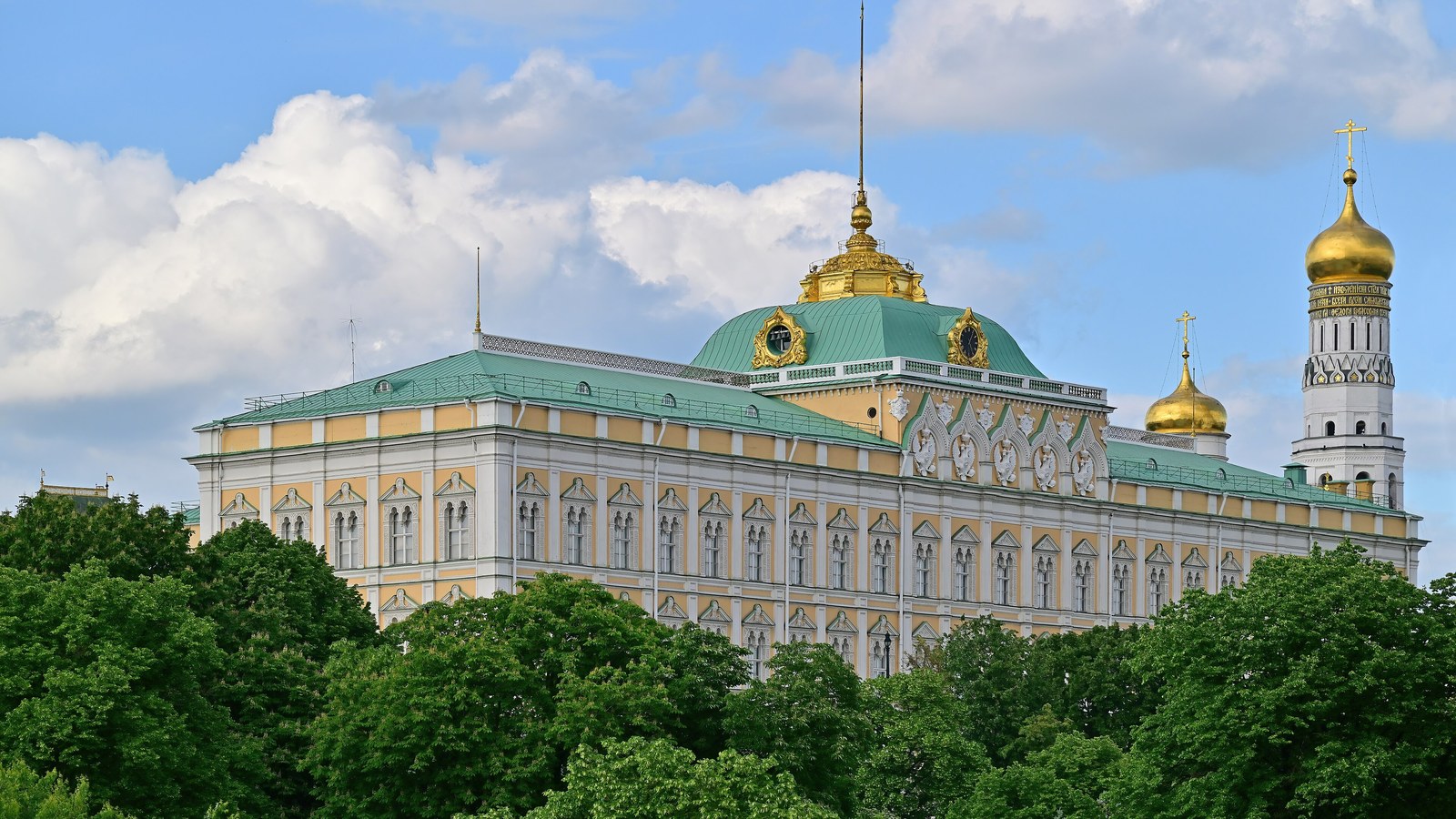
Articles 10–19: a mechanism of high-level meetings; cooperation in the United Nations and the Security Council; global strategic balance; economic, energy, scientific and cultural fields, at framework level; the environment and transboundary watercourses; cooperation against terrorism, separatism and extremism, without an enforcement playbook. The treaty provides that it is not directed against any third state. Cover: the Grand Kremlin Palace from the Bolshoy Kamenny Bridge; we do not claim the hall. Wikimedia Commons, free licence.
Sources consulted: 2001 Sino-Russian Treaty of Friendship; Договор о добрососедстве, дружбе и сотрудничестве между Российской Федерацией и Китайской Народной Республикой.











0 Comments
No comments on this article yet. Be the first!