


Sofía Monsalve Suárez, 56, a Colombian, speaks in Turin, at Terra Madre, to El País, on 15 October. She has been the UN special rapporteur on the right to food since 1 May. The Human Rights Council appointed her in March, at its 61st session. The post is unpaid. She says that, in return, she has the freedom to call things by their name. OHCHR confirms the mandate. The interview is hers. It is not a judgment.
Famine, she says, is being normalised by dehumanisation: “everyone there is a terrorist”, so one cannot live under that threat. The idea that hunger cannot be a weapon of war has worn away. Gaza, in her words, is the clear case. Israel, plus complicit states, the US and Germany, have not secured the ICJ’s March 2024 provisional measures: aid without restrictions. The limits, she says, still hold. Sudan: UN investigations, great responsibility on the United Arab Emirates, and famine, again, a weapon. “This impunity is appalling.” That is a rapporteur’s charge. It is not a court verdict in this piece.
After years of decline, the share of people in hunger rose from 2017, jumped in the pandemic, then fell, and has not returned to 2016. Humanitarian aid is at historic lows. Alex de Waal, of the World Peace Foundation: the end of a Pax Americana in which ending hunger was, more or less, a shared aim. Rivalry among powers, norms broken. Monsalve puts her first report on the question: why are we worse off, in a world of abundance.
Four pillars, in the speech: land redistribution, agroecology, relocalising food systems, democratic decisions. Food, not a commodity on an exchange. Corporations, she says, do not feed the world alone: monopoly, subsidies in the EU, the US, Brazil, low taxes, unpaid costs on nature, junk food in Africa and Latin America, displacements from plantations. FAO, in February, a study on the concentration of land. Piketty is about income; land, less so. The more equal the share, she says, the more biodiversity.
Neoliberalism said: stop producing, keep no reserves, global trade will feed you. Ukraine, Hormuz, fertiliser: one piece moves, the rest cracks. FAO, once the paradigm’s defender, now talks of diversification and of reserves, as India and China do. She wants a balance among the state, commercial private actors and the social-solidarity economy. The securitisation of food, in bloc logic, frightens her. Planning technology, she says, the multinationals already have; it could serve deliberation too. Political will is another sentence.
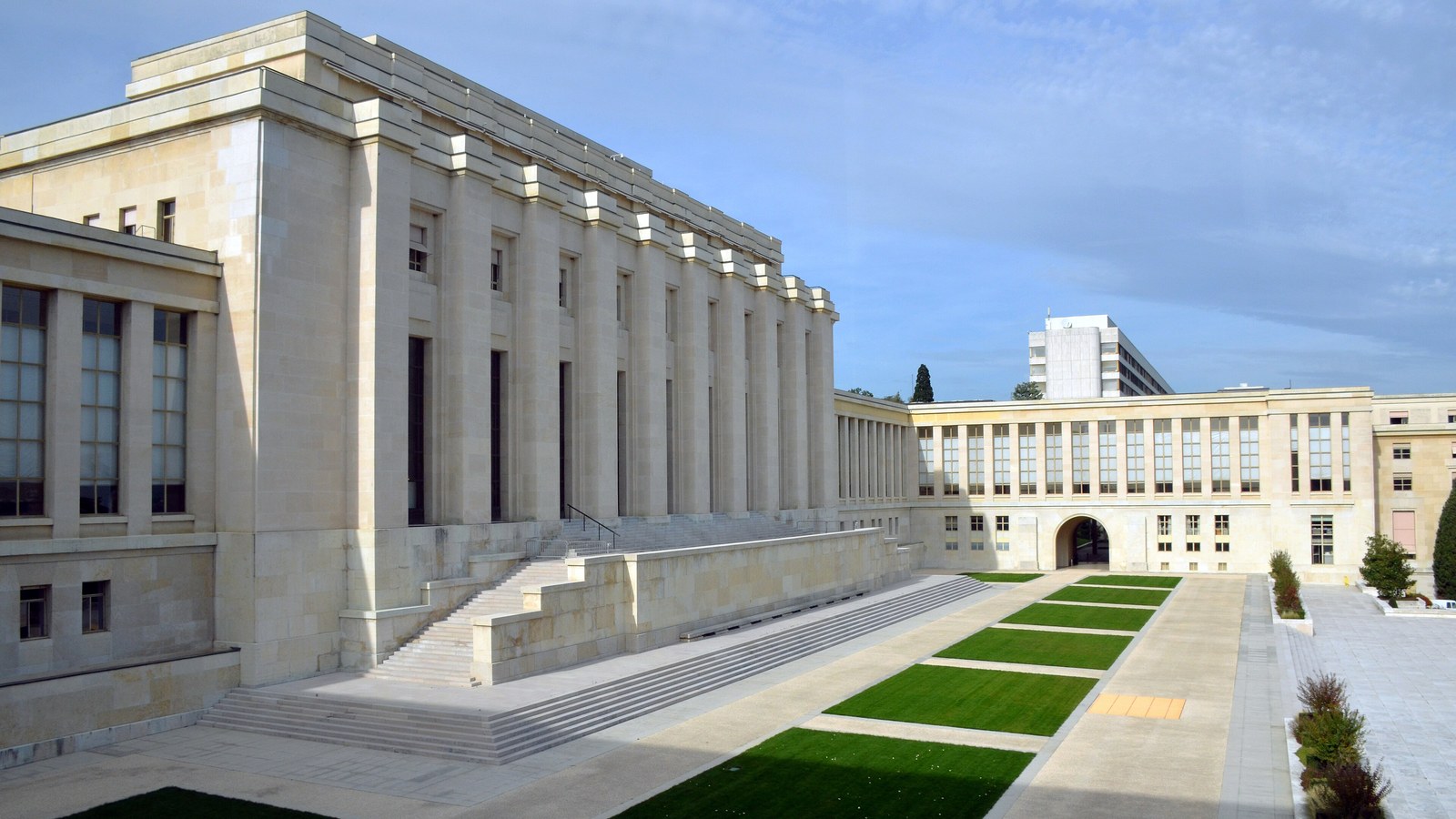
Albanese, sanctioned by the US, sits in the background as a warning. Rumours of intimidation. “The truth will prevail.” Until her report, what remains is the ICJ in 2024 and 1 May. After that, what remains is whether famine is still a broken norm or a tactic. Between them, the Palais des Nations from 2014, not the Slow Food hall.
Image: Vassil, Palais des Nations, Geneva, 20 October 2014, CC0, Wikimedia Commons. The photograph is of the UN building, not the Slow Food hall in Turin.
Sources consulted: Sofía Monsalve, UN special rapporteur on the right to food: ‘Famine is being normalized by dehumanizing a population’ — El País; Ms. Sofía Monsalve Suárez — OHCHR.











0 Comments
No comments on this article yet. Be the first!