


On 31 October 1988, at Sofia, the Executive Body of the 1979 Convention on Long-range Transboundary Air Pollution adopted the Protocol concerning the Control of Emissions of Nitrogen Oxides or their Transboundary Fluxes. The instrument is dated Sofia; the English, French and Russian texts are equally authentic; the depositary is the Secretary-General of the United Nations. It is not the first day of signature: article 13 opens it at Sofia from 1 to 4 November 1988 inclusive, then at United Nations Headquarters in New York until 5 May 1989, only for Parties to the Convention. It is not the 1985 Helsinki Sulphur Protocol, not the 1991 VOC Protocol and not the 1999 Gothenburg Protocol.
Article 2, first step: the Parties shall take effective measures so that, at the latest by 31 December 1994, national annual emissions of nitrogen oxides or their transboundary fluxes do not exceed those of calendar year 1987 or of any previous year specified upon signature or accession. If a previous year is specified, the national average annual figure from 1 January 1987 to 1 January 1996 shall not exceed the 1987 level. Upon signature the United States specified 1978 as the applicable calendar year.
No later than two years after entry into force: national emission standards, based on the best available technologies which are economically feasible, for major new stationary sources and/or source categories and for substantially modified stationary sources in major source categories; standards for new mobile sources; pollution-control measures for major existing stationary sources, taking into account the plant's age and rate of utilization and the need to avoid undue operational disruption. A major existing stationary source has a thermal input of at least 100 MW; a major new one, at least 50 MW. Second step: negotiations no later than six months after entry into force, on critical loads, with a timetable for reductions commencing no later than 1 January 1996.
Article 4: unleaded fuel as soon as possible and no later than two years after entry into force, in particular cases as a minimum along main international transit routes, to facilitate vehicles equipped with catalytic converters. The Technical Annex forms an integral part of the Protocol and is recommendatory in character. Article 1 defines EMEP, the Executive Body, critical load, and a major source category: at least 10 per cent of total national annual nitrogen-oxide emissions.
Article 15: the Protocol enters into force on the ninetieth day after deposit of the sixteenth instrument of ratification, acceptance, approval or accession. The United Nations Treaty Series records 14 February 1991, volume 1593, p. 287, No. 27874. Accession is open from 6 May 1989; a State acceding after 31 December 1993 may implement articles 2 and 4 no later than 31 December 1995. Withdrawal, after five years in force for that Party, takes effect on the ninetieth day.
The 1996 amendment to the Technical Annex (off-road vehicles, ships, aircraft) is a later act, not the day's text. The Gothenburg Protocol later addresses acidification, eutrophication and ground-level ozone; it is not this instrument. Current party counts are not given here.
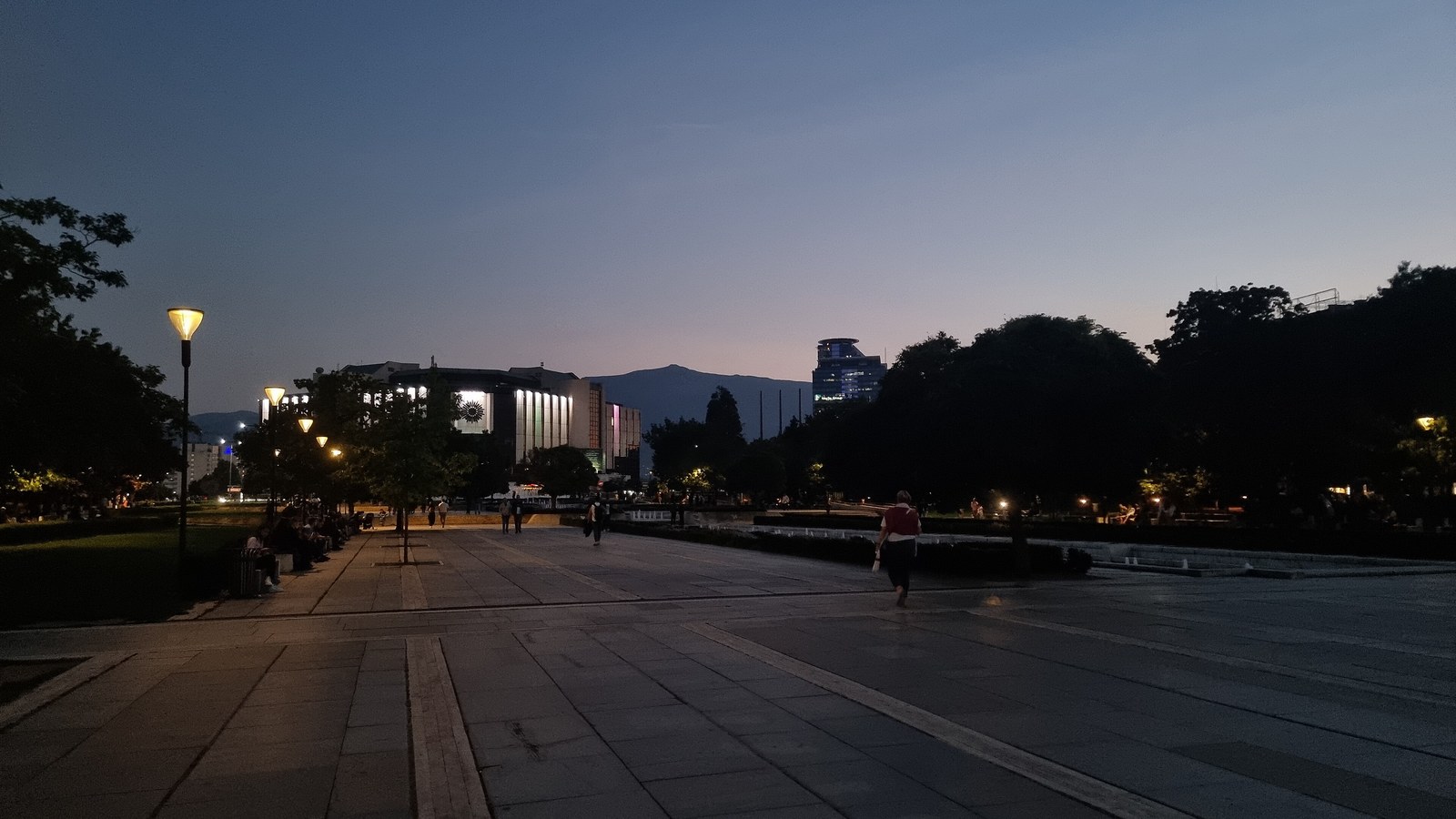
National Palace of Culture, Sofia. A capital conference landmark, not the confirmed hall of the Executive Body session. Wikimedia Commons, CC0.
For context: Nitrogen Oxide Protocol. The text: 1988 NOx Protocol.











0 Comments
No comments on this article yet. Be the first!