


The Treaty of Non-Aggression and Peaceful Settlement of Disputes between Estonia and the Union of Soviet Socialist Republics was signed at Moscow on 4 May 1932. Authentic texts: Estonian and Russian, in duplicate. The signatories were Julius Seljamaa, Envoy Extraordinary and Minister Plenipotentiary of Estonia to the USSR, and Maxim Litvinov, People’s Commissary for Foreign Affairs. The DONE formula is not transcribed. It is not the 1939 German–Soviet Non-Aggression Pact.
The preamble takes the Peace Treaty of Tartu of 2 February 1920 as the unshakable foundation of their mutual relations, the wish to strengthen friendly relations and to contribute to the maintenance of universal peace, and the Pact for the Renunciation of War signed at Paris on 27 August 1928. The Parties declare that none of the international obligations already assumed is incompatible with the peaceful development of their mutual relations or in contradiction with the present Treaty.
Article 1: each Party guarantees to the other the inviolability of the existing frontiers, as defined by the 1920 peace treaty, and undertakes to refrain from any act of aggression or any violent measures directed against the integrity and inviolability of the territory or against the political independence of the other Party, whether undertaken separately or in conjunction with other Powers, with or without a declaration of war. Article 2: neither Party shall take part in political agreements manifestly directed in an aggressive sense against the other, nor in coalitions of the same nature having as their object to subject the other Party to an economic or financial boycott. An operational catalogue is not transcribed.
Article 3: prior rights and international obligations remain, so far as they contain no elements of aggression within the meaning of the Treaty. Article 4: disputes which it has not been possible to settle within a reasonable time through the ordinary diplomatic channel shall be submitted to conciliation in a mixed Conciliation Commission, whose composition, powers and procedure were to be fixed by a separate Convention, to be concluded within the shortest possible time and to come into force simultaneously with the Treaty. The Conciliation Convention was signed at Moscow on 16 June 1932, again by Seljamaa and by B. Stomoniakov, and forms an integral part of the Treaty.
Article 5: ratification within the shortest possible time; instruments of ratification to be exchanged at Tallinn within forty-five days of ratification by both Parties. Article 6: entry into force on the date of that exchange, for three years. Either Party may denounce six months before expiry, or without such notice if the other commits an act of aggression against any third Power. If not denounced, the Treaty is tacitly prolonged for two years at a time. Wikipedia: Estonian ratification on 29 July, Soviet on 5 August; exchange on 18 August. Registration with the League of Nations on 26 August, volume 131, No. 3020.
The Treaty was prolonged, according to the same source, until 31 December 1945 by an act of 4 April 1934 and reaffirmed on 28 September 1939. The events of June 1940 are not transcribed. The Conciliation Convention is deemed ratified by virtue of the Treaty and remains in force for the same period.
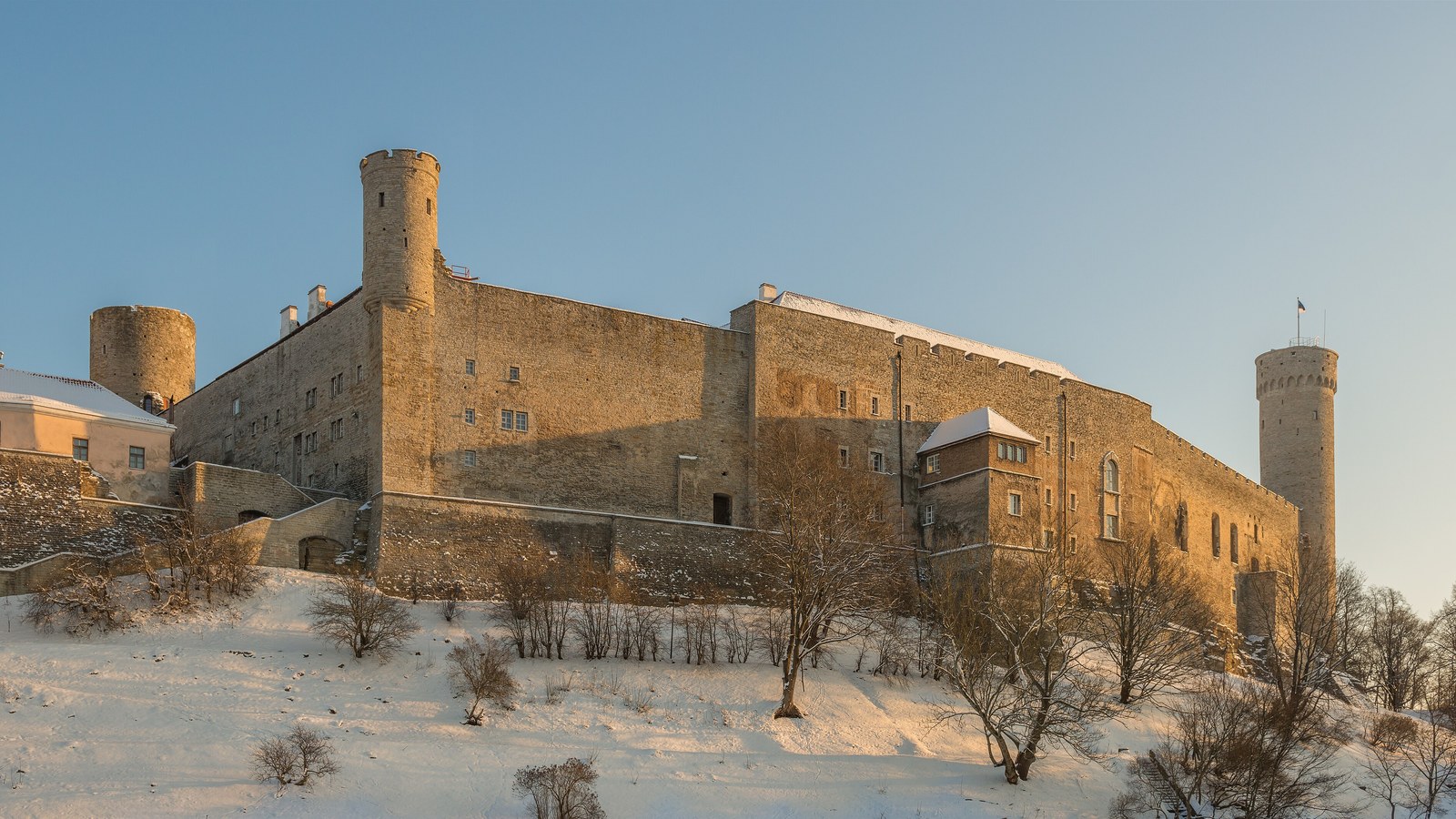
Cover: Toompea Castle in Tallinn, the place provided for the exchange of ratifications; no claim is made to the hall in Moscow. Wikimedia Commons, free licence.
Sources consulted: Soviet–Estonian Non-Aggression Pact; League of Nations Treaty Series, Vol. CXXXI, No. 3020.











0 Comments
No comments on this article yet. Be the first!