


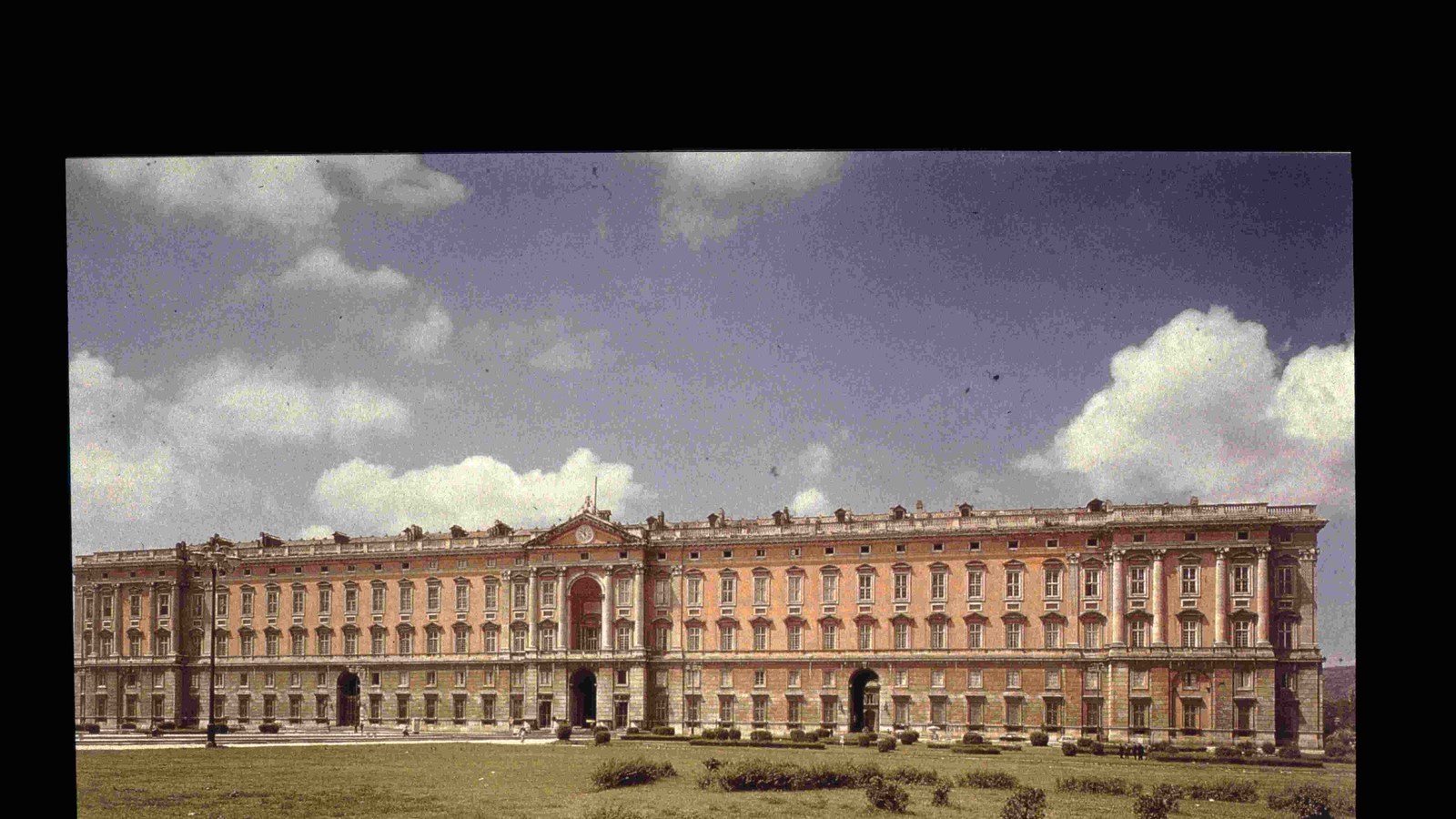
On 29 April 1945, at the Royal Palace of Caserta, the Instrument of Surrender of all German and Italian Social Republic forces in Italy is signed — the Surrender at Caserta.
Lt. Col. Victor von Schweinitz signs for General Heinrich von Vietinghoff (Army Group C); Major Eugen Wenner for SS-Obergruppenführer Karl Wolff and Marshal Rodolfo Graziani; for the Allies, Lt. Gen. William D. Morgan signs on behalf of Field Marshal Harold Alexander.
Secret talks (Operation Sunrise), mediated in part by Allen Dulles, had begun in March. The Soviets, protesting their exclusion, sent General Aleksei Kislenko as a witness; a Polish officer was also present.
The surrender takes effect on 2 May 1945, ending the Italian Campaign. German troops, without supplies since early April and without bridges over the Po, were already collapsing; Vietinghoff had noted fighting would cease within a day or two anyway.
Graziani had handed over an equivalent surrender document on 26 April and surrendered himself on 29 April to US IV Corps. On 1 May he ordered Army Group Liguria to lay down arms.
The Caserta act is a local unconditional capitulation, not a peace treaty; peace with Italy would follow separately in 1947.
The Surrender at Caserta of 29 April 1945 remains the act that closed the Italian front of the Second World War.
Image: Reggia di Caserta; Wikimedia Commons. Cropped to 16:9.
Source consulted: Surrender at Caserta. Treaty text: Instrument of Surrender (Caserta, Wikisource).











0 Comments
No comments on this article yet. Be the first!