


On 22 December 1978, at Vaduz, the Treaty between the Swiss Confederation and the Principality of Liechtenstein on Patent Protection (Patentschutzvertrag) was concluded. Two originals, in German. Signatories: Paul Braendli for Switzerland, Hans Brunhart for Liechtenstein. The Swiss Federal Council and the Reigning Prince. Article 19: ratification; the instruments shall be exchanged at Berne as soon as possible; it enters into force on the first day of the third month after the exchange. The instruments were exchanged on 24 January 1980. Entry into force: 1 April 1980. The Swiss Federal Assembly approved it on 4 December 1979. SR 0.232.149.514.
The preamble classes it as a special agreement within the meaning of Article 142 of the Munich Convention of 5 October 1973 on the Grant of European Patents and as a regional patent treaty within the meaning of Article 45 of the Patent Cooperation Treaty of 19 June 1970. It builds on the customs treaty of 29 March 1923. Article 1: Switzerland and Liechtenstein form a unified territory of protection for patents of invention.
Article 2: a European patent may be obtained for both only by joint designation under Article 149 EPC; designation of one is deemed designation of both. Article 3: the same for designation (and, where applicable, election under Chapter II) in international PCT applications. Article 4(1): patents valid for the unified territory are unified; they have the same effect in both States and may only be granted, transferred, annulled or lapse in respect of the whole territory. Article 4(2): unity also applies in expropriation; the expropriated person is entitled to a free and exclusive licence for the territory of Liechtenstein.
Article 5: in the unified territory the current Swiss federal patent legislation applies, together with other federal provisions required for its application; “inland” means the unified territory, subject to Article 8. Article 6: for the duration of the Treaty, Liechtenstein shall belong, in the same way as Switzerland, to the Paris Convention, the EPC and the PCT; Switzerland concludes bilateral patent treaties with effect for the unified territory; Liechtenstein authorizes Switzerland to represent it and refrains from concluding such treaties itself. Article 7: the Swiss Federal Institute of Intellectual Property performs the administrative tasks for the unified territory and is the receiving Office under the PCT for persons of Liechtenstein nationality or residence.
Article 10: Liechtenstein designates the courts that decide civil patent actions as a court of first instance; offences against the patent legislation are prosecuted and judged by its courts at first and second instance. Article 11: Liechtenstein civil and criminal judgments in patent matters may be appealed to the Swiss Federal Supreme Court. Article 15: a Mixed Commission. Article 16: differences first to the Commission, then a commission of representatives, with possible arbitration; fallback appointments by the President of the European Court of Human Rights. Article 17: the Treaty also applies to patents granted with effect for Switzerland before entry into force.
Article 20: concluded for an unlimited period; either Party may denounce it at any time; it remains in force for one year after denunciation. Article 21: rights acquired under the Treaty are not affected by its expiry; the governments shall take the measures necessary so that rightholders can still enforce their rights for the remainder of the term of protection. The annexes listing federal enactments and treaties are not reproduced here.
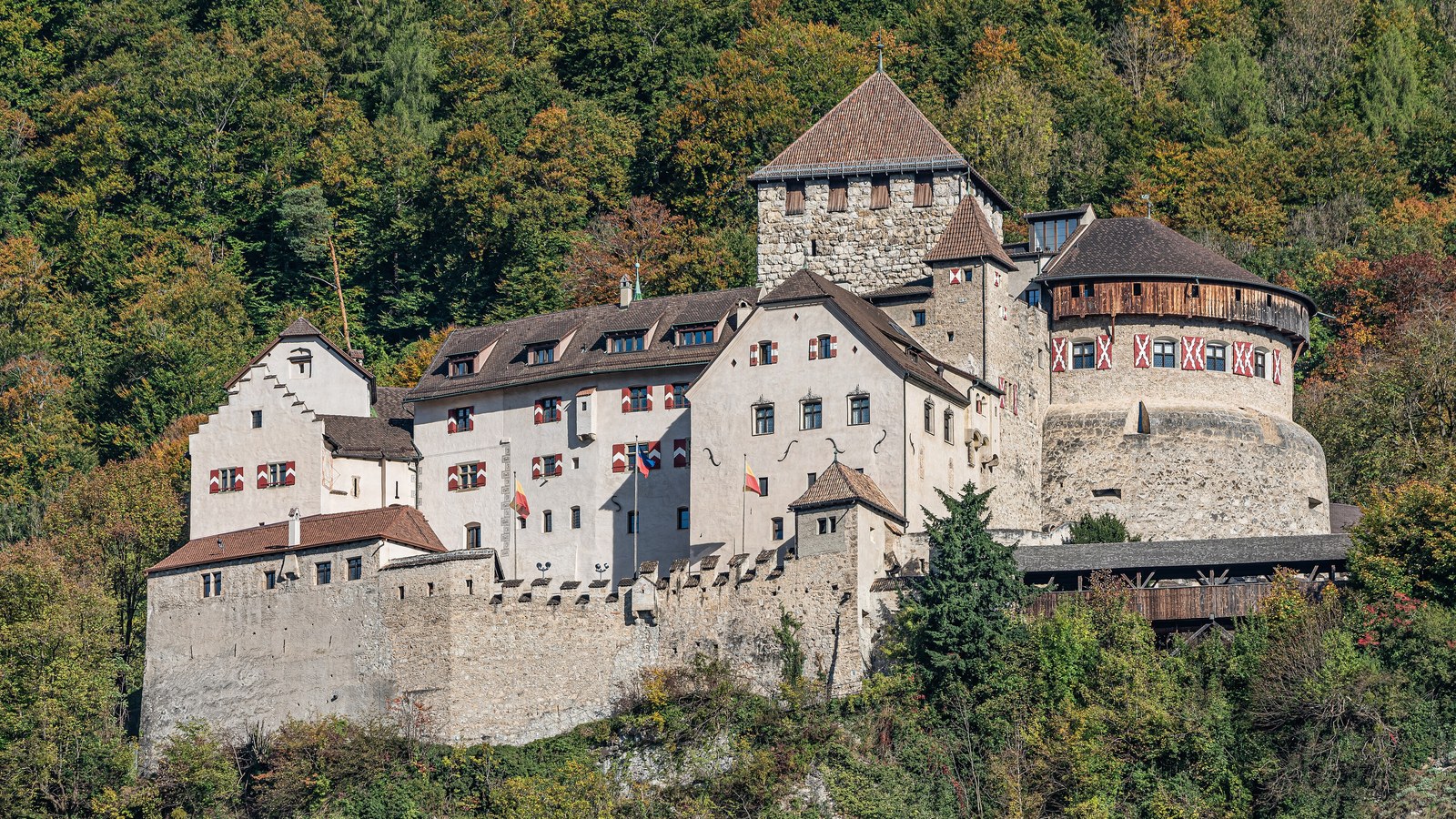
Vaduz Castle, the place of signature, not the signing room. Wikimedia Commons, free licence.
For context: Unitary patent (Switzerland and Liechtenstein). The text: Vertrag vom 22. Dezember 1978 zwischen der Schweizerischen Eidgenossenschaft und dem Fürstentum Liechtenstein über den Schutz der Erfindungspatente.











0 Comments
No comments on this article yet. Be the first!