


The Temporary Commercial Agreement between His Majesty's Government in the United Kingdom and the Government of the Union of Soviet Socialist Republics was signed in London on 16 April 1930. Signatories: Foreign Secretary Arthur Henderson and Soviet plenipotentiary Grigory Sokolnikov. It serves as a modus vivendi pending a formal treaty of commerce and navigation, which did not follow. The signature text is in English, in duplicate; a Russian translation, once agreed, is equally authentic. It comes into force the same day, Article 7; termination takes effect after six months' notice. Published as Treaty Series No. 19, Cmd. 3552.
Article 1 grants, at the level of principle, most-favoured-nation treatment for persons, companies and goods as to prohibitions, customs duties, transport, warehousing, drawbacks and excise. Excepted: Soviet treaties with states that on 1 August 1914 formed part of the former Russian Empire or with continental border states in Asia; a future customs union; frontier-zone trade. Article 3 gives vessels national or most-favoured-nation treatment in ports, without coasting trade on the same coast and without a right to fish in territorial waters. Notes on immigrants and Arctic fishing fleets are not transcribed as a maritime handbook.
Article 2 recognises the Soviet foreign-trade monopoly and allows a Trade Delegation in London, with the Trade Representative and two deputies forming part of the embassy, diplomatic immunities being limited to them and to offices used exclusively for the functions in paragraph 3. Transactions concluded in the United Kingdom by the Delegation fall under the British courts; the additional protocol provides that the immunities shall not be claimed in those proceedings. Office addresses and the publication of names are not transcribed as a diplomatic-status guide.
Articles 4 to 6 allow extension, by exchange of notes, to self-governing Dominions, India, colonies, protectorates and mandated territories, on reciprocity. Henderson's declarations exclude the Union of South Africa and the Irish Free State from Articles 4 and 6. The protocol requires purchases, sales and shipping to be guided by commercial and financial considerations only, including British export credits. Sokolnikov reserved Soviet claims to vessels of the former Russian fleet seized abroad.
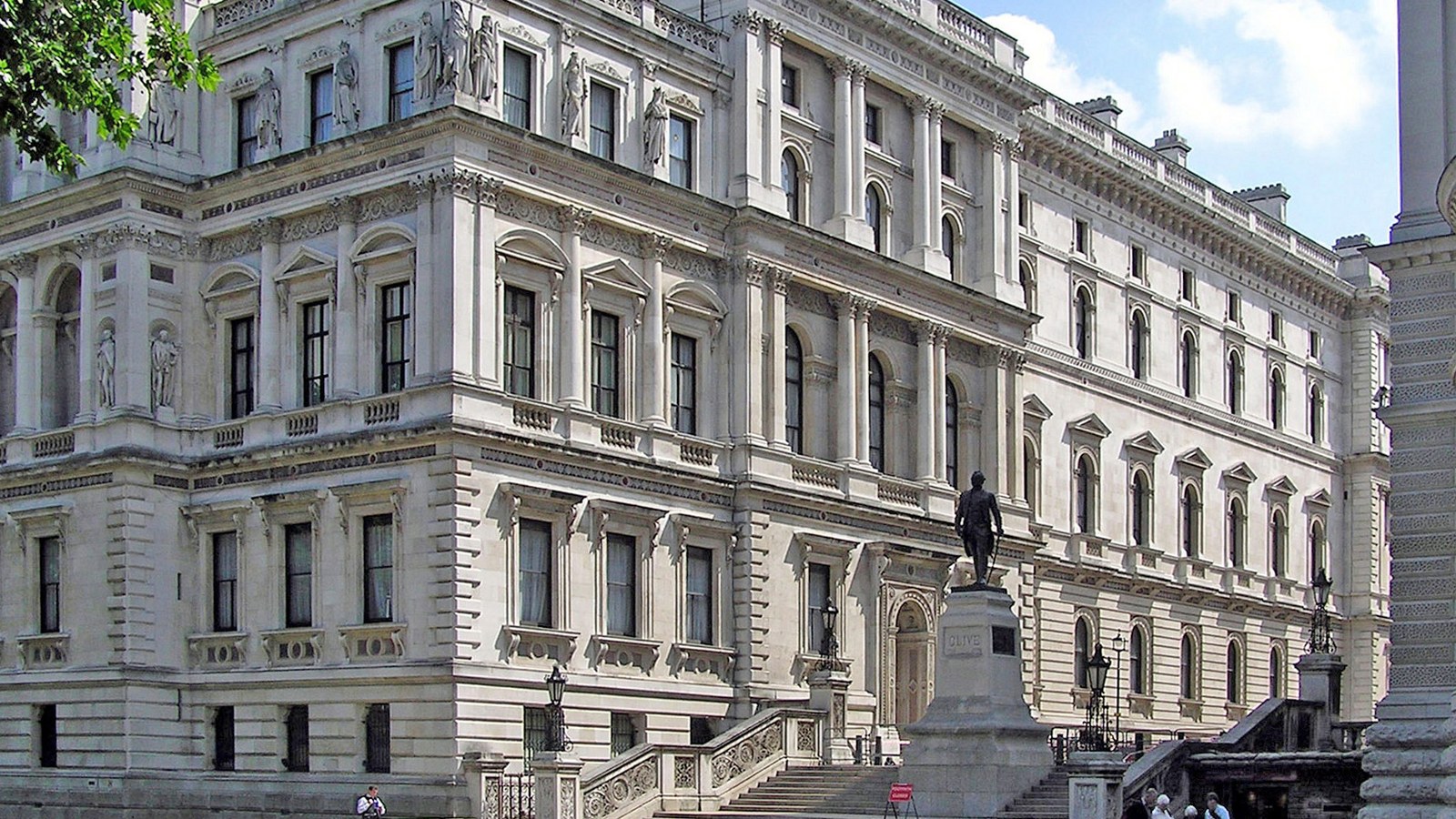
The British Government gave notice of termination on 17 October 1932, after the Ottawa Agreements. The register JSTOR item is a 1934 article on Ottawa, not the instrument. Cover: the Foreign Office building on King Charles Street, Whitehall; no claim is made to the hall. Wikimedia Commons, free licence.
Sources consulted: 1930 Temporary Anglo-Soviet Commercial Agreement; Temporary Commercial Agreement (UK Treaty Series No. 19, 1930).











0 Comments
No comments on this article yet. Be the first!