


On 28 October 1994, at the headquarters of the World Intellectual Property Organization in Geneva, 36 States signed the Trademark Law Treaty, done the day before, on 27 October. The English, Arabic, Chinese, French, Russian and Spanish texts are equally authentic. The instrument has 25 articles and Regulations with model forms. It is not the Madrid Protocol and does not automatically recognise marks registered in another member State.
Article 2 applies to visible signs, including marks for goods and for services. Parties that accept three-dimensional marks must apply the Treaty to those marks as well. Holograms, sounds and smells are excluded. Collective, certification and guarantee marks fall outside the Treaty. Article 16 nevertheless requires each Party to register service marks and to apply to them the Paris Convention provisions on trademarks.
Article 3 closes the list of elements an Office may require in an application: the applicant’s identity, representation, a reproduction of the mark, a list of goods or services under Nice, and a fee. Article 3(7) forbids, throughout pendency, an extract from a commercial register, proof of an industrial or commercial activity, and proof that the mark is already registered in another State, except where Article 6quinquies of the Paris Convention is claimed. Article 5 fixes the filing date on a minimum set of indications.
Article 6: an application covering several Nice classes results in a single registration. Article 7 allows division of an application or a registration, keeping the filing date and any priority. Article 13: the initial term and each renewal last 10 years; at renewal the Office may not require a reproduction of the mark, proof of registration in another State or a declaration of use, and may not examine the registration as to substance.
Article 15 requires compliance with the Paris Convention provisions concerning marks. Article 20(2): the Treaty enters into force three months after five States deposit instruments; notification TLT/7 named Moldova, Ukraine, Sri Lanka, the Czech Republic and the United Kingdom, with effect from 1 August 1996. Article 24 kept the Treaty open for signature at WIPO headquarters for one year. The depositary is the Director General.
The Singapore Treaty on the Law of Trademarks of 2006 is a later instrument, used to cover electronic communications; it does not amend the 1994 text. Reservations under Article 21 concern associated, defensive or derivative marks, not holograms.
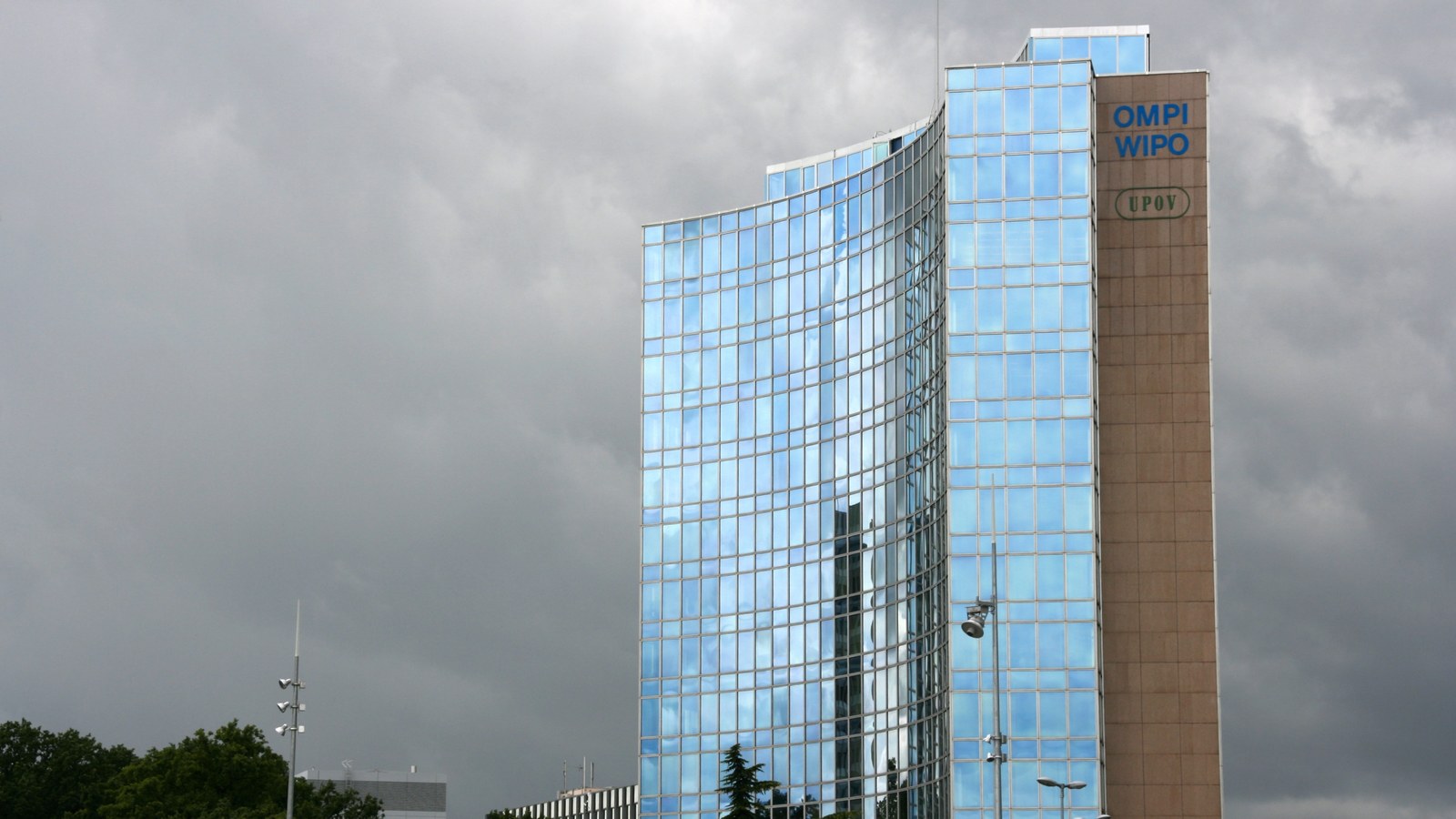
Image: WIPO headquarters (Árpád Bogsch Building), Geneva, place of signature; Marek Ślusarczyk, 15 August 2008; CC BY 3.0, Wikimedia Commons. Cropped to 16:9.
Source consulted: Trademark Law Treaty (1994). Treaty text: Trademark Law Treaty, Geneva, 27 October 1994.











0 Comments
No comments on this article yet. Be the first!