


On 3 December 1920, at Alexandropol (Gumru), Kazim Karabekir Pasha, Hamid Bey and Suleyman Necati Bey, for the Government of the Grand National Assembly of Turkey, and Alexander Khatisyan, Avram Gulhandanian and Stepan Gorganian, for the Republic of Armenia, signed the treaty of peace and friendship. It was done in two copies; in case of dispute the Turkish text prevails. It is not the Treaty of Sevres of 1920.
Article 1: the state of war between Turkey and Armenia has ended. Article 2: the frontier follows, from the mouth of the Lower Karasu, the Aras, the Arpachay north to Kekach, then the Karahan valley, western Tignis, eastern Buyuk Kimli, Kiziltash and Mount Buyuk Akbaba; the definitive demarcation shall be made on the spot by a mixed commission two weeks after signature. In the Nakhchivan, Shahtaght and Sharur zone, south of the Ararat–Karasu line, Armenia shall not interfere in the form of administration to be chosen by plebiscite; for the time being a local administration shall be established under Turkish protection.
Article 3: if Armenia so requests, three years after ratification a plebiscite may decide the return of the native population to the territories between the new frontier and the old Ottoman frontier remaining to Turkey. Article 4: the Republic of Erevan undertakes not to maintain a military organization beyond a gendarmerie of 1,500 paid men, with eight mountain or field guns and twenty machine guns; there shall be no compulsory military service. Armenia is free to fortify and to place heavy artillery against external enemies, but not 15-centimetre howitzers or long guns usable in a field army, nor larger calibres.
Article 5: the Turkish political representative in Erevan may investigate these matters at any time; if asked, the Grand National Assembly undertakes to give armed assistance. Article 6: refugees may return across the old boundaries, except those who, during the general war, took arms in the enemy's army or participated in massacres; minority rights as in the most civilized countries are mutually assured. Article 7: those who do not return within one year after ratification lose those claims. Article 8: Turkey waives war damages; both parties waive claims arising from the general war. Article 9: Turkey promises sincere assistance for the complete establishment of the Armenian Republic within the limits of Article 2.
Article 10: the Erevan Government declares the Treaty of Sevres, which the Grand National Assembly rejected, null and void, and undertakes to recall its delegations in Europe and America. Article 11: the muftis of the Muslims living in Armenia shall be elected by the community, and the appointment of the chief mufti shall be confirmed by the Ministry of Sharia of the Grand National Assembly. Article 12: free transit, including towards Iran via Sharur, Nakhchivan, Shahtaght and Julfa; Turkey shall supervise the railways in Armenia until general peace, without obstructing transit; agents of the imperialist Powers shall be barred. Article 13: Turkey may take temporary military measures in Armenia against attacks that may threaten its territorial integrity, provided they do not disturb the rights conceded to Armenia. Article 14: treaties concluded by Armenia with any State, in so far as they concern Turkey or harm its interests, are void.
Article 15: commercial relations shall begin upon signature; ambassadors and consuls may be appointed. Article 16: telegraph, post, telephone, consular and commercial arrangements shall be drawn up by mixed commissions; railway, telegraph and postal communications with the occupied territories shall resume at once. Article 17: the evacuation of Armenian territories under Turkish occupation and the exchange of prisoners shall take place after Armenia has fulfilled its obligations; detained civilians and notables shall be returned. Article 18: ratification within one month; the ratified copies shall be exchanged at Ankara. It is not the Treaty of Moscow of March 1921 and not the Treaty of Kars of October 1921.
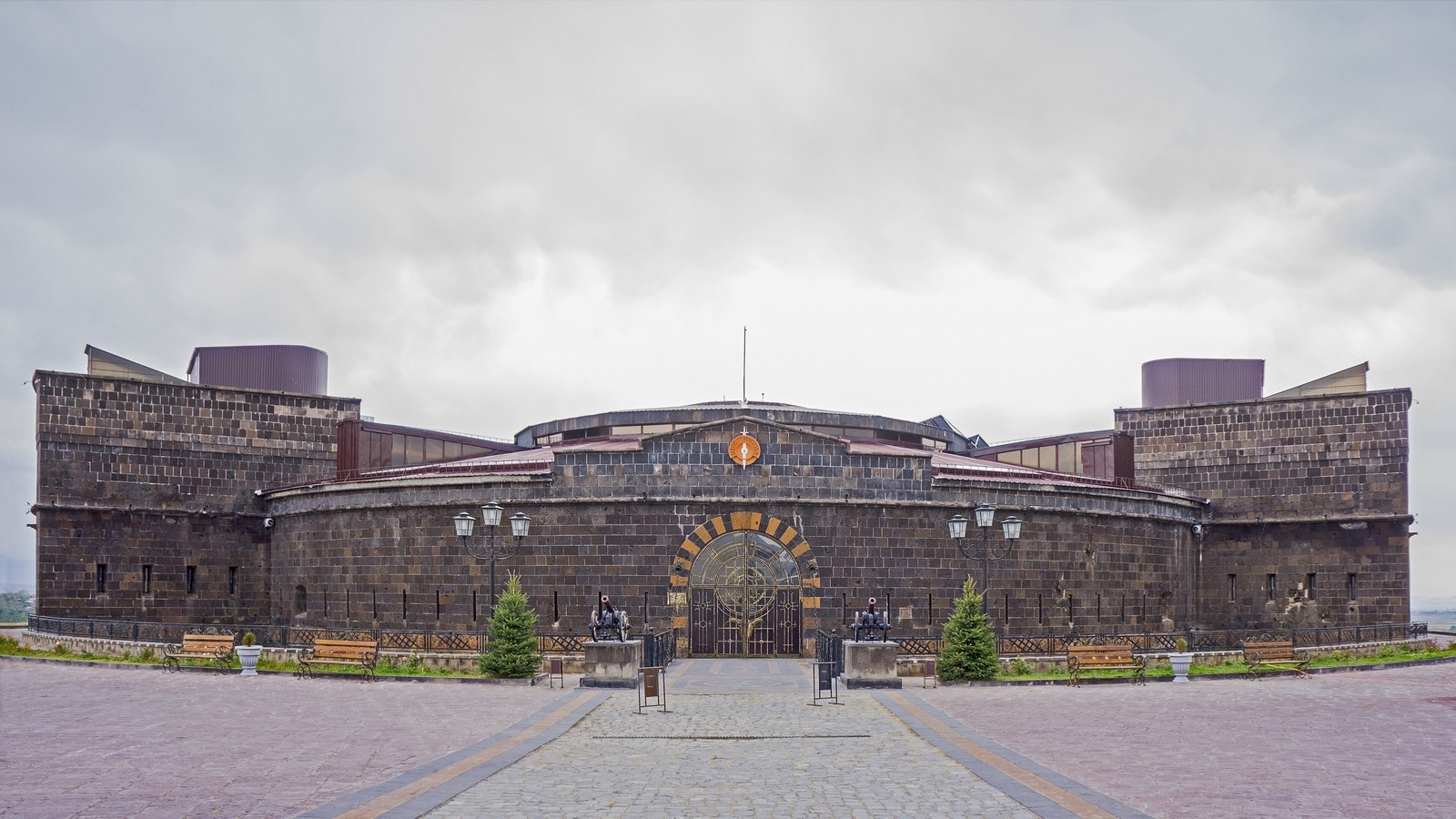
Image: Black Fortress, Gyumri (Alexandropol); Armenak Margarian, 15 September 2019; CC BY-SA 4.0, Wikimedia Commons. Cropped to 16:9.
Source consulted: Treaty of Alexandropol. Treaty text: Treaty of Alexandropol, 3 December 1920.











0 Comments
No comments on this article yet. Be the first!