


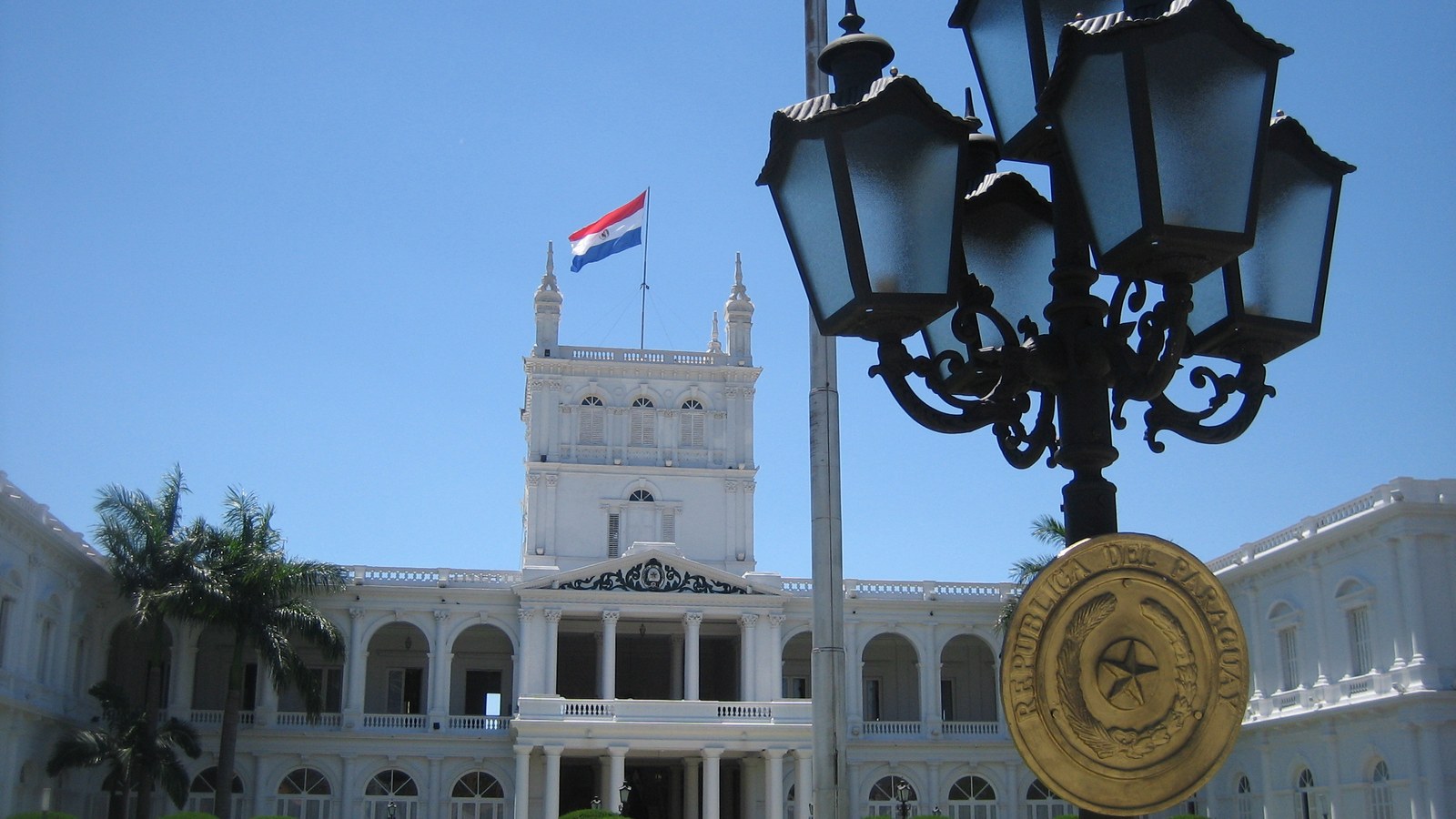
On 26 March 1991, in the city of Asunción, the Argentine Republic, the Federative Republic of Brazil, the Republic of Paraguay and the Eastern Republic of Uruguay sign, in Spanish and Portuguese, both texts equally authentic, in one original deposited with the Government of Paraguay, the Treaty establishing a common market. Signatories: Carlos Saúl Menem and Guido Di Tella; Fernando Collor and Francisco Rezek; Andrés Rodríguez and Alexis Frutos Vaesken; Luis Alberto Lacalle Herrera and Héctor Gros Espiell. Preamble: expansion of their domestic markets, through integration, as a vital prerequisite for economic development with social justice; optimum use of available resources, preserving the environment, improving physical links, coordinating macroeconomic policies and complementarity, based on gradualism, flexibility and balance; a proper place in the international economy; a further step towards Latin American integration, in keeping with the Montevideo Treaty of 1980; scientific and technological development and modernization of the economies; political will to lay the bases for closer ties between their peoples.
Chapter I, Article 1: the States Parties decide to establish a common market, which shall be in place by 31 December 1994 and shall be called the common market of the southern cone (MERCOSUR). It shall involve: the free movement of goods, services and factors of production, through, inter alia, the elimination of customs duties and non-tariff restrictions; a common external tariff and a common trade policy towards third States, and the coordination of positions in economic forums; the coordination of macroeconomic and sectoral policies (foreign trade, agriculture, industry, fiscal and monetary matters, foreign exchange and capital, services, customs, transport and communications); the commitment to harmonize legislation in the relevant areas. Article 2: reciprocity of rights and obligations.
Article 3: the transition period, from entry into force until 31 December 1994; general rules of origin, a system for the settlement of disputes and safeguard clauses, in Annexes II, III and IV. Article 4: equitable trade terms with third countries; domestic legislation against subsidies, dumping and other unfair practices; coordination towards common rules for trade competition. Article 5, the main instruments: a trade liberalization programme of progressive, linear and automatic tariff reductions, towards a zero tariff and no non-tariff restrictions by 31 December 1994 (Annex I); macroeconomic policy coordination, gradually and in parallel; a common external tariff; sectoral agreements. Article 6: differentials in the rate of transition for Paraguay and Uruguay, indicated in Annex I. Article 7: in taxes, charges and other internal duties, products originating in one State Party shall enjoy, in the others, the same treatment as domestically produced products. Article 8: prior commitments, including those in the Latin American Integration Association, shall be honoured; any advantage granted to third countries that are not ALADI members shall be extended automatically to the other States Parties.
Chapter II: the Council of the common market, the highest organ, political leadership; the Ministers for Foreign Affairs and of the Economy; at least once a year with the Presidents; the presidency rotates in alphabetical order for six months. The Common Market Group, the executive organ, coordinated by the foreign ministries: monitors compliance, enforces Council decisions, proposes measures, draws up work programmes; four members and four alternates per country (foreign affairs, economy, central bank); an administrative secretariat in Montevideo. Article 16: during the transition, decisions by consensus, with all States Parties present. Article 17: official languages Spanish and Portuguese. Article 18: before 31 December 1994, a special meeting to determine the final institutional structure. This is not the 1994 Protocol of Ouro Preto, which follows the meeting provided for here.
Article 19: unlimited duration; entry into force 30 days after deposit of the third instrument of ratification with the Government of Paraguay. Article 20: open to accession, through negotiation, by other ALADI members once the Treaty has been in force for five years; earlier for ALADI members that do not belong to subregional schemes; unanimous approval. Articles 21–22: denunciation to the Paraguayan Ministry of Foreign Affairs within 60 days; rights and obligations relating to the liberalization programme remain for two years. Article 23: this Treaty shall be called the Treaty of Asunción. Article 24: a Joint Parliamentary Commission of MERCOSUR; the executive branches shall keep the legislatures informed.
Annex I: elimination of duties, charges and other restrictions in reciprocal trade by 31 December 1994 at the latest; for the schedules of exceptions of Paraguay and Uruguay, until 31 December 1995. Tariff-reduction timetable: 47 per cent on 30 June 1991, then 54, 61, 68, 75, 82, 89 and 100 per cent on 31 December 1994. Schedules of exceptions, in ALADI nomenclature items: Argentina 394, Brazil 324, Paraguay 439, Uruguay 960; annual reduction of 20 per cent for Argentina and Brazil; for Paraguay and Uruguay, 10, 10, then 20 per cent a year until 1995. Annex III: disputes by direct negotiations, then the Group, then the Council; a permanent system before 31 December 1994. Annex IV: safeguard clauses, in exceptional cases only, until the same date, once per product, for one year plus one consecutive year.
According to the United Nations Treaty Series, volume 2140, number 37341, ratifications: Paraguay and Uruguay 6 August, Argentina and Brazil 30 October 1991; the Treaty takes effect on 29 November 1991. This is not the Montevideo Treaty of 1980 (ALADI) and not the Andean Pact of 1969.
Image: Stefano Vigorelli, Palacio de los López, Asunción, CC0, Wikimedia Commons. Cropped to 16:9.
Source consulted: Treaty of Asunción. Treaty text: UNTS vol. 2140, no. 37341: Treaty establishing a Common Market (Asunción Treaty).











0 Comments
No comments on this article yet. Be the first!