


On 14 November 1913, in Athens, Ghalib Kemal bey, for the Emperor of the Ottomans, and Dimitrios Panas, Minister of Foreign Affairs, for the King of the Hellenes, signed the peace convention between Turkey and Greece. French text. It takes effect on signature; ratifications are exchanged within two weeks. It is not the Treaty of London of 1913, not the Peace of Bucharest of 10 August 1913 and not the Treaty of Constantinople with Bulgaria of 29 September 1913.
Article 1: diplomatic relations and consulates are resumed; the Ottoman Government may establish consulates in the ceded territories where agents of foreign Powers are already found, and in all places where the Greek Government sees no objection. Article 2: treaties and acts in force when relations were broken are restored; Protocol No. 3 applies throughout the territories of Greece. Article 3: full amnesty for political occurrences prior to the treaty; no one shall be pursued for acts relating to the war; such sentences fall ipso facto.
Article 4: persons domiciled in Ottoman territories which pass under Greek dominion become Greek subjects; they may opt for Ottoman nationality within three years, by declaration and by transferring domicile outside Greece; Moslems shall not render military service nor pay a military tax during those three years; for minors the period runs from majority. Article 5: rights acquired up to the occupation, judicial decisions and official Ottoman deeds remain until legally disproved; without prejudice to the Financial Commission on Balkan Affairs sitting at Paris. Article 6: those remaining Ottoman keep their real property, by renting it or through third parties; Ottoman titles, including those of corporations, are recognised; deprivation of property only for a duly stated public purpose, after proper indemnity. A letter of the same day: “Union and Progress” is such a corporation at Salonika.
Article 7: the private property of the Sultan and of the Imperial Dynasty is maintained; disputes go to The Hague. Article 8: prisoners of war exchanged within a month; officers’ pay advanced by Greece is reimbursed by the State to which they belong. Article 9: immediate release of Greek ships seized before the declaration of war; damages go to an arbitral tribunal. Article 10: the protocol of surrender of Salonika of 26 October 1912, concerning the garrison’s arms, goes to The Hague. Article 13: cemeteries and tombs of soldiers. Article 14: Greece is subrogated to Ottoman rights and duties towards the Salonika–Monastir, Oriental and Salonika–Dedeagatch junction railways on the portions falling within the ceded territories; questions go to Paris.
Article 11: life, property, honour, religion and customs of inhabitants remaining under Greek dominion; the same civil and political rights; free public Moslem worship; the Sultan’s name as caliph in public prayers; autonomy of Moslem communities and of waqfs; muftis elected, the chief mufti named by the King from three candidates, invested by the Sheikh-ul-Islam at Constantinople; jurisdiction in marriage, divorce, alimony, guardianship and wills. Article 12: the Idjarie-Vahide, Idjaretein and Mouhatas waqfs remain, administered by the communities; expropriation after just compensation; Greek subsidies if abolition of tithes leaves mosques, medreses or hospitals without revenue; disputes to The Hague. Protocol No. 3: ancient Christian churches converted into mosques and restored; Greece shall at its own expense construct a mosque in the capital and four in poor villages; private Moslem schools recognised, instruction in Turkish, Greek obligatory.
Article 15: the parties agree to uphold, so far as they concern them, the Treaty of London of 1913, including Article 5 (the fate of the Aegean islands occupied by Greece remains with the Great Powers). The convention does not itself award the islands and is not the Powers’ note of February 1914, nor Lausanne 1923. Protocol No. 1: natives of the ceded territories domiciled outside the Ottoman Empire have six months to choose Greek nationality. Protocol No. 2: private property of the State in the provinces of Salonika and Janina goes to The Hague. It is not a population-exchange treaty.
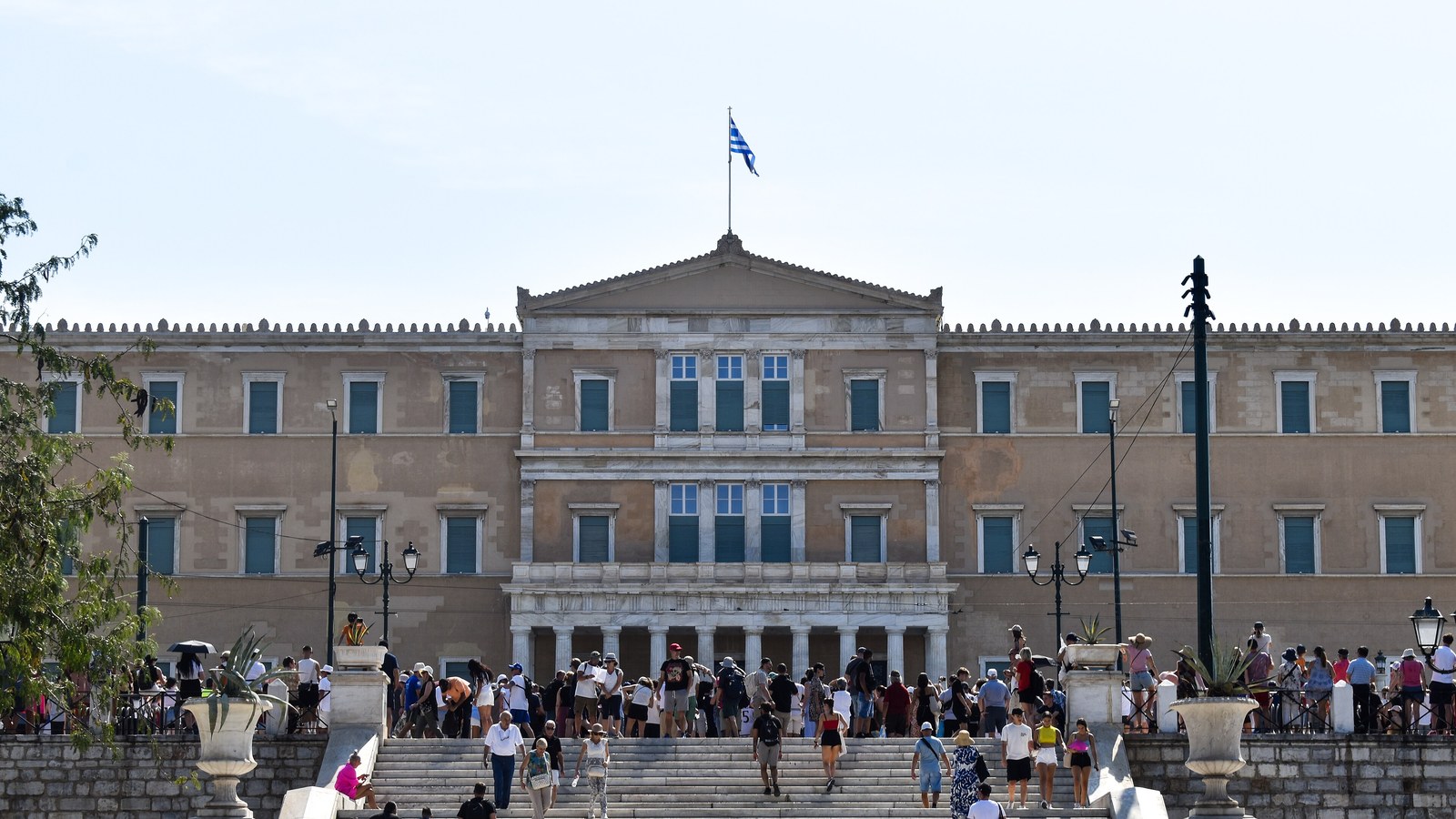
Image: Old Royal Palace, Athens, seat of the Greek government at the signing; Julian Lupyan, 18 August 2024; CC0, Wikimedia Commons. Cropped to 16:9.
Source consulted: Treaty of Athens. Treaty text: Treaty of Peace between Turkey and Greece, Athens, 1/14 November 1913.











0 Comments
No comments on this article yet. Be the first!