


The treaty of peace and friendship between the Imperial Ottoman Government and the Republic of Armenia was signed in Batumi on 4 June 1918 by Halil Bey, minister of justice, and Vehib Pasha, for the Empire, and by Alexander Khatisian, Hovhannes Kachaznuni and Mikael Papadjanov, for Armenia. The same day the Empire signed separate instruments of peace or friendship with Georgia and with Azerbaijan; it is not a single four-party treaty. It is not the Treaty of Brest-Litovsk of 3 March, which Article XII resumes insofar as compatible, and not the October Armistice of Mudros, which undid the gains. Article XIV: ratification and exchange at Constantinople within one month; it takes effect from that exchange. It did not enter into force.
The conference had opened in May still on behalf of the Transcaucasian Federation; after that federation's dissolution on 26 May, the three republics negotiated separately. The Armenian treaty has fourteen articles. A campaign diary is not transcribed, nor are casualty figures from the retreat restated.
Article I: peace and permanent friendship. Article II, at framework level: a frontier from the mouth of the Çoruh on the Black Sea to the former Russo-Persian line, separating the Empire from Georgia, Armenia and Azerbaijan; final delimitation by a mixed commission. A peak-by-peak itinerary or occupation protocol is not transcribed. Article III: the Armenian–Azerbaijani border protocol was to be communicated to the Porte. Article IV: armed assistance, at the Armenian government's request, to secure order, without an intervention protocol. Article V: Armenia undertakes to prevent armed bands from forming on its territory. Article XIII: troops outside the frontiers thus defined are to be evacuated after signature.
Article VI: respect for the religion and customs of Muslims, equal civil and political rights, communities as legal persons, a chief mufti at Yerevan. Article VII: a consular convention within two years of the exchange and a commercial treaty after the general peace; until then a provisional regime. Article VIII: railway facilities, at framework level, not a tariff. Article IX: posts and telegraph after the exchange. Article X: immovable property on the other side of the frontier, with compensation if taken for public utility. Article XI: Armenia undertakes to evacuate Armenian forces from Baku immediately after signature. Article XII: Brest-Litovsk remains valid insofar as compatible.
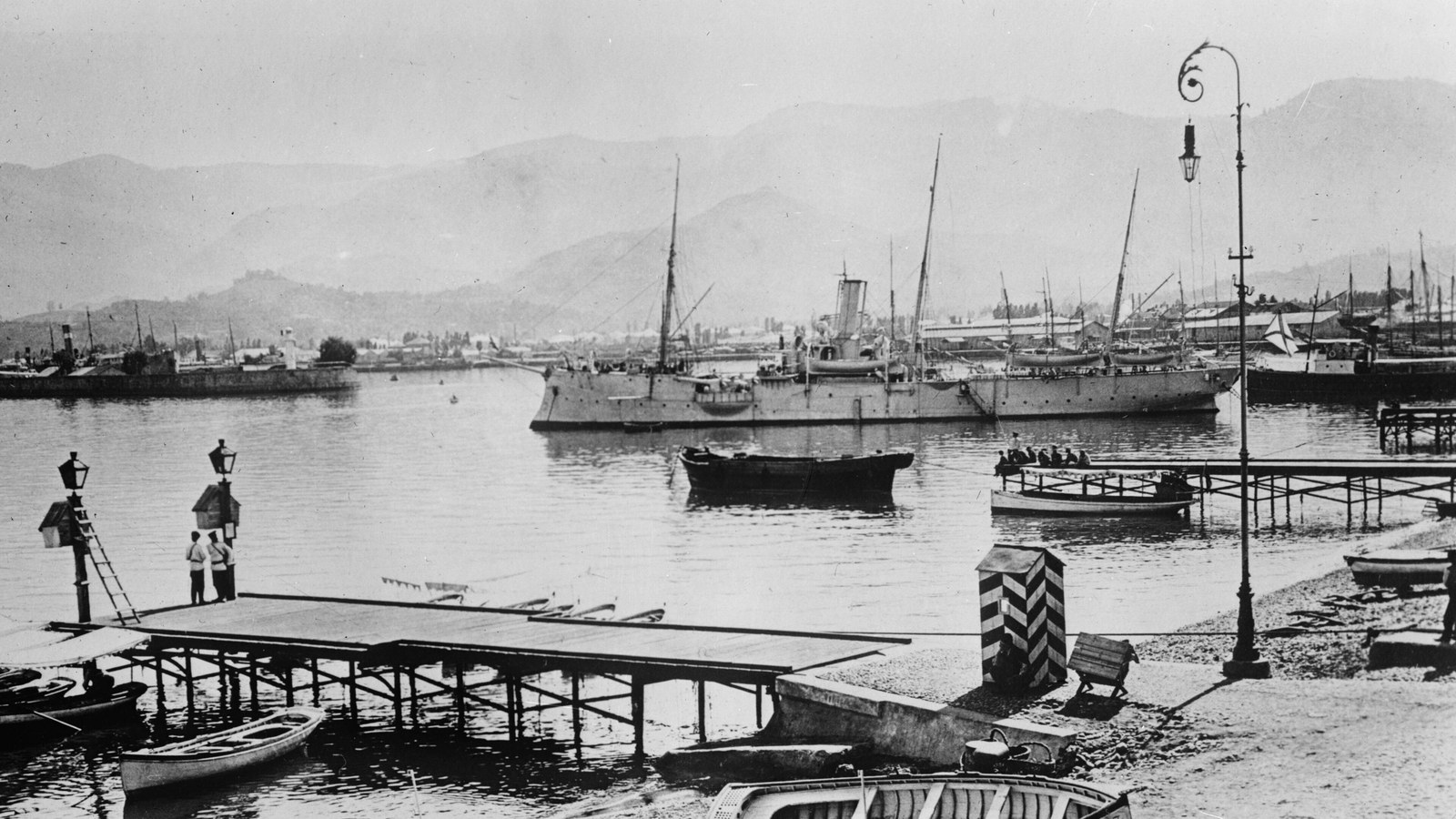
Cover: a period view of Batumi, place of the conference; we do not claim the hall. Wikimedia Commons, free licence.
Sources consulted: Treaty of Batum; Treaty of peace and friendship between the Imperial Ottoman Government and the Republic of Armenia (Wikisource).











0 Comments
No comments on this article yet. Be the first!