


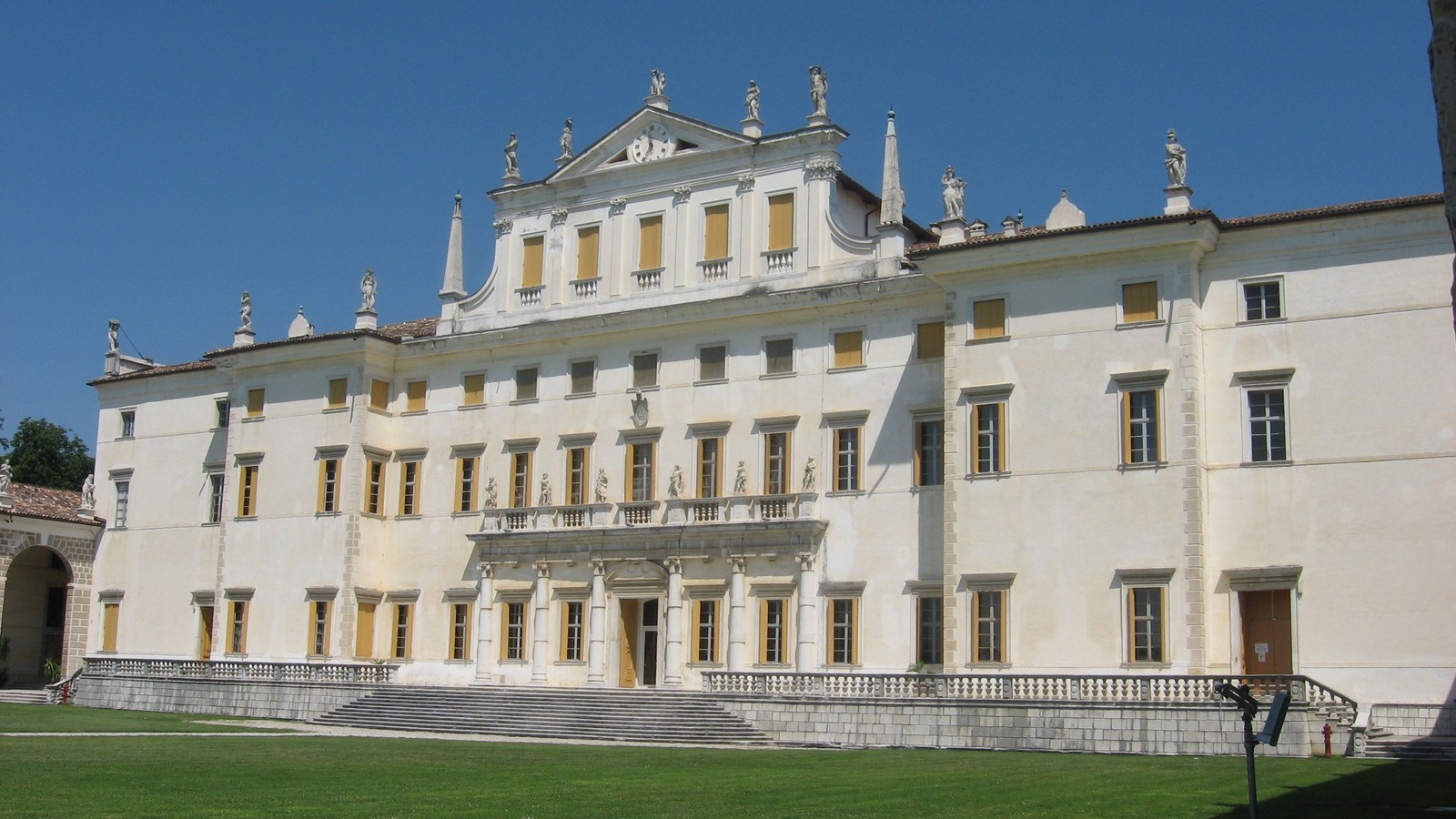
On 17 October 1797, 26 Vendémiaire Year VI, at Campo-Formio near Udine, Bonaparte, general in chief of the army in Italy, signed with the Marquis de Gallo, Count Louis de Cobenzl, Count Maximilian von Merveldt and Baron Ignace de Degelmann the peace between the French Republic and the Roman Emperor, King of Hungary and Bohemia. It is not Leoben of 18 April, not Basel of 1795 and not Lunéville of 1801. The act is dated in the village, not in a hall of Villa Manin at Passariano, where Bonaparte lodged.
Article 1 sets a solid and unvarying peace, with no hostilities by land or sea and no help, direct or indirect, to anyone who would harm the other party. Article 3: the emperor renounces, for himself and his successors, in favour of the Republic, all rights over the Belgian provinces called the Austrian Netherlands; France holds them forever, with all the land. Article 4: debts mortgaged on that soil before the war fall on the Republic, after a statement to be given before the ratifications.
Article 5 gives France the former Venetian islands of the Levant: Corfu, Zante, Cephalonia, Santa Maura, Cerigo and their dependents, plus Butrinto, Arta, Vonizza and all the Venetian and Albanian establishments below the Gulf of Lodrino. Article 6 gives the emperor Istria, Dalmatia, the Adriatic islands, the mouths of Cattaro, Venice, the lagoons and the country between the hereditary states, the Adriatic and a line from the Tyrol along the torrent before Gardola, across Garda to Lazise, then a military line to San Giacomo, the Adige on the left bank, Canal Bianco, Tartaro, Polisella, the great Po to the sea; Porto-Legnago on the right bank, with a radius of three thousand toises.
Articles 7–8: the emperor yields to the Cisalpine Republic all he held before the war within it and recognizes it as an independent power: Austrian Lombardy, Bergamo, Brescia, Crema, Mantua, Peschiera, the Venetian lands west and south of the line in Article 6, Modena, Massa and Carrara, the three legations of Bologna, Ferrara and Romagna. Article 11: navigation of the boundary rivers is free, with no toll and no ship of war, save the guard of Porto-Legnago. Article 18 gives the Duke of Modena, as indemnity, the Breisgau, on the same terms as the Modenese.
Article 20 opens at Rastatt, within a month, the congress of the Germanic Empire and the Republic. Article 23 keeps the ceremonial of before the war; with the Cisalpine, the same ceremonial as once with Venice. Article 24 makes the peace common to the Batavian Republic. Ratifications, within thirty days, are exchanged at Rastatt. It is not Schönbrunn of 1809. The secret articles, on the left bank of the Rhine, are not in the public instrument.
Villa Manin at Passariano, Bonaparte’s lodging in the days of the peace, not the house in the village square where the treaty was signed. Photograph: GhePeU, Wikimedia Commons, CC BY-SA 3.0.
For context: Treaty of Campo Formio. The text: Peace Treaty of Campo Formio.











0 Comments
No comments on this article yet. Be the first!