


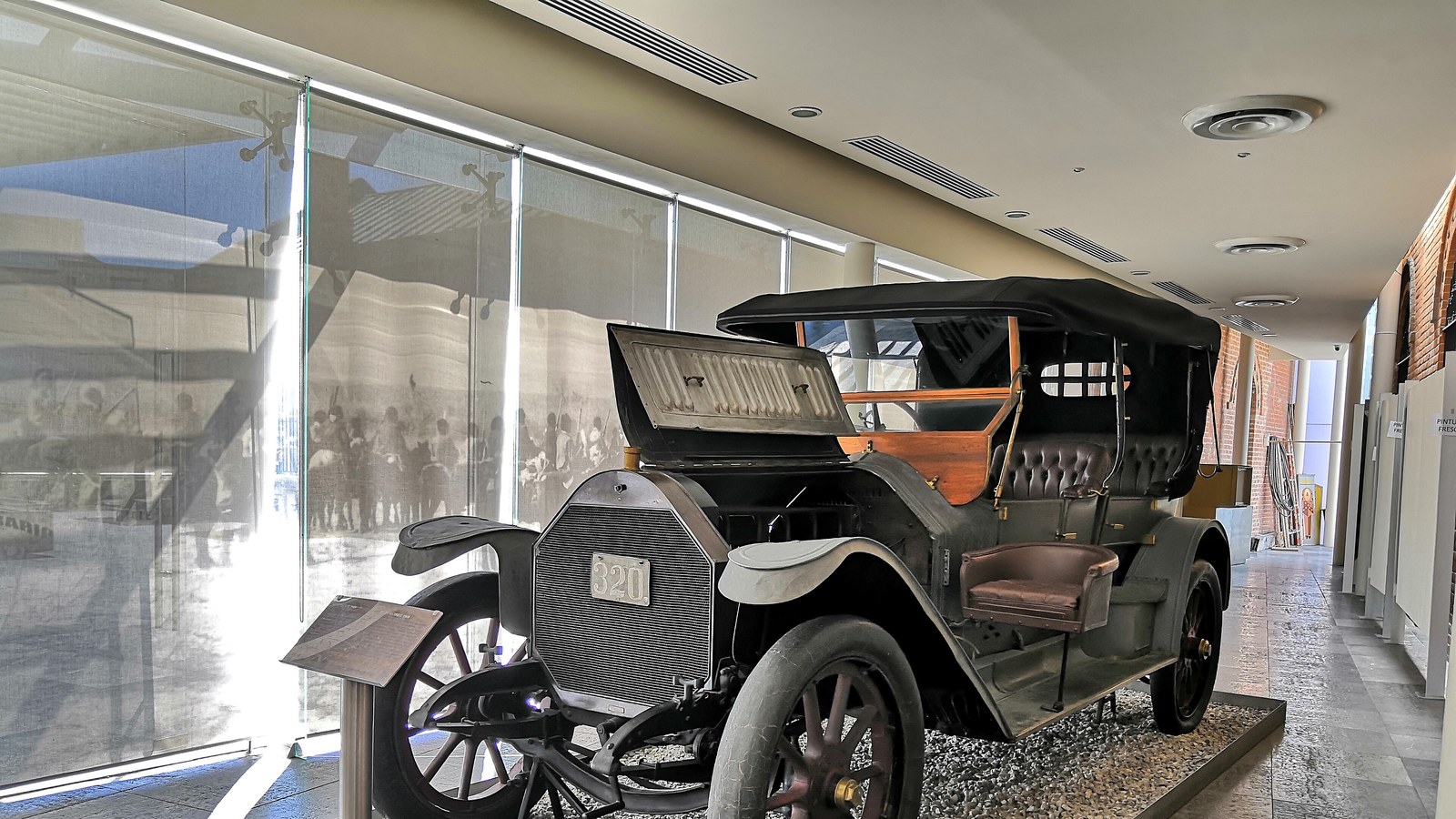
In Ciudad Juárez, on 21 May 1911, in the border Customs House, Francisco S. Carvajal, for the government of General Porfirio Díaz, and Francisco Vázquez Gómez, Francisco I. Madero and José María Pino Suárez, for the revolution, signed the convention that ends hostilities throughout the Republic. The instrument is made in duplicate. Díaz does not sign it himself. The New York Times reported that, finding the customs house locked, the commissioners signed on the steps, by automobile headlamps, at about 10:35 p.m.
The convention is not the Plan of San Luis Potosí of October 1910, nor the battle for the city, won by Pascual Orozco’s and Pancho Villa’s forces on 10 May, nor the Plan of Ayala of November 1911, nor Victoriano Huerta’s coup of 1913.
The four recitals state that General Díaz has shown his resolve to resign the presidency before the end of the present month; that there is reliable news that Ramón Corral will likewise leave the vice-presidency within the same term; that, by operation of law, Francisco León de la Barra, the current secretary of Foreign Relations, will assume the executive power ad interim and will call general elections within the terms of the Constitution; and that the new government will study the state of public opinion, to satisfy it in each state within the constitutional order, and will arrange indemnities for losses caused directly by the revolution.
The single clause: from the day of signature, hostilities between Díaz’s forces and those of the revolution cease throughout the republic; the revolutionary troops are to be discharged as, in each state, the steps needed to restore peace and public order are taken. The transitory provision requires the immediate reconstruction or repair of interrupted telegraph and railway lines.
The signed text does not speak of agrarian reform, nor of breaking up the haciendas. It names no governors and does not disband the federal army. Katz and other historians record, outside the convention, political understandings about fourteen provisional governors, an amnesty and the retention of Porfirian judges; those points are not in the few lines signed at the customs house.
Díaz submitted his resignation on 25 May. León de la Barra became interim president. Madero entered Mexico City on 7 June and was elected president in October, with Pino Suárez as vice-president. Zapata refused to recognise the interim government and kept fighting in Morelos; Orozco, passed over in appointments, rose in 1912. The Juárez convention is not that rupture.
The act closes the first phase of the Mexican Revolution: the fall of the Porfiriato, without changing the state apparatus. Carranza said, after the signing, that Madero had delivered to the reactionaries a dead revolution that would have to be fought over again. Díaz, leaving for exile in France, observed that Madero had unleashed a tiger.
Image: former Ciudad Juárez Customs House, now Museo de la Revolución en la Frontera; Wotancito, 7 April 2019, CC BY-SA 4.0, Wikimedia Commons. Cropped to 16:9.
Source consulted: Treaty of Ciudad Juárez. Treaty text: Ciudad Juárez accords, 21 May 1911.











0 Comments
No comments on this article yet. Be the first!