


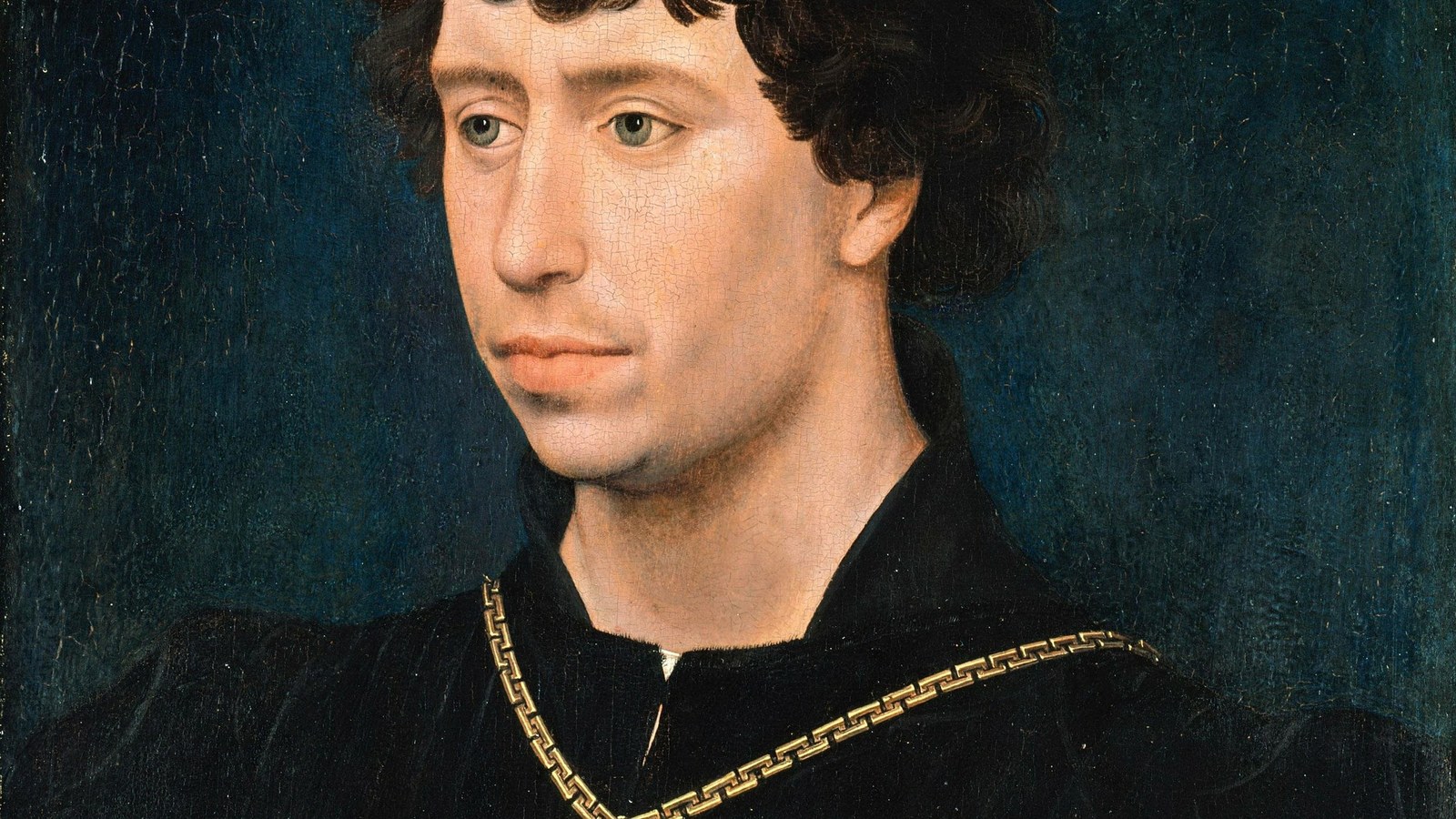
On 5 October 1465, at Conflans-l'Archevêque on the Seine, by the Charenton bridge, Louis XI issued the patents of peace with Charles, Count of Charolais, son of Philip the Good. It is not the Peace of Saint-Maur of 29 October with the other princes of the League of the Public Weal, nor the Caen settlement of December with Francis II of Brittany, nor Péronne in 1468.
The patents, dated Paris, registered in Parlement on 12 October by the king's order, grant the count the Somme towns, the counties of Ponthieu, Boulogne and Guînes, Péronne, Montdidier and Roye, and the prévôtés of Vimeu, Beauvoisis and Foulloy. Amiens, Abbeville, Saint-Quentin and the rest the king had redeemed, three years earlier, for four hundred thousand écus from Philip, under the Peace of Arras of 1435, which had given them to the duke and his male heirs, with a right of repurchase. Charolais said that in his lifetime the king ought not to have taken them back.
Montlhéry, on 16 July, had stayed indecisive: the king regained the road to Paris, the count remained master of the field. The league camped from the Charenton bridge to the house at Conflans, along the river. Arras is not reopened here; only the Picard pledge is returned. Berry, the king's only brother, takes Normandy as his apanage and leaves Berry to the Crown; homage for the duchy and the Picard lands was read later, at Vincennes. Saint-Pol swore the constable's sword at the Palais, on 12 October.
Olivier de La Marche notes the same Somme places — Amiens, Saint-Quentin, Abbeville, Le Crotoy and all Ponthieu — and a commission of thirty-six chosen men to mend the “defects of the public weal”. The king, he says, kept none of it. La Marche follows the count to Liège, then back to Abbeville, Amiens and Saint-Quentin, to put the pledged lands under obedience again.
It is not the war of 1472, nor the Peace of Arras of 1482 with Maximilian. A few months later Louis told the Parlement of Paris that the acts of Conflans and Saint-Maur, wrung under duress, were void. Rouen first passed into Jean de Bourbon's hands, for Berry; the duchy later returned to the Crown, and the count kept the Somme until the next rounds.
Portrait of the Count of Charolais, the Burgundian party to the peace of Conflans, not a signing hall. Workshop of Rogier van der Weyden. Image: Wikimedia Commons, public domain.
For context: Treaty of Conflans. The text and patents, in Mémoires de Philippe de Commynes, ed. Mandrot.











0 Comments
No comments on this article yet. Be the first!