


The Russo-Persian War of 1804–1813 followed Paul I’s annexation of Georgia in December 1800 and Pavel Tsitsianov’s offensive: Ganja fell on 15 January 1804. Fath Ali Shah Qajar crossed the Aras with his son, Crown Prince Abbas Mirza. After Tilsit (1807), France left Persia without the help promised at Finkenstein. The Battle of Aslanduz, on 31 October 1812, shattered Abbas Mirza’s army. The fall of Lankaran on 1 January 1813 precipitated peace. The British diplomat Gore Ouseley acted as mediator.
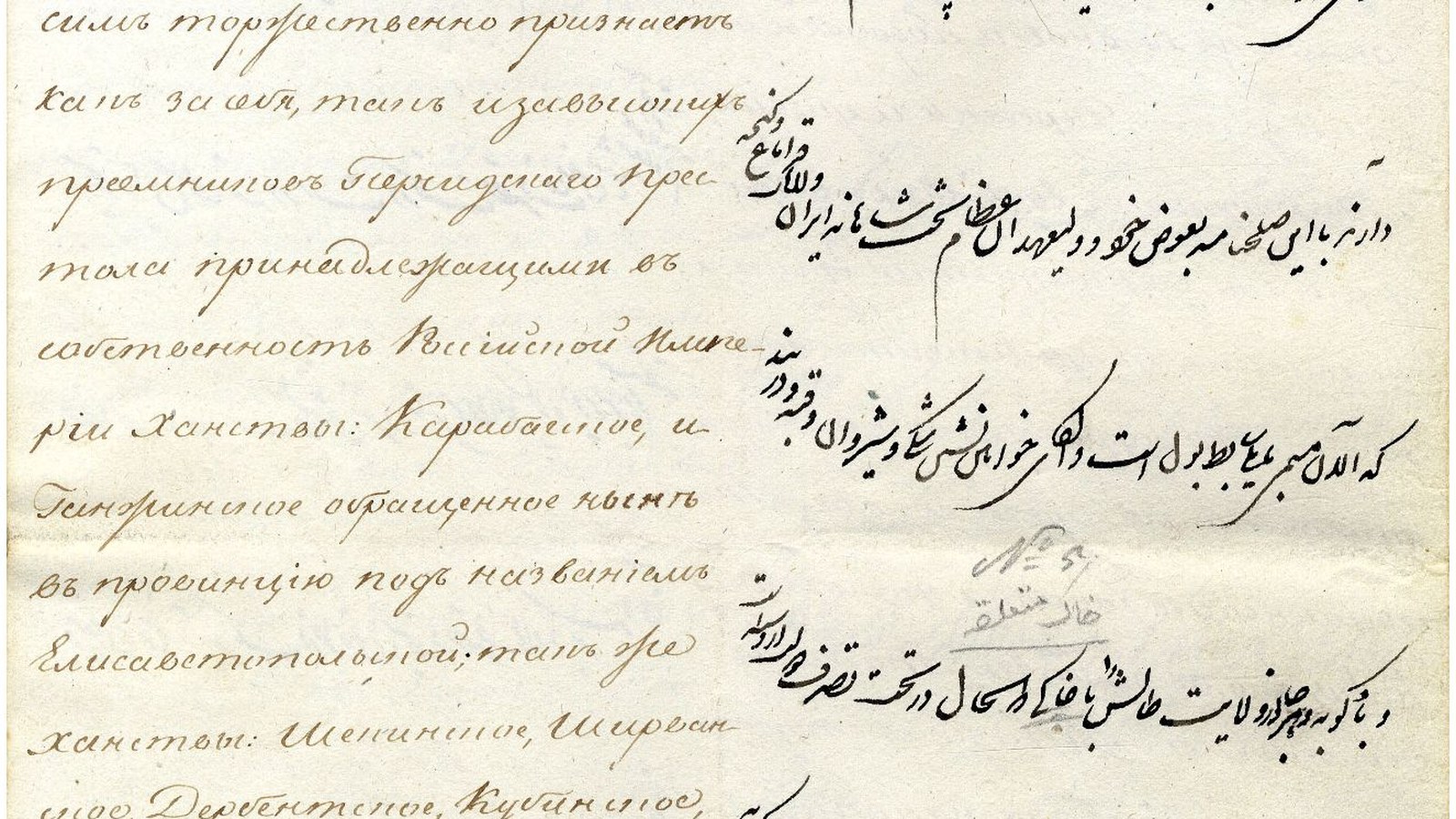
On 24 October 1813 (29 Shawwal 1228), in the village of Gulistan in Karabakh — now in Goranboy District, Azerbaijan — Nikolai Rtischev signed for Russia, Mirza Abolhassan Khan Ilchi for the Qajars. Encyclopaedia Iranica notes that Rtischev dictated the terms; Ouseley kept the talks moving. Ratification followed at Tbilisi in September 1814. Article 1 ends hostilities.
Article 2 draws the frontier on the status quo ad presentem: from Adina Bazar towards the Mugan plain, the Aras ford at Yedi Boluk, then the Aras to the Kapanak Čāy, the mountains of Karabakh and Nakhchivan, Išik Meydān, Hamza Čaman, the Aragats ridge and the Arpa Čāy river. The situation in Talysh, still contested, was left to a commission.
Article 3 obliges the shah to recognise the tsar’s sovereignty over Georgia, Mingrelia, Abkhazia, Ganja, Karabakh, Quba, Derbent, Baku, Dagestan, Shaki and other lands. The ceded khanates cover, in the main, today’s Dagestan, eastern Georgia, most of Azerbaijan and parts of northern Armenia. Article 5 gives Russia commercial access to Persian Caspian ports and the exclusive right to keep ships of war on the sea.
Article 4 gives Russia the right to recognise the prince named as heir and to help him against rivals — an ambiguous formula, meant to avoid an explicit recognition of Abbas Mirza, but one that opened a Russian veto on the succession. Articles 6 to 11 regulate prisoners, ambassadors, trade and a 5 percent ad valorem duty on imported goods.
The vagueness of the borders, especially between Lake Gokča and Erevan, kept the tension. The Russian occupation of the Gokča district in 1825 opened the second Russo-Persian War (1826–1828), ended by the Treaty of Turkmenchay, by which Persia lost the rest of today’s Armenia and Azerbaijan north of the Aras.
Sources: Treaty of Gulistan; Encyclopaedia Iranica, Golestān Treaty.











0 Comments
No comments on this article yet. Be the first!