


The Treaty and Complementary Protocol to resolve the question of Tacna and Arica were signed in Lima on 3 June 1929 by Pedro José Rada y Gamio, Peru's minister of foreign affairs, and Emiliano Figueroa Larraín, Chile's ambassador in Peru, in duplicate. It is not the Treaty of Ancón of 20 October 1883, whose Article 3 it closes, and not the 1922 Washington arbitration protocol. Ratifications were exchanged in Santiago on 28 July, according to the League of Nations Treaty Series.
The preamble seeks to remove difficulties and to secure friendship, on the bases proposed by the President of the United States as good offices, after the parties' direct arrangements. Article 1: the dispute arising out of Article 3 of the peace treaty is finally settled. Article 2: the territory of Tacna and Arica is divided — Tacna to Peru, Arica to Chile — by a line from the coastal point Concordia eastward to Laguna Blanca. Chile cedes to Peru, with a perpetual easement over the sections remaining in Chile, its rights over the Uchusuma and Mauri canals. A demarcation or water-capture protocol is not transcribed.
Article 3: a mixed boundary-marker commission, with a casting vote of a third member appointed by the President of the United States. Article 4: delivery of the Peruvian territories thirty days after the exchange of ratifications. Article 5: Chile shall build, at its cost, in the Bay of Arica, a steamer quay, a Peruvian customs building and a Tacna railway terminal, with the independence of a free port for Peruvian transit. Article 6: six million dollars and the public fiscal works in the territories handed over. Article 7: legally acquired private rights, including the 1852 Arica–Tacna railway concession. Article 8: reciprocal cancellation of pecuniary obligations, including those from Ancón.
Article 9: a later frontier-police convention, not set out here. Article 10: children of Peruvians born in Arica and children of Chileans born in Tacna may opt at twenty-one. Article 11: a monument on the Morro of Arica. Article 12: if the parties cannot agree on interpretation, the President of the United States shall decide. Article 13: ratification and exchange in Santiago. The complementary protocol, an integral part: no cession to a third power and no new international railways without prior agreement; free transit of persons and merchandise until the works in Article 5 are finished; the Morro dismantled, the monument at Chile's expense.
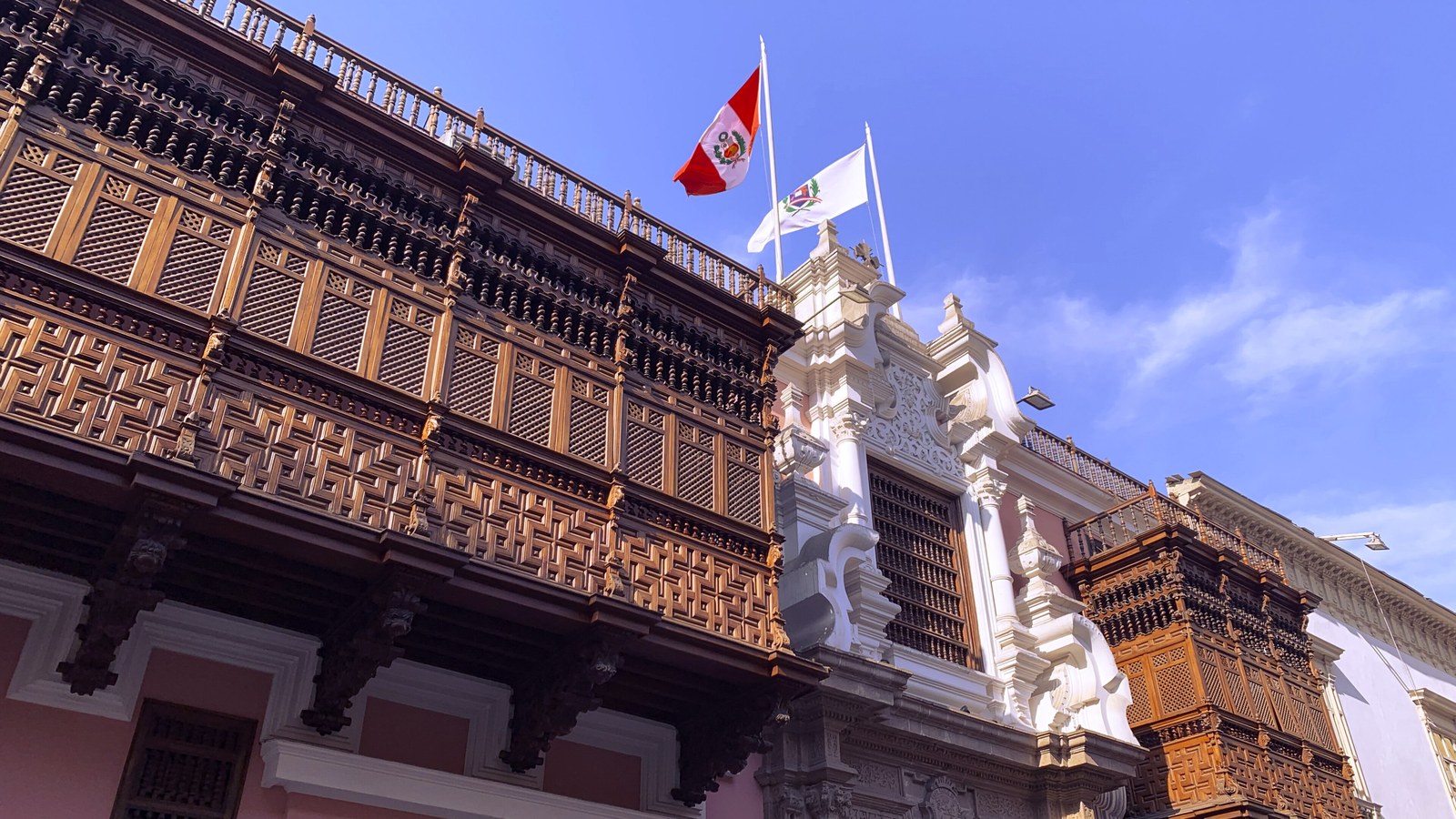
Cover: Torre Tagle Palace in Lima, seat of Peruvian diplomacy; we do not claim the hall. Wikimedia Commons, free licence.
Sources consulted: Treaty of Lima (1929); Tratado y Protocolo Complementario para Resolver la Cuestión de Tacna y Arica (Wikisource).











0 Comments
No comments on this article yet. Be the first!