


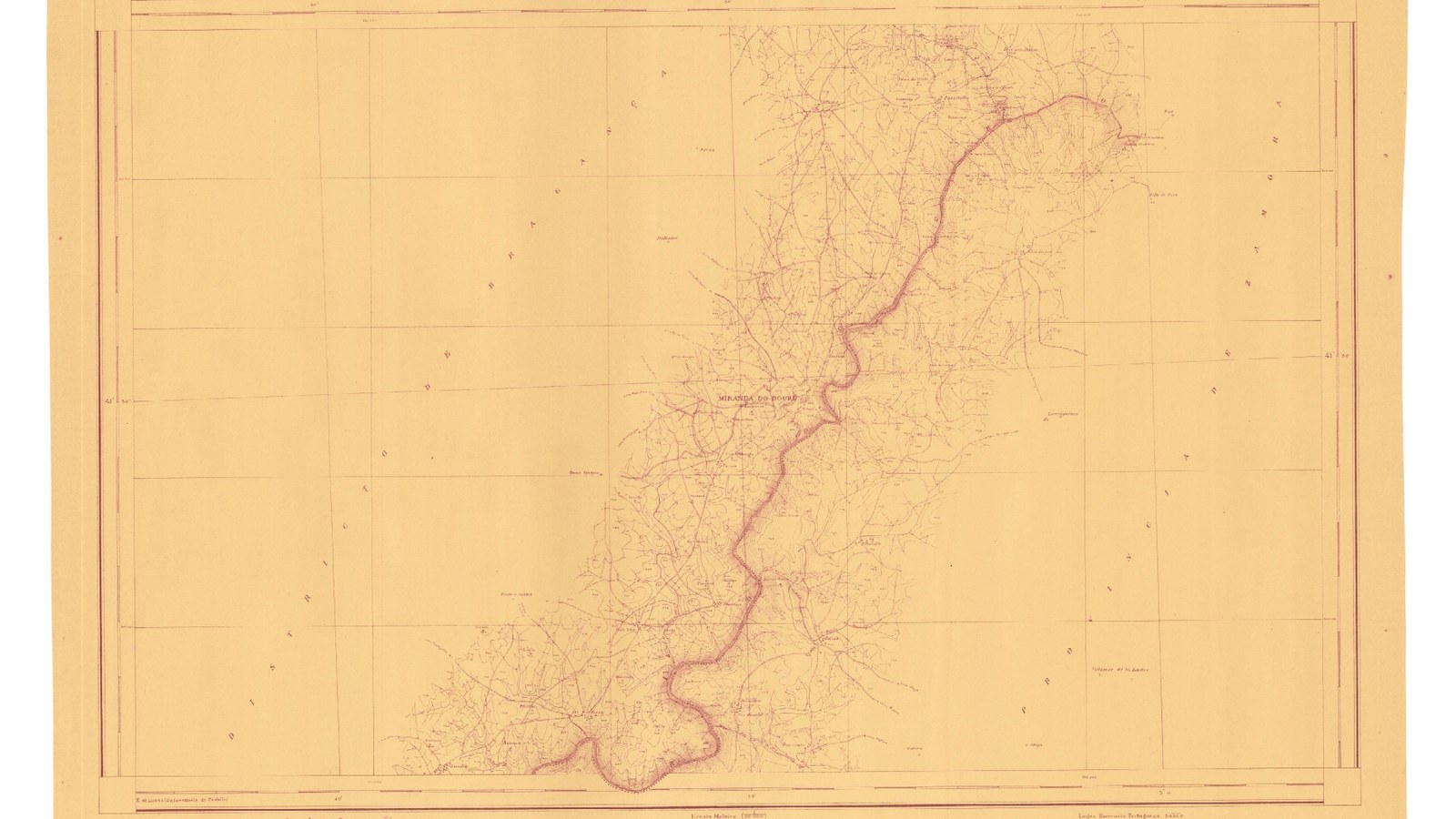
In Lisbon, the plenipotentiaries of Queen Isabel II of the Spains and of King Luís I of Portugal and the Algarves sign the Treaty on boundaries from the mouth of the Minho to the junction of the Caya with the Guadiana. The date of the instrument is 29 September 1864. It is not the Treaty of Lisbon of 13 February 1668, and it is not the European Union’s Treaty of Lisbon of 2007.
For Spain there sign the Marquis de la Ribera, Juan Jiménez de Sandoval, and Facundo Goñi. For Portugal, the Duke of Loulé, Nuno José Severo de Mendoça Rolim de Moura Barreto, president of the Council and minister for foreign affairs, and Jacinto da Silva Mengo. The authentic texts are Spanish and Portuguese, in duplicate.
Article I: the line starts at the mouth of the Minho, between Pontevedra and Viana do Castelo, along the centre of the principal stream. The islands of Canosa, Cancela, Insula Grande and Filla Boa remain to Spain; Canguedo and Rana Gallega, to Portugal. Article XXIII: the frontier whose delimitation is the object of this treaty terminates at the confluence of the Caya with the Guadiana, between Badajoz and Portalegre.
Olivenza and the lower course of the Guadiana are not delimited here. The Convention of Limits of 1926 will take them up from that same confluence southwards. This act does not close them.
Article VII: Portugal renounces in favour of Spain all rights to the Coto Mixto (Couto Misto) and to the villages which, by the line, fall within Spanish territory. Article XXVII: the villages of Soutelinho, Cambedo and Lamadarcos pass to Portugal; Santa Maria de Rubiás, Santiago and Meaus, to Spain. The inhabitants may keep their nationality, by declaration within one year of the treaty’s coming into operation.
Article XXXI: the ratifications are exchanged at Lisbon. Entry into force is 19 May 1866. Article XXX: conventions and arbitral awards on this stretch, if they conflict with the treaty, fall from that day.
It is not the Final Act of 4 November 1866, which approves the annexes — frontier rivers, works on the banks — and comes into force on 20 November 1866. It is not the Treaty of Badajoz of 1801.
Article XXIV: the landmarks and their geometric description, by commissioners, are attached to the treaty with the same force. Every August municipal delegates inspect the line. The island of Canosa remains, for herbage, in common use by the villages on both banks.
Image: chorographic map of the Portugal–Spain boundary after the 1864 treaty; International Boundary Commission, 1928; CC BY 4.0, Wikimedia Commons. Cropped to 16:9.
Source consulted: Treaty of Lisbon (1864). Treaty text: UNTS 1288 II-906, Treaty on boundaries, Lisbon, 29 September 1864.











0 Comments
No comments on this article yet. Be the first!