


At Westminster, the commissioners of Charles I and of the Scottish estates settle the articles of peace between England and Scotland that close the Bishops’ Wars. The king signs the lasting settlement; the instrument is dated 10 August 1641. It is not the truce of Ripon of 26 October 1640, and it is not the London treaty with Spain of 1604.
After Newburn on 28 August 1640, the Covenanter army had occupied Northumberland and Durham at £850 a day, pending a final peace. The royal commission under the Great Seal, given at Westminster on 23 November in the sixteenth year of the reign, empowers any ten or more peers — Bedford, Hertford, Essex, Salisbury, Warwick, Bristol, Holland, Berkshire, Wharton, Paget, Kimbolton, Brooke, Paulet, Howard of Escrick, Savile and Dunsmore — to treat with John, Earl of Rothes, Charles, Earl of Dunfermline, John, Lord Loudoun, Patrick Hepburn of Waughton, William Douglas of Cavers, William Drummond of Riccarton, John Smith of Edinburgh, Alexander Wedderburn of Dundee, Hugh Kennedy of Ayr, Alexander Henderson and Archibald Johnston.
The first Scottish demand, granted, is that the acts of the parliament held at Edinburgh on 2 June 1640 be published in the king’s name, with the force of law, together with those of the next session. The second leaves Edinburgh Castle and the other strengths of the kingdom, with the advice of the estates, for the defence of the country. The third frees, in England and Ireland, those censured for signing the National Covenant and stops oaths contrary to the Scottish laws, except for persons settled there as inhabitants.
The fifth demand restores, reciprocally, ships and goods detained; the Scots speak of some eighty vessels, and £4,000 is advanced for caulking, sails and cordage. The sixth, for the losses of the war, is set at three hundred thousand pounds of “brotherly assistance”: eighty thousand before disbanding, the remaining two hundred and twenty thousand in two equal moieties at Midsummer 1642 and 1643, paid in the Chamber of London on the public faith of Parliament.
The seventh asks that proclamations and pamphlets against the Scots’ loyalty be recalled, with a public thanksgiving in every parish church; the day appointed is Tuesday 7 September. The eighth, for a durable peace, removes the garrisons of Berwick and Carlisle once the Scottish army leaves Newcastle, and lets the fortifications decay, without prejudice to the grant concerning the Scottish castles.
The wish for ecclesiastical uniformity between the two kingdoms is left to the English Parliament, “in due time”; Presbyterianism is not imposed on England and Ireland. An act of oblivion buries the hostilities, but excepts the Scottish prelates, the Earl of Traquair, Robert Spottiswood, John Hay and Walter Balcanquall, cited as “incendiaries” between king and people. Conservators of the peace, named by the king and by both parliaments, are to watch between sessions.
None of the three kingdoms is to declare war on another without the consent of its own parliament, with three months’ warning. War with foreigners, leagues, trade and naturalization are remitted to later commissioners, so as not to hold up the peace. The English, Scottish and Irish armies are to disband once the treaty is ratified; by the end of the month the Covenanter forces have left northern England.
Charles sets out for Edinburgh, where he addresses the estates on 19 August. The peace restores quiet between the two crowns, but it does not close the quarrel between the king and the Long Parliament, which breaks out in 1642. The English commission stands under the Great Seal; the Scottish one on the warrant from Newcastle and Edinburgh of 31 October and 4 November 1640.
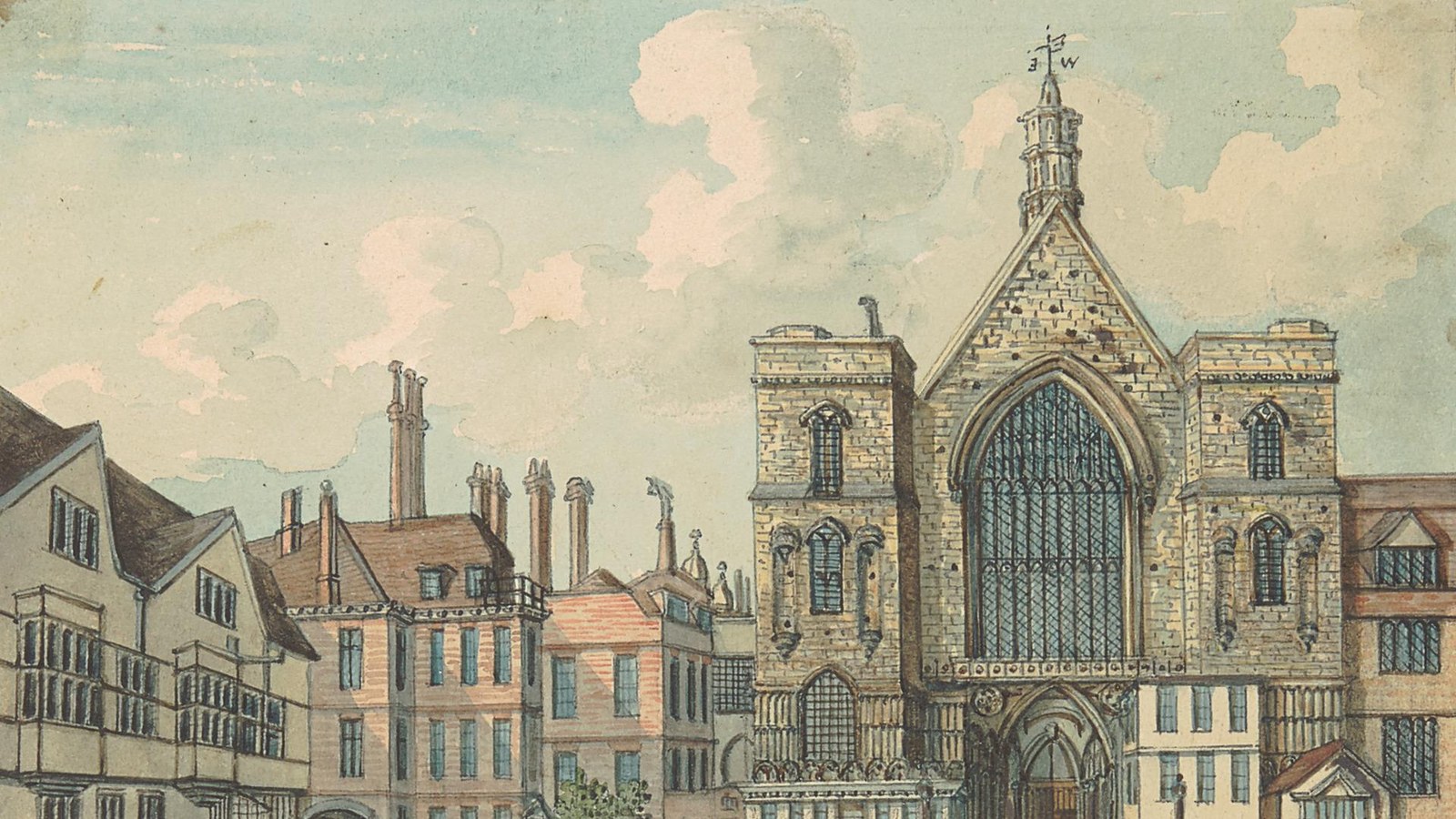
Image: Westminster Hall, engraving by Samuel Ireland, 1798; CC0, Yale Center for British Art / Wikimedia Commons. Cropped to 16:9.
Source consulted: Treaty of London (1641). Treaty text: Articles of the Treaty, Westminster, 7 August 1641.











0 Comments
No comments on this article yet. Be the first!