


In London on 19 April 1839 two treaties and an act of accession were signed. The first, between France, Austria, Great Britain, Prussia and Russia on one side and the Netherlands on the other, recognises the separation of Belgium from the Netherlands. The second, between Belgium and Holland, inserts the 24 articles annexed to the first. On the same day the German Confederation accedes to the whole. For the King of the Netherlands, Grand Duke of Luxembourg, the signatory is Salomon Dedel; for the King of the Belgians, Sylvain van de Weyer. For the Five: Count Senfft-Pilsach, Horace Sébastiani, Viscount Palmerston, Baron von Bülow and Count Pozzo di Borgo. The Five-Power treaty is made in the name of the most holy and indivisible Trinity; ratifications are to be exchanged in London within six weeks, together with the Belgian–Dutch ones. The King of the Netherlands ratified on 26 May; the exchange took place on 8 June 1839.
Article One of the Five-Power treaty binds the King of the Netherlands to convert immediately, into a treaty with the King of the Belgians, the annexed articles agreed under the auspices of the courts in 1831. Article Two states that those articles have the same force as if inserted word for word and that they thus stand under the guarantee of their said Majesties. Article Three recognises that the union between Holland and Belgium, created by the Treaty of Vienna of 31 May 1815, is dissolved.
In the Belgian–Dutch treaty, Article One composes Belgian territory of South Brabant, Liège, Namur, Hainaut, West Flanders, East Flanders, Antwerp and Limburg as they formed part of the kingdom of 1815, minus the districts in Article 4, plus the part of the Grand Duchy of Luxembourg described in Article 2: the line from Rodange and Athus, through Arlon, Steinfort and Martelange, then the thalweg of the Sûre to the Prussian frontier. West of the line goes to Belgium; east remains with the Grand Duchy. Article 3 assigns the King, for those cessions, a territorial indemnity in the province of Limburg. Article 4 leaves him, on the right bank of the Meuse, the whole sector between the Meuse, Prussia, Liège and Dutch Gelderland; on the left bank, a line above Wessem, with Maastricht and a radius of twelve hundred toises from the outer glacis, in Dutch sovereignty. The old Dutch enclaves on the left bank, except Maastricht, go to Belgium.
Article 7 states that Belgium, within the limits of Articles 1, 2 and 4, shall form an independent and perpetually neutral State, and shall be bound to observe such neutrality towards all other States. Article 9 applies Articles 108–117 of the Vienna Act to rivers that separate or traverse both countries; for the Scheldt, joint pilotage and buoying below Antwerp, a single due of 1.50 florins per ton, collected by Dutch agents at Antwerp and Terneuzen, with no visit in Dutch roadsteads. Article 12 allows Belgium, if it opens a road or canal to the Meuse opposite the canton of Sittard, to ask that it be prolonged to the German frontier, at Belgian expense, without prejudice to exclusive Dutch sovereignty. Article 13 charges Belgium with an annual rent of five million Dutch florins from the public debt of the former kingdom, payable half-yearly at Brussels or Antwerp in cash, without any deduction. Article 14 keeps Antwerp a commercial port, after Article 15 of the Treaty of Paris of 30 May 1814. Article 24 requires evacuation of places that change dominion within fifteen days of the exchange of ratifications.
The treaty is not the draft of 18 articles of 26 June 1831, accepted by Belgium and refused by the Netherlands. It is not the treaty of 15 November 1831 between the Five and Belgium, signed without Holland. It is not the second Treaty of London, of 1867, which settled Luxembourg after the German Confederation disappeared. The London signatories are not Leopold I and William I in person: the instruments of April 1839 name Dedel, van de Weyer, Palmerston, Sébastiani, Senfft, Bülow and Pozzo di Borgo.
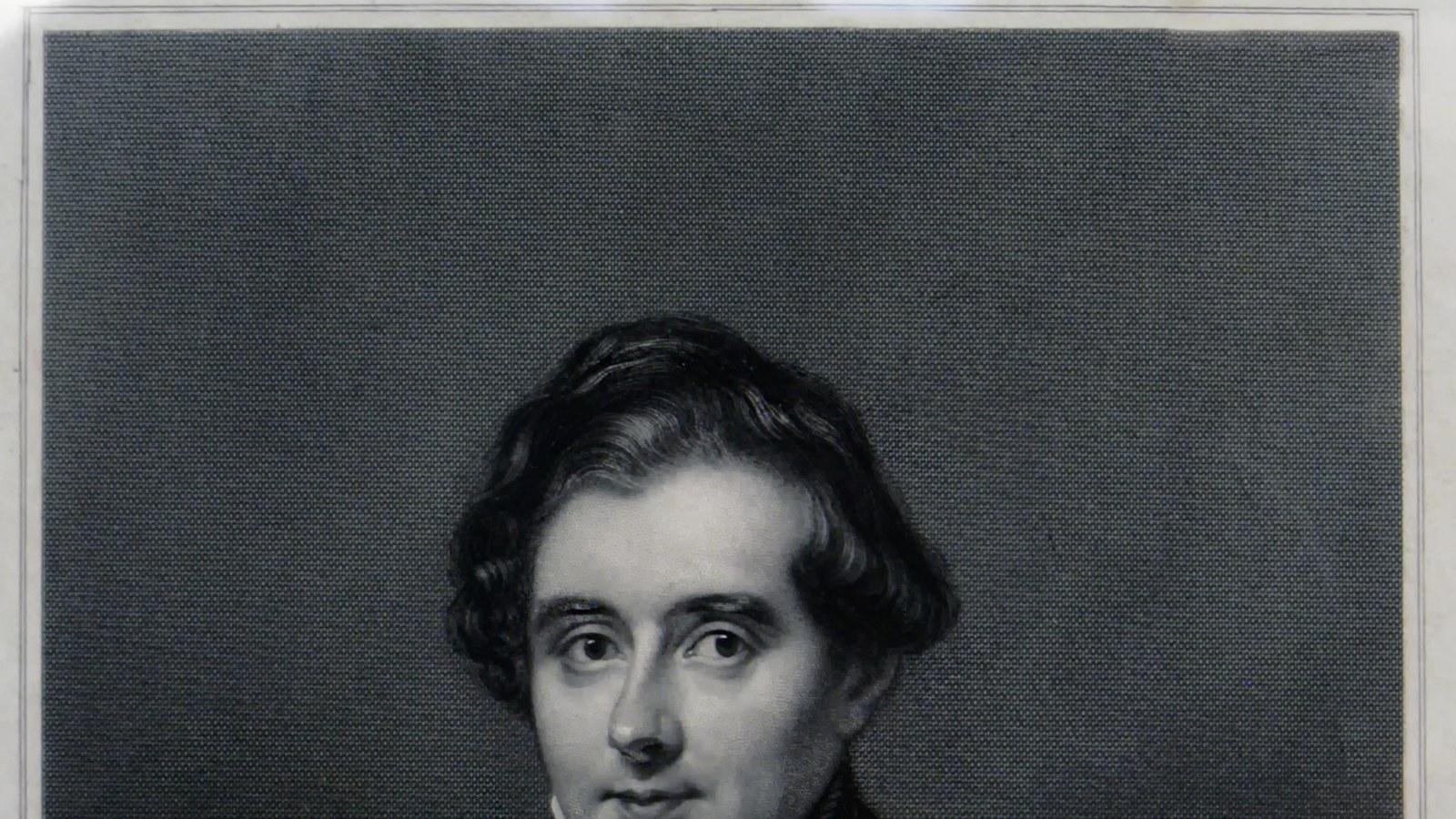
Image: Sylvain van de Weyer, Belgian plenipotentiary in London; engraving by I. Thomson after Wappers, 1830s, public domain, Wikimedia Commons. Cropped to 16:9.
Source consulted: Treaty of London (1839). Treaty text: MJP: Treaties of London, 19 April 1839.











0 Comments
No comments on this article yet. Be the first!