


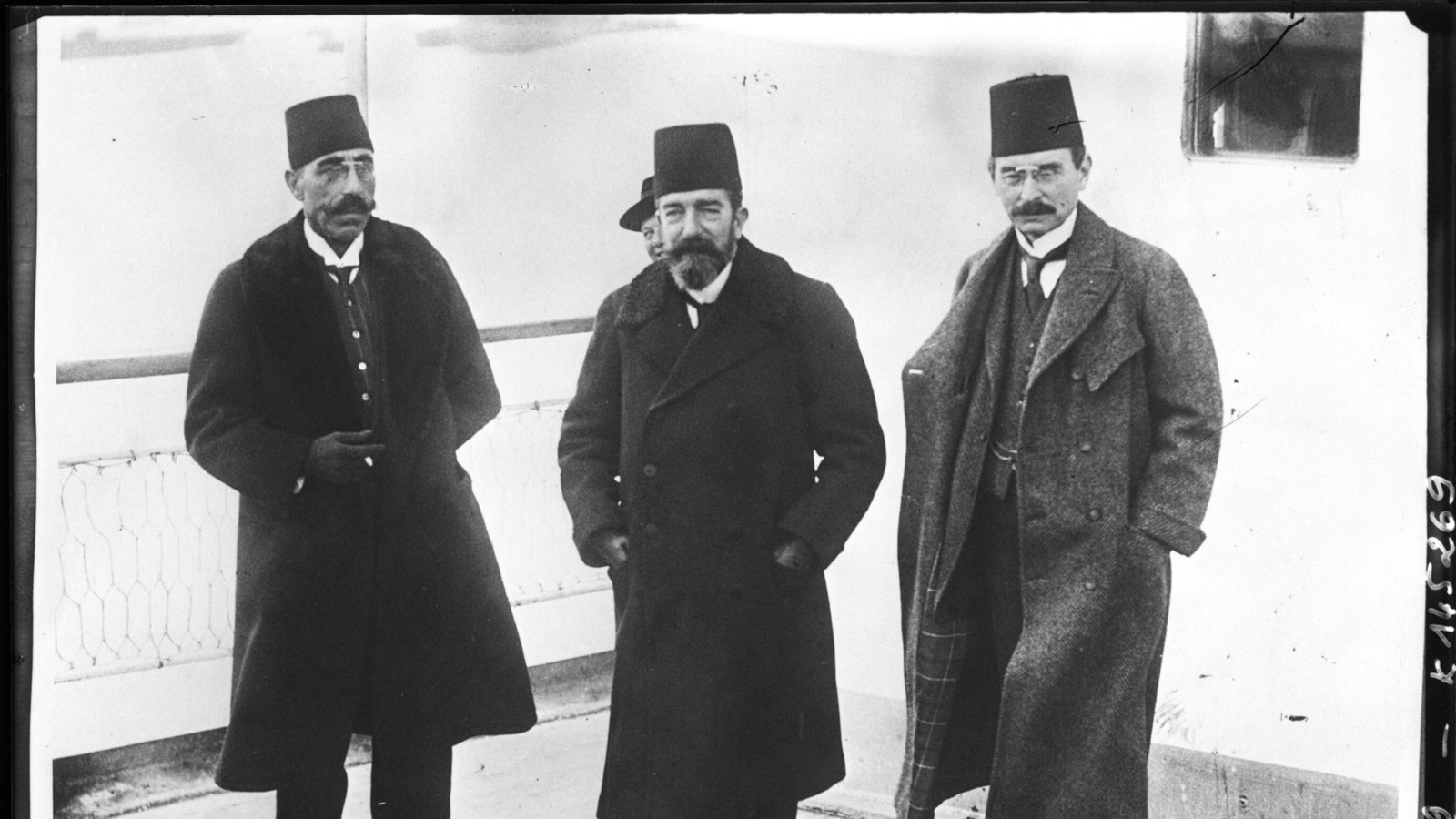
At St James’s Palace in London, on 30 May 1913, at noon Greenwich Mean Time (17 May on the Julian calendar), the plenipotentiaries of Greece, Bulgaria, Montenegro and Serbia, on the one part, and of the Ottoman Emperor, on the other, signed the peace treaty that closes the First Balkan War. The instrument has seven articles plus the ratification clause. Martens notes that an exchange of ratifications does not appear to have taken place.
The kings did not sign; the envoys did. For Greece: Étienne Skouloudis, Jean Gennadius and Georges Streit. For Bulgaria: Stoyan Danev and Mihail Madjarov. For Montenegro: Jean Popovitch and Count Louis Voinovitch. For Serbia: Stoyan Novakovitch, André Nikolitch, Milenko Vesnitch and Ivan Pavlovitch. For the Porte: Osman Nizamy Pasha, Batzaria Effendi and Ahmed Réchid Bey. The treaty is not the Treaty of London of 1839, nor the secret treaty of 1915, nor the Peace of Bucharest of 10 August 1913, nor the Treaty of Constantinople of the same year.
Article 1 proclaims, from the day of the exchange of ratifications, perpetual peace and friendship between the Ottoman Emperor and the Allied Sovereigns, their heirs, states and subjects. Article 2: the Porte cedes to the Allies all European territory west of the Enos (Aegean)–Midia (Black Sea) line, except Albania; the exact line is to be drawn by an international commission. Article 3 leaves to the six Great Powers (Germany, Austria-Hungary, France, Great Britain, Italy, Russia) the delimitation of Albania’s frontiers and all other Albanian questions.
Article 4 cedes Crete to the Allies and renounces every right of sovereignty there. Article 5 entrusts to the same six powers the fate of the other Ottoman islands in the Aegean and of the Mount Athos peninsula. Article 6 refers the financial questions of the war and of the cessions to the international commission sitting in Paris. Article 7 leaves prisoners of war, jurisdiction, nationality and commerce to special conventions. Ratifications were to be exchanged in London as soon as possible.
The ambassadors’ conference had opened in London in December 1912, after Albania’s declaration of independence on 28 November. The armistice of 2 December had not included the Greeks. On 23 January 1913 the Istanbul coup removed Kâmil Pasha; Enver Pasha withdrew the Ottoman delegation from the conference. The peace treaty was nevertheless signed with Ottoman plenipotentiaries. The Great Powers are not parties to this instrument: they appear only in Articles 3 and 5, as referees.
The partition of Macedonia among the Allies is not in the text. Serbia refused the division agreed with Bulgaria in March 1912. On 16 June 1913 the Second Balkan War broke out. The May Treaty of London is not that Peace of Bucharest, nor the Protocol of Florence of 17 December 1913, nor the Protocol of Corfu of 1914.
Image: Osman Nizami Pasha, Rechid Pasha and Salih Pasha, Ottoman delegates on the deck of the Roumania, bound for the London peace conference, 1912; Agence Rol, BnF, public domain, Wikimedia Commons. Cropped to 16:9.
Source consulted: Treaty of London (1913). Treaty text: Martens: Treaty of peace, London, 17/30 May 1913.











0 Comments
No comments on this article yet. Be the first!