


On 29 September 1267, at Montgomery, Cardinal Ottobono, deacon of St Adrian and legate of the apostolic see, issued the instrument of peace between Henry III and Llywelyn ap Gruffudd. The dating clause is iii Kalendas Octobris, in the third year of Pope Clement IV. The act had been spoken the Sunday before, at Shrewsbury, by the prince’s envoys; on the Thursday, the feast of St Michael, Llywelyn accepted the peace, did homage to the king and swore fealty. It is not the Treaty of Pipton of 1265 and not the Peace of Aberconwy of 1277.
In the name of the king, his heirs and men, and of Llywelyn son of Gruffudd, for his successors and men, injuries and damages on both sides are remitted. Llywelyn restores the lands taken in the late quarrel, except Brycheiniog and Gwerthrynion, which remain in his seisin; those, and what is restored, are to be judged by the customs of the March. Builth remains his, and the king grants him the right he had there. In Maelienydd, Roger Mortimer may raise a castle; if the land is adjudged to Llywelyn, castle and land are restored to him.
The king grants Cedewain and Ceri. Of Whittington, Llywelyn is to receive the service his predecessors had, the ward remaining with the knight to whom the king granted it. Robert de Mohaut is to be freed at once, with all his land of Hawarden; for thirty years he may not build a castle there. Gruffudd ap Gwenwynwyn is not bound to restore what he held while with the king, before he went over to Llywelyn.
Of his mere liberality, with the will and assent of Edward, his first-born, the king grants to Llywelyn and his heirs the principality of Wales, that they may be called and be princes of Wales. He receives the fealty and homages of all the Welsh barons, to hold of the prince in chief, except the homage of Maredudd ap Rhys, which the king keeps, with all that man’s land, which the prince must restore. If the king later chooses to grant that homage, the prince is bound to pay five thousand marks.
To his brother Dafydd is restored all the land he had before he went over to the king; if that does not content him, the increase is to be ordained by Gruffudd ap Gwenwynwyn, Gruffudd ap Madog, Hywel ap Madog, Owain ap Bleddyn and Tudur ap Ednyfed, by Christmas. The king also grants the Four Cantrefs of Perfeddwlad, as fully as he and his predecessors ever held them. For the principality, lands, homages and grants, Llywelyn and his successors owe the king the fealty, homage and customary service due to the kings of England. Neither side is to receive, in its lands, a banned enemy of the other.
For all the grants the prince is bound to twenty-five thousand marks: a thousand within a month, four thousand by Christmas, then three thousand a year, at Christmas, at the monastery of Chester, until the sum is paid. Delay after the Purification brings a hundred marks as penalty, then fifty a month. Robert Walerand and John de la Lynde swore on the gospels on the king’s soul, Walerand on Edward’s, Einion ap Caradog and Dafydd ap Einion on Llywelyn’s. At Montgomery, Hywel ap Madog, seneschal Goronwy and Tudur ap Ednyfed swore as well. The seals of the legate, the king, Edward, the prince, Einion and Dafydd corroborate the deed. It is not the grandfather’s style Prince of Aberffraw in the 1230s, and not the claim of uncle Dafydd ap Llywelyn in 1240–1246.
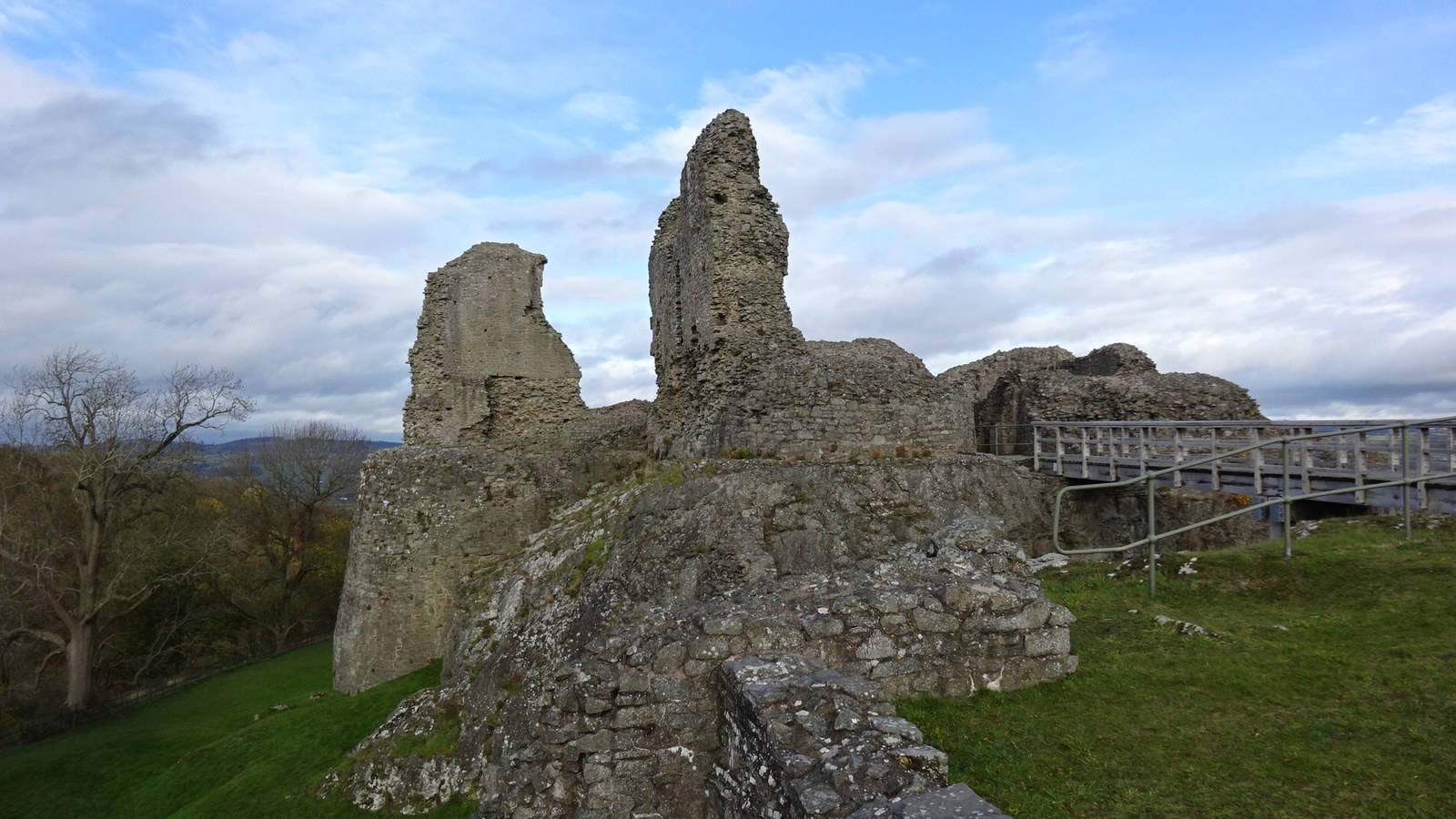
Montgomery Castle, near the Severn ford of the peace. Photo: Rosser1954, Wikimedia Commons, CC BY-SA 4.0.
For context: Treaty of Montgomery. The text: Littere Wallie, De pace facta (Edwards, 1940).











0 Comments
No comments on this article yet. Be the first!