


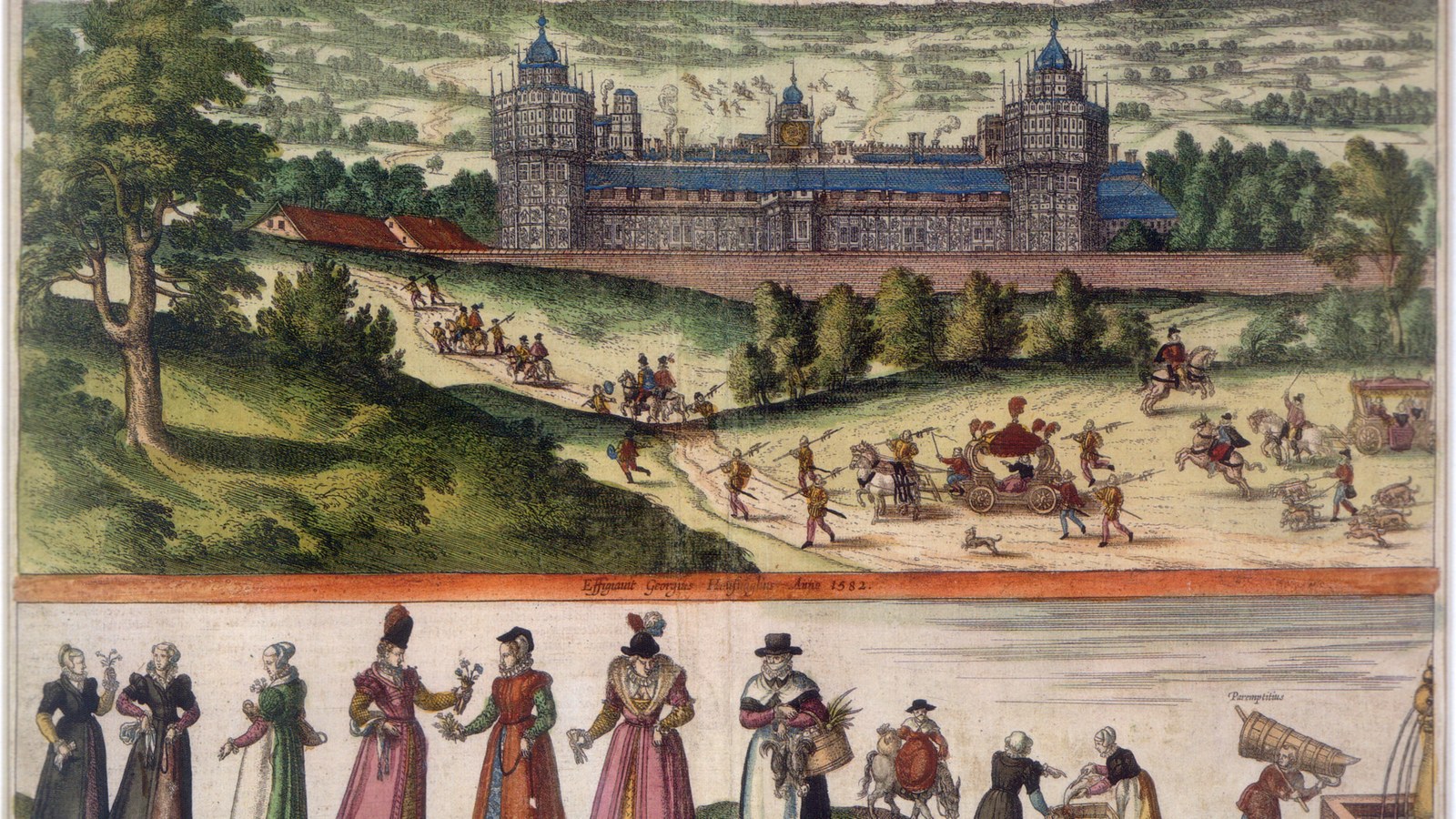
Elizabeth I of England and the States General of the United Provinces concluded at Nonsuch Palace, in Surrey, on 10 August 1585, the treaty of assistance: the first international treaty of what would become the Dutch Republic. Article 1, in the 1732 English copy: 4,000 foot and 500 horse, then 5,000 and 1,000, under a governor-general of quality, “well inclin’d to the true Religion,” paid by the Queen during the war. Elizabeth refused the sovereignty of the Low Countries, offered by the deputies. The Treaty of Joinville of 1584, Philip II and the Catholic League, hastened the decision. Antwerp fell on 17 August; the aid no longer lifted the siege.
Article 2: the Provinces, in peace, repay the costs of levying, transport and the first year’s wages in the first year of peace, the rest in four annual instalments, according to the commissaries’ reckoning. Article 3: within a month of confirmation, the States hand to governors named by the Queen Flushing (Vlissingen) and Rammekins Castle on Walcheren, plus Brill (Den Briel) and two fortresses in Holland, an English garrison until full payment in London. Zeeland opposed the pledge. Articles 4–8: artillery inventoried; English governors hold the defence, not civil policy; no correspondence with the Spaniards; magistrates, privileges and local imposts remain the towns’.
Article 10: once the debts are paid, the cautionary towns are restored to the States, not to the king of Spain. Article 11: a double oath, to the Queen and to the States General, for the places and for the religion practised in England and the Provinces. Article 14: a church for the garrison, worship as in England. Article 16: two English councillors in the Council of State; the governors of the cautionary towns may attend, without being members. Articles 17–19: the governor-general and the Council reform the coinage, imposts, the number of officers and military discipline. Ratification by the States, 2 October New Style.
Robert Dudley, Earl of Leicester, landed at Flushing in December and received from the States, in January 1586, the title of governor-general, beyond what Elizabeth had accepted for herself. Conflict with Holland and Zeeland, François Vranck’s Deduction (1587), Leicester’s resignation in April 1588. The treaty remained in force; renewed at Westminster, 6/16 August 1598. Philip treated Nonsuch as a declaration of war; the Armada, three years later.
This is not Joinville 1584, not Greenwich and not Westminster 1598. The cover is Nonsuch Palace, the Braun and Hogenberg engraving after Joris Hoefnagel’s 1582 drawing, the place of signature.
Sources: Treaty of Nonsuch; Treaty of Nonsuch, A General Collection of Treatys (1732).











0 Comments
No comments on this article yet. Be the first!