


At Novgorod, on 3 June 1326, three days before the Nones of the month, Haakon, envoy of the magnificent prince Magnus, King of Norway, Sweden and the Goths, confirmed peace, on behalf of the whole Kingdom of Norway, with the Novgorod bishop Moses, the posadnik Olfromei (Bartholomew), the tysyatsky Ostafii and all the Novgorodians, as it had been of old between their predecessors. The surviving text is in Latin. The interpreter was Vernekin. The peace is for ten years. On it the posadnik and the tysyatsky kissed the Cross, for all the Novgorodians, and Haakon, for the king and the kingdom. The seals of the bishop, the posadnik and the tysyatsky hang from the deed.
The Treaty of Novgorod of 1326 is not the Peace of Nöteborg of 1323, between Novgorod and Sweden, nor the understanding of 1250–1251 between Alexander Nevsky and Haakon IV, nor the undated note of the 1330s with Lyngstuva, Mæleå and Trianæma, nor the Norwegian–Russian frontier of 1826.
Where the King of Norway’s land and water extend, the Norwegians may pass, dwell and acknowledge the land and water as their own, according to the ancient settlement or division. If in recent years the Norwegians have crossed that ancient mark, they must leave and restore the Russians’ land, by the kiss of the Cross. Likewise the Novgorodians shall not cross the ancient mark; if they have crossed, they restore. When envoys come from Novgorod to the King of Norway, they shall divide the lands according to the ancient marks, by the kiss of the Cross. That division is committed to God and to the King of Norway, to divide as he will, upon his soul.
For the harm the Norwegians have done the Novgorodians, on land or water, by killings or other injuries, the Novgorodians shall not avenge it nor keep it in memory. Likewise, if the Novgorodians have done any harm to the Norwegians, the Norwegians shall not stir it up. If nonetheless either side crosses the bound intending evil, such men are to be seized and punished, by the kiss of the Cross, without breaking the peace.
Guests from Norway shall pass to Novgorod and Zavolochye without hindrance; likewise guests from Novgorod and Zavolochye to Norway. Those of Zavolochye are in the same peace. Whoever breaks that kiss of the Cross, let God judge and punish him.
The instrument does not draw a frontier line. It is not the 1330s note with tribute as far as Lyngstuva. In practice there remained a middle country from which the Sámi paid both Norway and Novgorod, long afterwards. The Treaty of Novgorod of 1326 is not that later border note.
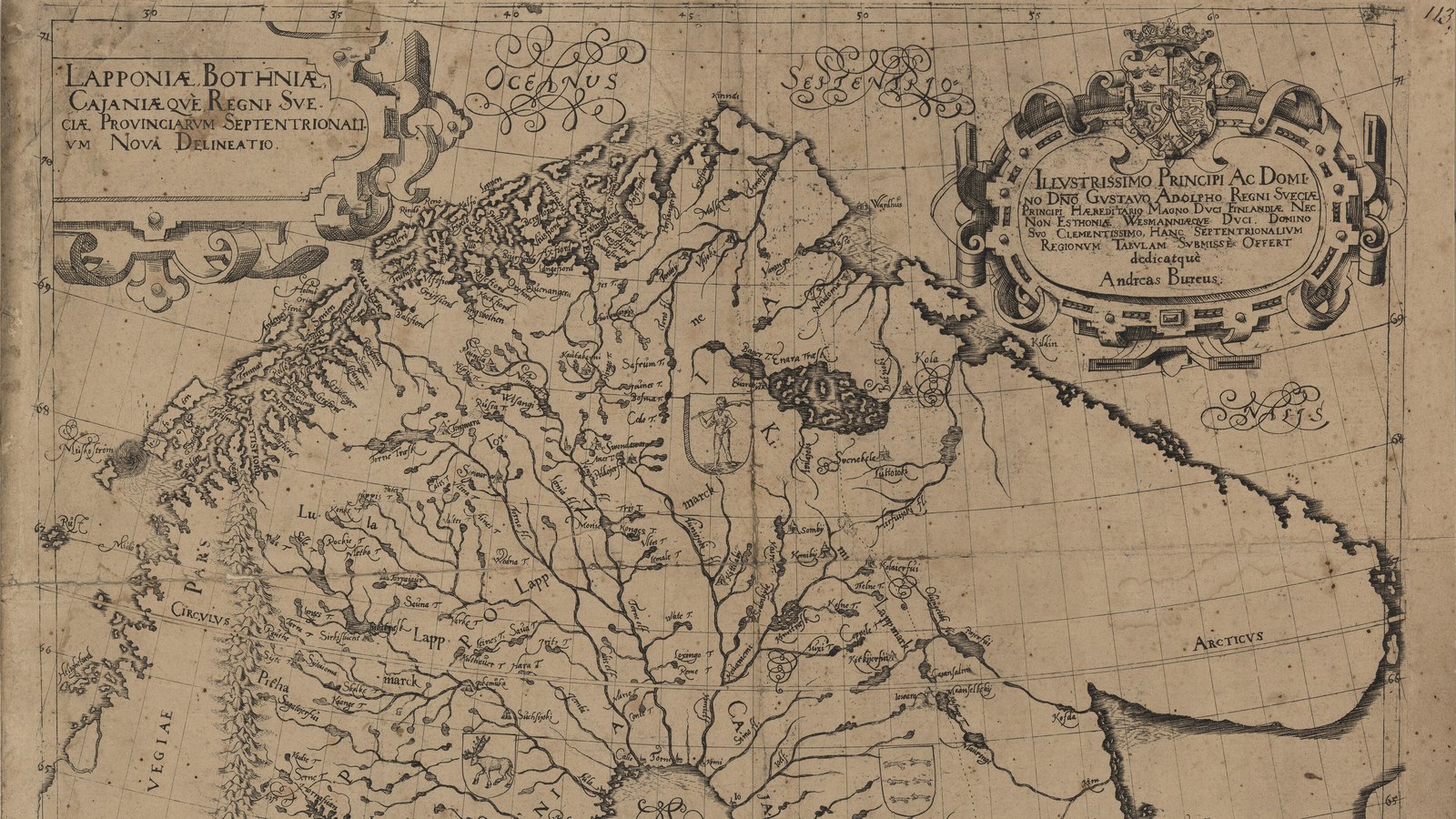
Image: Lapponia, map by Anders Bure, 1611; Uppsala University Library, CC0, Wikimedia Commons. Cropped to 16:9. The 1326 treaty concerns Sámi tribute in this country; it does not draw the line on the map.
Source consulted: Treaty of Novgorod (1326). Treaty text: GVNP: Treaty charter of Novgorod with Norway, 3 June 1326.











0 Comments
No comments on this article yet. Be the first!