


On 11 December 1973, in Prague, the Federal Republic of Germany and the Czechoslovak Socialist Republic sign the Treaty on Mutual Relations. The signatories are Willy Brandt and Walter Scheel, and Lubomír Štrougal and Bohuslav Chňoupek. It is not the Moscow Treaty of 12 August 1970 and not the Warsaw Treaty of 7 December 1970.
The preamble recognizes that the Munich Agreement of 29 September 1938 was imposed on the Czechoslovak Republic by the National Socialist regime under the threat of force. The parties intend to put an end to the disastrous past in their relations, especially in connection with the Second World War, and to create lasting foundations for good-neighbourly relations on the basis of the purposes and principles of the United Nations Charter. The authentic texts are German and Czech, in duplicate.
Article I deems the Munich Agreement void with regard to their mutual relations. Article II leaves unaffected the legal effects on natural or legal persons of the law applied between 30 September 1938 and 9 May 1945, except measures which both parties deem void because they are incompatible with the fundamental principles of justice. The Treaty does not affect the nationality of living or deceased persons under either legal system, and does not constitute a legal basis for material claims by Czechoslovakia or its persons.
Article III binds the parties, in their mutual relations and in matters of European and international security, to the purposes and principles of the Charter. Pursuant to Articles 1 and 2, they settle disputes exclusively by peaceful means and refrain from the threat or use of force. Article IV reaffirms the inviolability of their common frontier now and in the future and unrestricted respect for territorial integrity. They declare that they have no territorial claims against each other and will not assert any.
Article V provides for further steps toward the comprehensive development of mutual relations and for an extension of neighbourly co-operation in the economic and scientific fields, scientific and technological relations, culture, environmental protection, sport, transport and other sectors. Article VI subjects the Treaty to ratification; it enters into force on the date of the exchange of instruments of ratification, which is to take place in Bonn. The exchange later took place, and the Treaty entered into force on 19 July 1974.
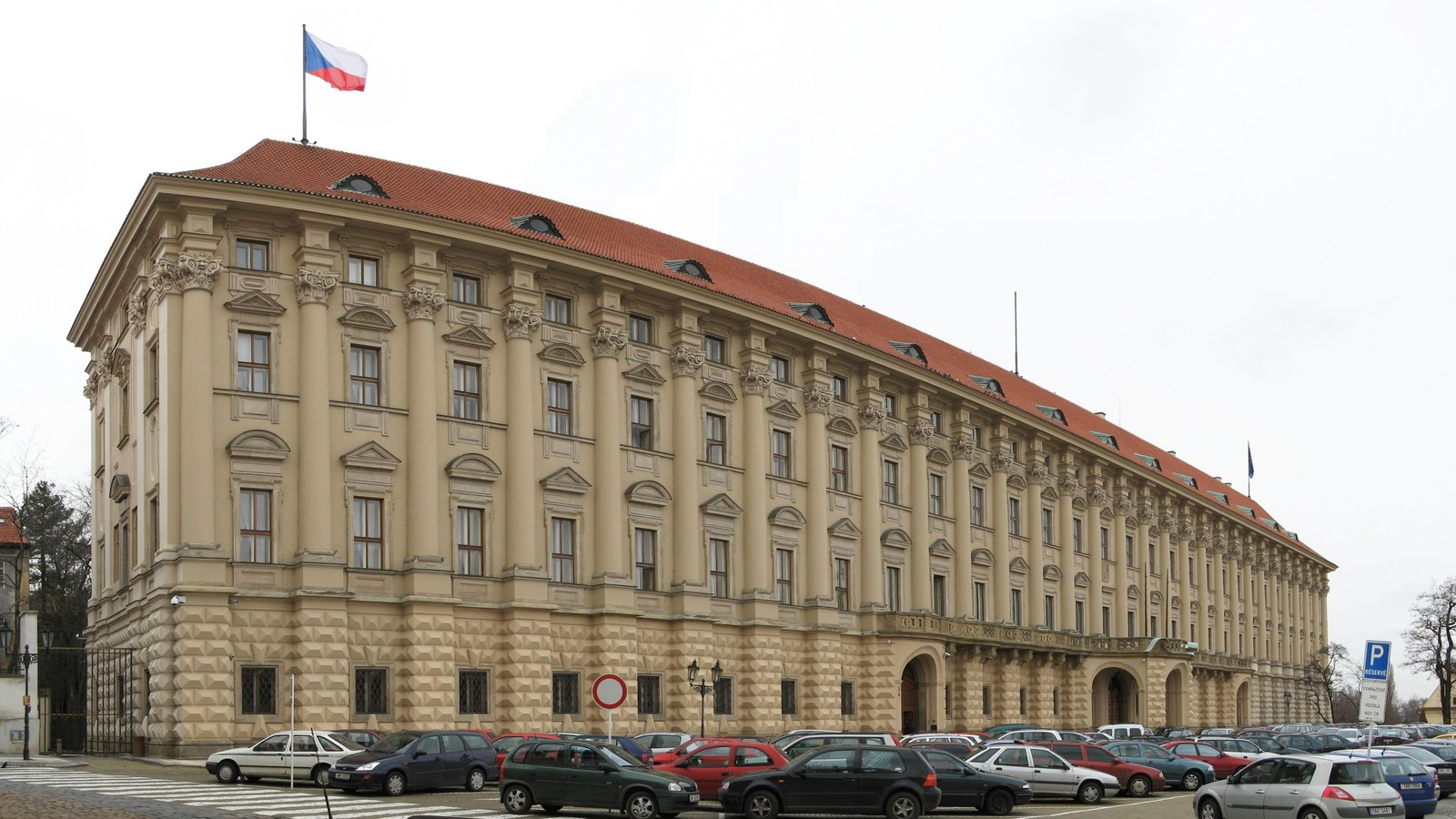
The same day, at the Černín Palace, a communiqué is issued on the establishment of diplomatic relations. A letter from Scheel to Chňoupek records the understanding that Article II, and later treaties arising from Article V, are to be extended to Berlin (West) in accordance with the Quadripartite Agreement of 3 September 1971.
It is not the Basic Treaty between the two German states of 21 December 1972 and not the Czech-German Declaration of 21 January 1997. It is not the Munich Agreement of 1938 as such, but the finding that it is void in relations between Bonn and Prague.
Image: Czernin Palace, Prague; Ludek, 12 February 2007; CC BY-SA 3.0, Wikimedia Commons. Cropped to 16:9.
Source consulted: Treaty of Prague (1973). Treaty text: Treaty of Mutual Relations between the Federal Republic of Germany and the Czechoslovak Socialist Republic, Prague, 11 December 1973.











0 Comments
No comments on this article yet. Be the first!