


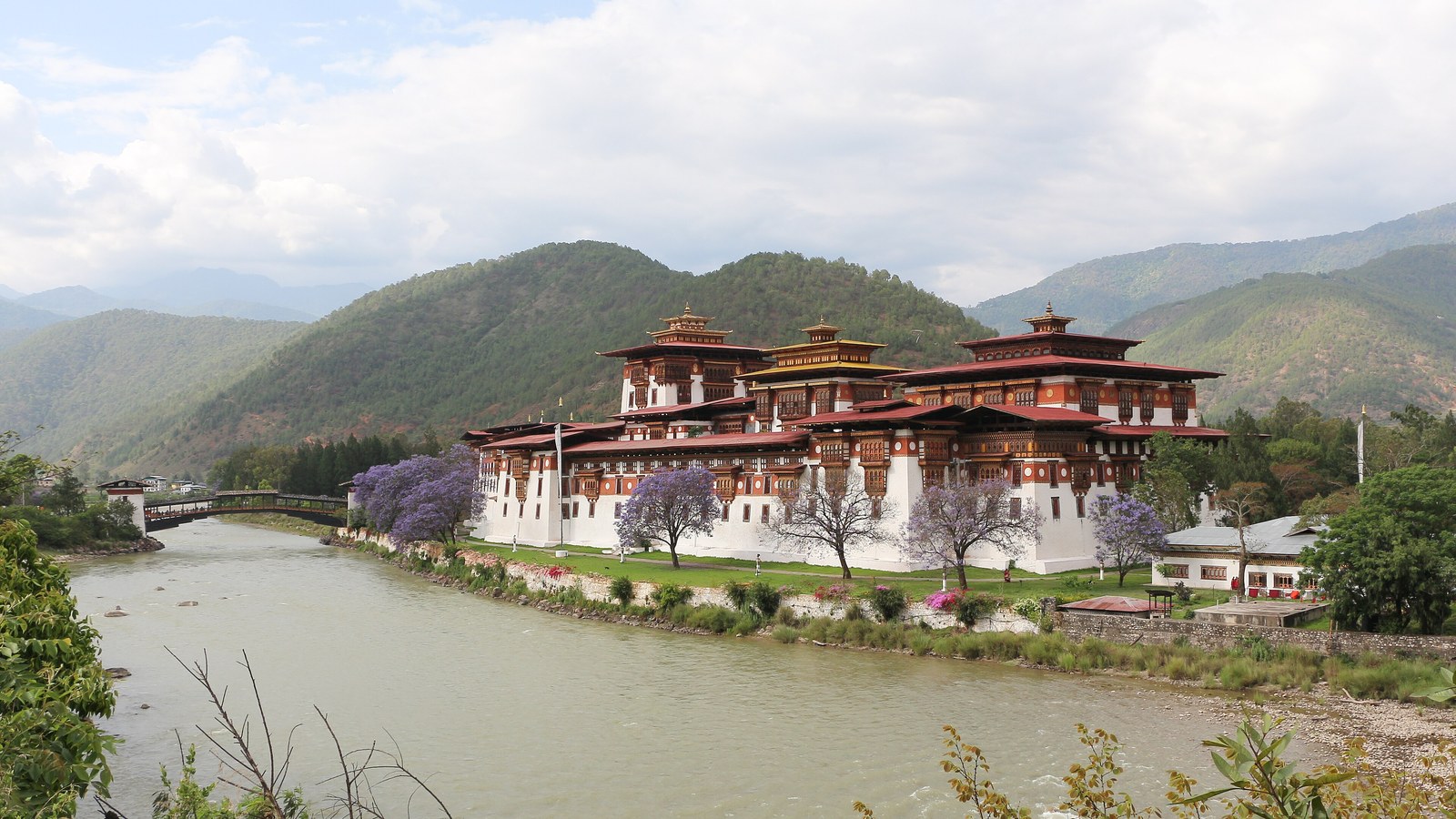
On 8 January 1910, at Punakha Dzong, Charles Alfred Bell, Political Officer in Sikkim, and the first Druk Gyalpo, Maharaja Ugyen Wangchuck, signed the treaty amending Articles IV and VIII of the Treaty of Sinchula of 11 November 1865. Bell acted under full powers from the Viceroy, Gilbert Elliot-Murray-Kynynmound, Earl of Minto. The instrument is in quadruplicate. The corresponding Bhutanese date is the 27th day of the 11th month of the Earth-Bird (Sa-ja) year. The language of the instrument is English.
It is not a stand-alone treaty: the rest of Sinchula remains in force by reference. After the Duar War of 1864–1865, Sinchula had ceded the Assam and Bengal Duars and Dewangiri in return for an annual subsidy of 50,000 rupees.
The addition to Article IV: the British Government increased the annual allowance from 50,000 to 100,000 rupees, with effect from 10 January 1910. Revised Article VIII: the British Government undertakes to exercise no interference in the internal administration of Bhutan; on its part the Bhutanese Government agrees to be guided by the advice of the British Government in regard to its external relations. Disputes with or complaints against the Maharajas of Sikkim and Cooch Behar are referred to British arbitration, which settles them as justice may require and insists upon observance of the decision. This is not a protectorate handbook: the official formula is advice, not annexation.
On the instrument: the seals of Bell, the Dharma Raja, the Maharaja, the Tatsang Lamas, the Penlops of Tongsa, Paro and Taka, the Jongpens of Thimphu, Punakha and Wangdue Phodrang, the Zhung Dronyer and the Deb Zimpon. Minto ratified the treaty in Council at Fort William on 24 March 1910. Secretary: S. H. Butler, Foreign Department.
Ugyen Wangchuck had been elected monarch in December 1907, after consolidating power as Penlop of Tongsa. Aitchison, Volume XIV (1929), No. IX, summarises: the allowance rose to one lakh, and Bhutan’s external relations were placed under the control of the British Government.
Wikipedia’s infobox puts “Effective” on the date from which the increased stipend ran; British ratification is the Fort William act. “Expiration 1947” is a shorthand: Indian independence ended British suzerainty; the relationship was recast by the Indo-Bhutan Treaty of 8 August 1949 and again in February 2007. Present-day borders are not set out here.
Punakha Dzong, the place of signature. Wikimedia Commons, free licence.
For context: Treaty of Punakha. The text: A Collection of Treaties, Engagements and Sanads, Vol. XIV.











0 Comments
No comments on this article yet. Be the first!