


On 12 November 1920, at Villa Spinola in Rapallo, Italy and the Kingdom of Serbs, Croats and Slovenes signed the treaty that cuts the Adriatic frontier after the war. For Italy, Giovanni Giolitti, Carlo Sforza and Ivanoe Bonomi sign; for Belgrade, Milenko Vesnić, Ante Trumbić and Kosta Stojanović. The text is in Italian and Serbo-Croatian; if they differ, Italian is authentic, “the language known by all the plenipotentiaries”. The League of Nations publishes it in the Treaty Series, vol. 18, pp. 397–403.
The talks, at Santa Margherita Ligure, run from 9 to 11 November. Sforza asks for Istria and Snežnik (Monte Nevoso) and leaves Dalmatia, except Zara. The 1915 Treaty of London had promised Italy the Dalmatian shore; in Paris, Wilson held against enforcing it. Prince Regent Alexander wants an agreement with Italy. Trumbić, a Croat, leads the bargaining so that the Serbs should not appear to cede Croat and Slovene land.
Article 1 draws the line from Mt Pec (1511), common to the three Italy–Austria–SHS frontiers, over Jalovec and Triglav, along the Isonzo–Sava watershed, to the Free State of Fiume. Italy takes Trieste, Pula, Gorizia and Istria. Article 2 recognises Zara, with Borgo Erizzo, Cerno, Boccagnazzo and a strip of Diclo. Article 3 gives Italy Cherso, Lussin, Lagosta, Pelagosa and the reefs of those judicial areas. The other islands of the former monarchy remain with the SHS.
Article 4 recognises the State of Fiume as “completely free and independent”, to be respected “in perpetuity”: the city’s corpus separatum plus a strip of Istria to Preluca, so that it has a land border with Italy. Sušak, across the Rječina, stays with the SHS. Article 5 sends delimitation commissions; on disagreement, the President of the Swiss Confederation decides. Article 6 requires, within two months, a conference of experts on economic relations.
Article 7 keeps Italian concessions in Dalmatia up to 12 November 1920, gives Italians of the former Empire a year to opt for Italian nationality without leaving their homes, and recognises Italian degrees. About half a million Slovenes and Croats fall under Italian sovereignty. D’Annunzio condemns the treaty on 17 November; the Italian navy drives him from Fiume at Bloody Christmas. The Treaty of Rome, 1924, annexes the city to Italy.
In Belgrade, Slovenes and Croats see a national loss. In Rome, the surrender of Dalmatia feeds the myth of the mutilated victory. Zara remains a semi-enclave; Split takes its regional role. The port of Fiume loses its hinterland.
The Hungarian institute FOROST keeps the League of Nations Treaty Series text: Treaty between the Kingdom of Italy and the Kingdom of the Serbs, Croats and Slovenes signed at Rapallo, November 12, 1920.
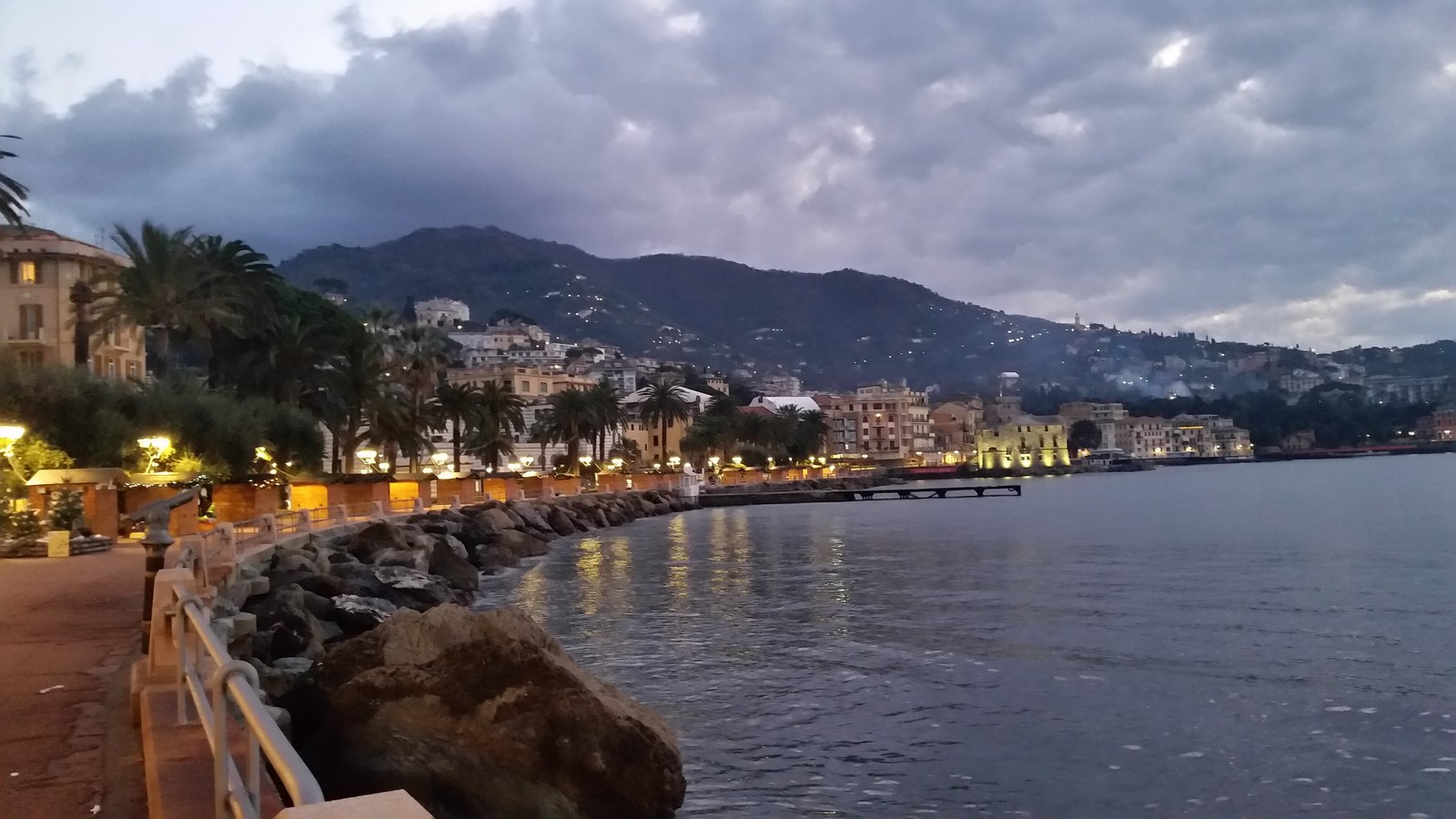
Image: Obibon, Rapallo, Liguria, 2017, CC BY-SA 4.0, Wikimedia Commons. Cropped to 16:9.
Source consulted: Treaty of Rapallo (1920). Treaty text: Treaty between the Kingdom of Italy and the Kingdom of the Serbs, Croats and Slovenes signed at Rapallo, November 12, 1920.











0 Comments
No comments on this article yet. Be the first!