


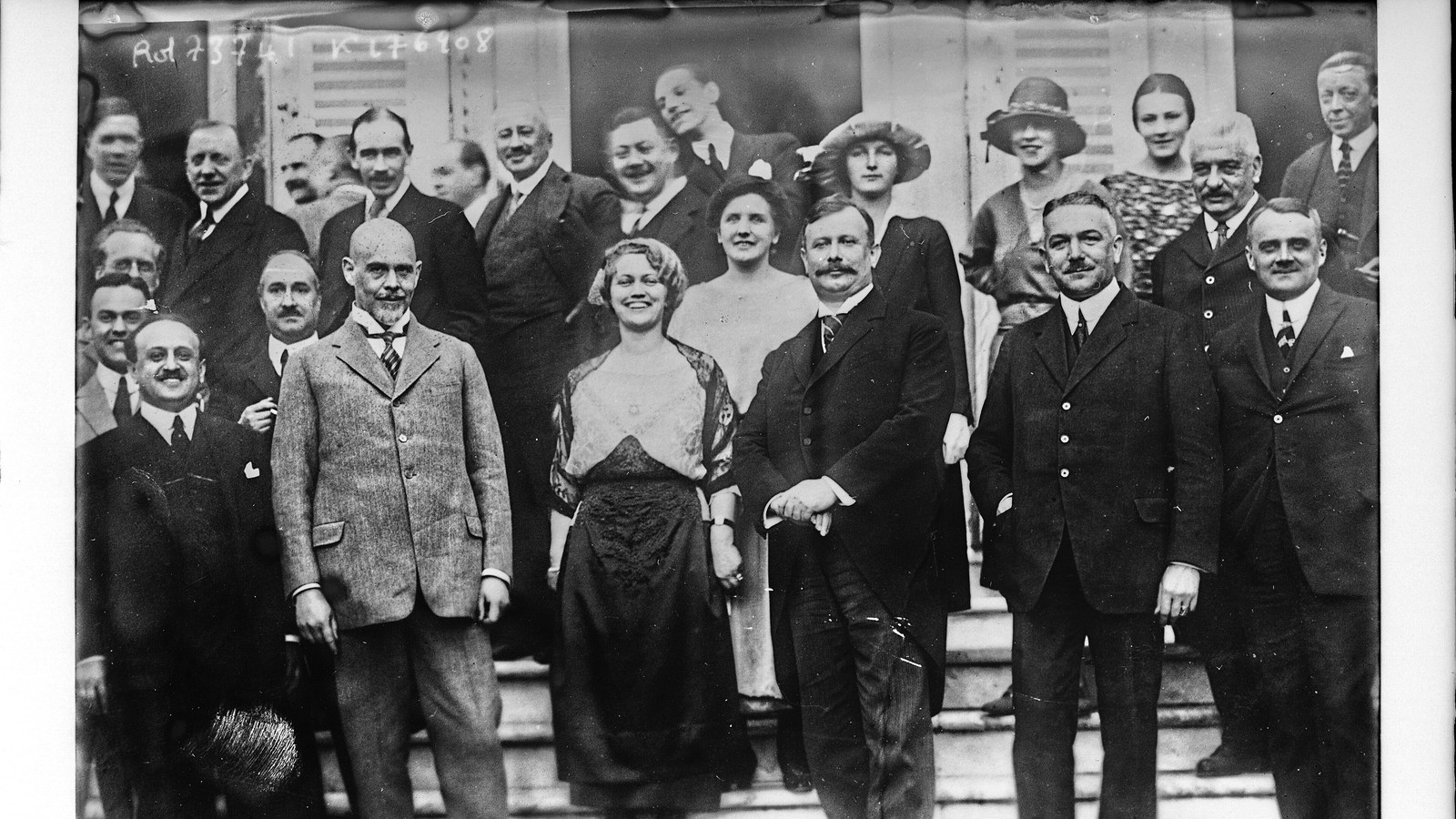
At Genoa, in April 1922, thirty-four states came to talk of debts and reparations. Poincaré’s France wanted Germany to pay Russia, and Russia, with that money, the tsarist debts. The United States did not come. Germany and Soviet Russia, both isolated after Versailles and Brest-Litovsk, left the hall. The treaty, six articles, was signed on 16 April 1922, at Rapallo. For the Reich: Walther Rathenau, foreign minister. For the RSFSR: Georgy Chicherin, people’s commissar. The original, in duplicate. Ratifications, in Berlin, on 31 January 1923; registration with the League of Nations, on 19 September.
Article I closes the war accounts: each party waives war expenditure and damages, military and civilian, including requisitions and exceptional measures. Public and private legal relations, and the fate of captured merchant ships, are settled on reciprocity. Prisoner costs fall; the Reich does not claim for the Red Army interned in Germany; Moscow does not reclaim the proceeds of army stores sold there.
Article II: Germany waives claims born of Soviet laws and measures against Germans and the Reich, on one condition: that Russia does not pay similar compensation to a third party. Article III: diplomatic and consular relations at once; admission of consuls, by a separate agreement. Article IV: the status of nationals and commercial relations, on a most-favoured-nation footing; exception: facilities the RSFSR grants a Soviet republic or a state of the former Russian Empire.
Article V: goodwill toward both countries’ economic needs; if a fundamental international settlement comes, the parties consult first. The Reich will support arrangements by private firms. Article VI: 1(b) and 4 enter into force on ratification; the rest, at once. The published text has no military clause. Secret co-operation, already under way, gained diplomatic cover: flying and tank schools on Russian soil, contrary to Versailles. The Berlin supplement, 5 November 1922, extends the treaty to Ukraine, Belarus, Georgia, Azerbaijan, Armenia and the Far Eastern Republic.
The news broke the Genoa conference. Lloyd George and Poincaré denounced it. For Moscow and Berlin, an exit from isolation; the “spirit of Rapallo” held, reaffirmed by the Treaty of Berlin in 1926. Rathenau was killed on 24 June 1922. The cover is the German delegation at Genoa, with Rathenau in the front row; the signing photograph is too small on Commons. This is not the 1920 Treaty of Rapallo, between Italy and Yugoslavia.
Sources: Treaty of Rapallo (1922); Avalon Project, German-Russian Agreement; April 16, 1922 (Treaty of Rapallo).











0 Comments
No comments on this article yet. Be the first!