


In Saint Petersburg on 5 May 1762 (24 April in the Julian calendar), Chancellor Mikhail Vorontsov, for Peter III, and Colonel, aide-de-camp and chamberlain Bernhard Wilhelm Baron von der Goltz, for Frederick II, signed, after producing their full powers, a treaty of peace and friendship, with the seals of their arms. The act is made in the name of the most holy and indivisible Trinity. Ratifications are to be exchanged in the same city within six weeks of signature.
Article One proclaims inviolable peace and perfect sincere friendship between the Emperor of all the Russias, his heirs and all his States, and the King of Prussia, his heirs and all his States: neither High Contracting Party shall commit or permit any hostility, secretly or publicly, directly or indirectly. Article Two states that the aim is only rest for the provinces and subjects, without prejudice to the interests of others; the Emperor reserves his good offices for peace in Europe and in Germany and derogates from past engagements that would force him to remain an auxiliary or a principal belligerent against Prussia. Article Three: the King of Prussia shall not contract alliances contrary to the interests of the Russian Empire and of the Emperor’s hereditary lands in Germany, and shall likewise derogate from any past engagements opposed to this article.
Article Four grants a general amnesty and eternal oblivion of everything that passed in the war. Article Five records that hostilities have already ceased by the armistice of Stargard of 5/16 March and requires the peace to be published as soon as the ratifications are exchanged. Article Six, as a proof of disinterestedness, restores to the King of Prussia, within two months of signature, all the lands, towns, places and fortresses occupied by Russian arms; from the day of restitution the exercise of sovereignty belongs to him, as before the war, by the most sacred and hereditary titles.
Article Seven: the King of Sweden has declared, through Baron Posse, the same intention of peace with Prussia; the Emperor promises his good offices, and the King of Prussia every facility. The first separate article allows, if European circumstances prevent withdrawal at the term, Russian troops to remain after the two months, with quarters as Prussian troops had before the war, not beyond simple lodging, with magazines and hospitals, free passage of supplies on a passport of the Imperial War College, wagons at the Prussian ordinance price, forage from contractors, the value of coin left as it stands, and disputes judged by commissioners in equal number. The second separate article provides, immediately after signature, work on a treaty of alliance for the security of their possessions; both separate articles have the same force as if inserted word for word in the principal treaty.
The treaty is not the Russo-Prussian alliance of June 1762, left unratified, and not the Peace of Hubertusburg of 1763 among Prussia, Austria and Saxony. It is not the Treaty of Saint Petersburg of 1746 with Austria. The signatories are not Peter III and Frederick II in person: the instrument names Vorontsov and Goltz.
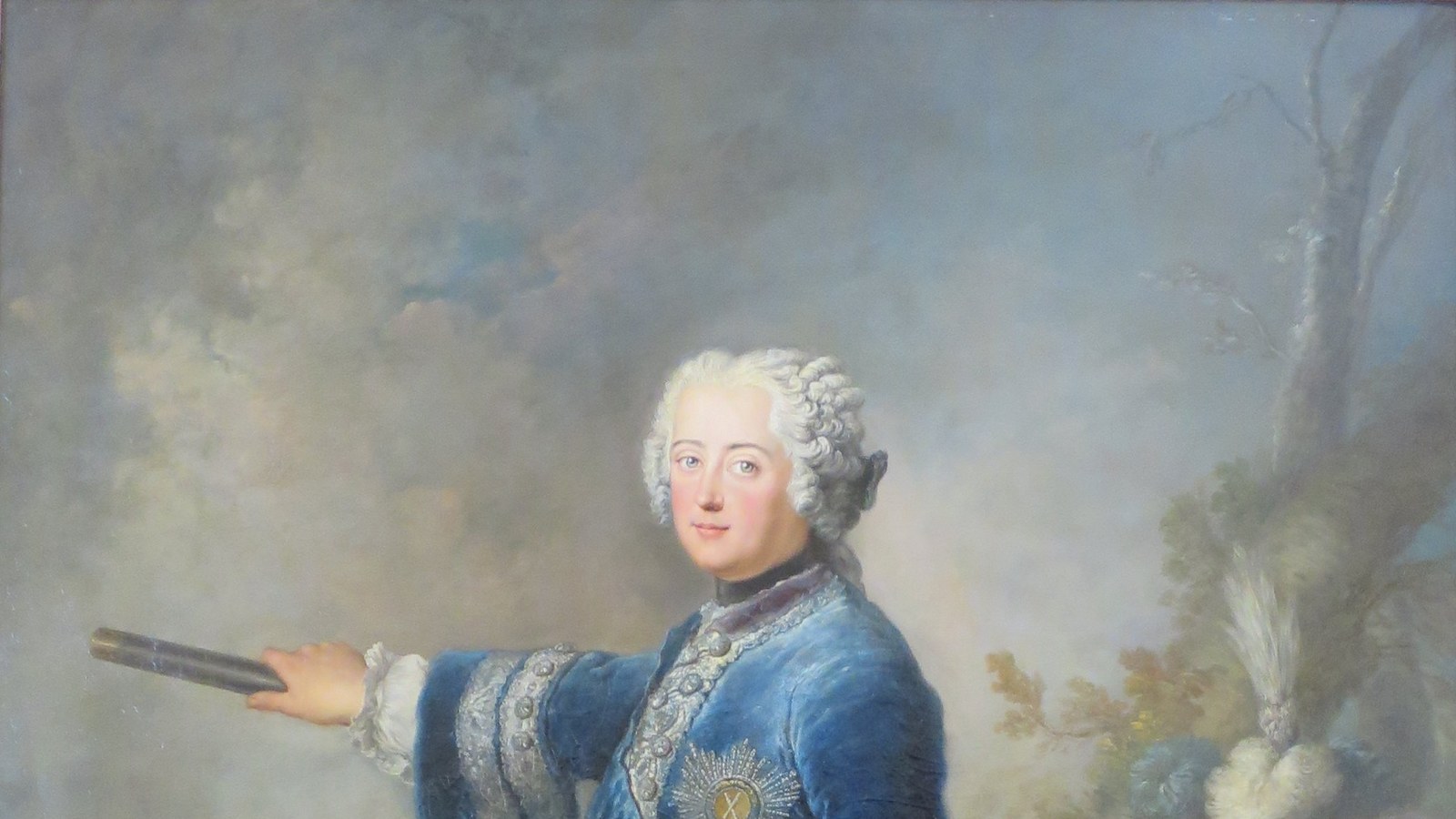
Image: Frederick II of Prussia; Antoine Pesne, Hermitage, public domain, Wikimedia Commons. Cropped to 16:9.
Source consulted: Treaty of Saint Petersburg (1762). Treaty text: PSZRI: Treaty of peace of Saint Petersburg, 24 April 1762.











0 Comments
No comments on this article yet. Be the first!