


Utrecht in 1713 recognised Philip V as the first Bourbon of Spain, at the price of Naples, Sicily, Milan and Sardinia; Gibraltar and Mahón stayed British. Elisabeth Farnese, his second wife from 1714, wanted an Italian inheritance for her own sons, not for the children of the first marriage. The reoccupation of Sardinia (1717) and the landing in Sicily (1718) opened the War of the Quadruple Alliance; Cape Passaro isolated the Spanish force. At The Hague in 1720 Spain gave up Italy in return for a guarantee that Parma would pass to the Infante Don Carlos. George I promised to raise in Parliament, “at a favourable opportunity”, the return of Gibraltar. Lack of progress and commercial friction led to the Anglo-Spanish War of 1727–1729: a failed Spanish siege of Gibraltar, a British attack on Porto Bello, restrictions on merchants in Cádiz.
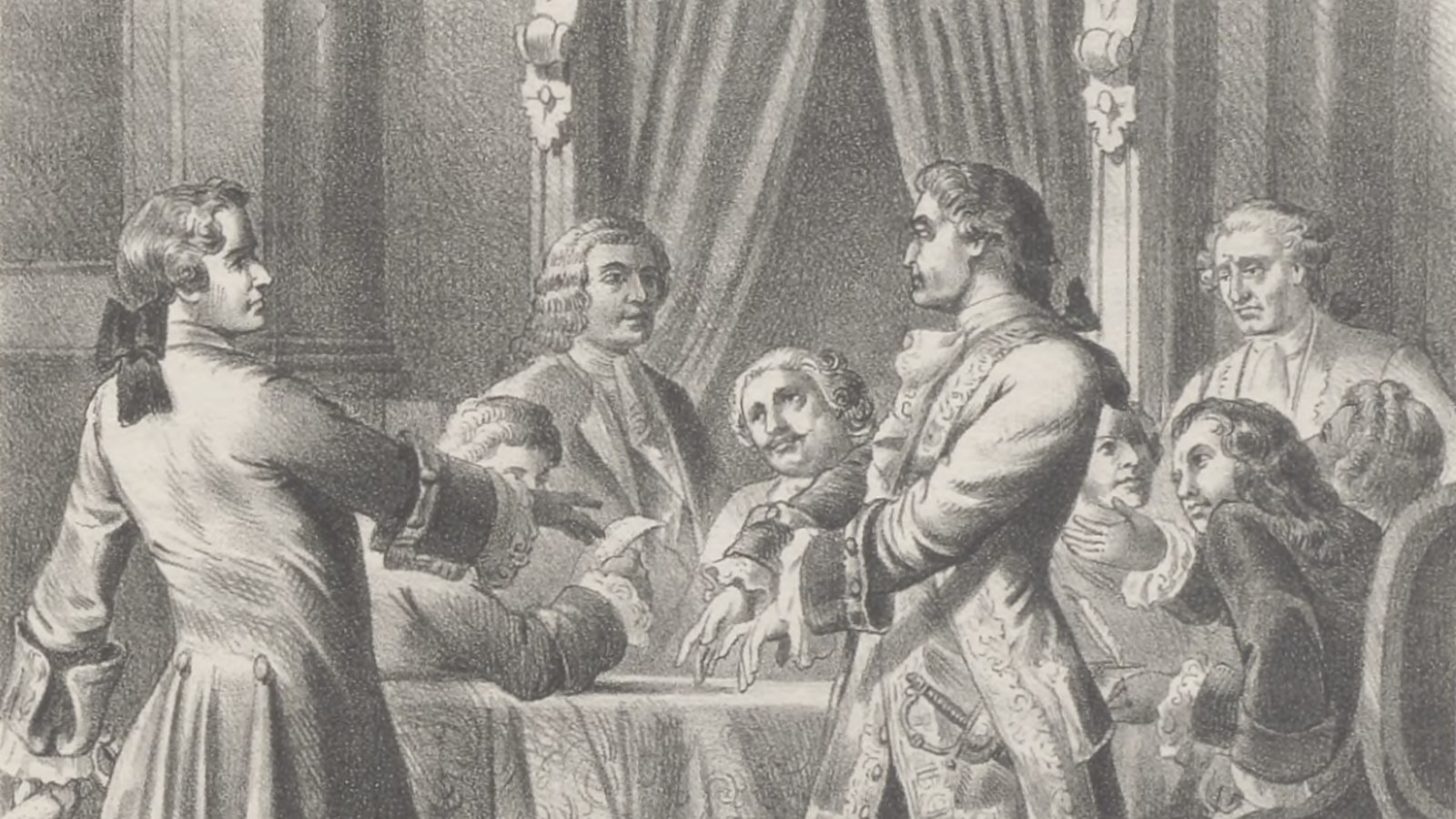
The Treaty of Peace, Union, Friendship and Mutual Defence between the crowns of Great Britain, France and Spain was concluded on 9 November 1729 at Seville. William Stanhope and Benjamin Keene signed for George II, the Marquis de Brancas for Louis XV, the Marquis de la Paz (Juan Bautista de Orendáin) and José Patiño for Philip V. The terms had come from the Congress of Soissons, called by Cardinal Fleury; Spain had been kept out of the room and received the text ready-made. The States General of the United Provinces joined on 29 November.
Article I restores peace and renews earlier treaties in the points not derogated from. Article II is a defensive alliance: 8,000 foot and 4,000 horse from each crown, or the equivalent in ships and money (1,000 foot = 10,000 Dutch florins a month). Article III declares that Philip never meant to let stand, from the 1725 Vienna treaties with the Emperor, any privilege contrary to the commerce confirmed here. Article IV puts English and French trade, in Europe and the Indies, back on the footing of the treaties before 1725; Separate Articles I–II specify Utrecht, Madrid 1667 and 1715, the Asiento of 1713 and the declaration of 1716, plus restitution of the ship Prince Frederick.
Article V requires reparation for acts of hostility after the preliminaries: in Europe at once, in America from the arrival of orders at Cartagena on 22 June 1728. Articles VI–VIII name Anglo-Spanish (and Franco-Spanish) commissaries who, within three years at most, are to judge prizes, commercial abuses, American limits and Spanish claims over ships taken by the English fleet in 1718.
Articles IX–XIII are the Italian core. Six thousand men in Philip’s pay enter Leghorn, Portoferraio, Parma and Piacenza, to secure the Infante Don Carlos’s immediate succession to Tuscany, Parma and Piacenza. The garrisons swear to the present possessors in everything that does not touch the right of succession; they are not to meddle in political, economic or civil government. Once the Infante is quietly in possession, troops that remain the father’s, not Carlos’s, are to be withdrawn. The three crowns declare themselves perpetual guarantors of the possession.
The treaty did not touch Gibraltar or Mahón. The commercial commission made little headway. The Anglo-French alliance lapsed in 1731; London then signed Vienna with Austria, but still co-operated with Paris so that Don Carlos entered Parma in 1732. In the War of the Polish Succession he exchanged the duchies for the Kingdom of Naples; in 1759 he became Charles III of Spain. British Georgia (1732) and the Family Compact of 1733 reopened the tension, down to the War of Jenkins’ Ear (1739) and the War of the Austrian Succession.
Sources: Treaty of Seville; Wikisource, Treaty of Seville.











0 Comments
No comments on this article yet. Be the first!