


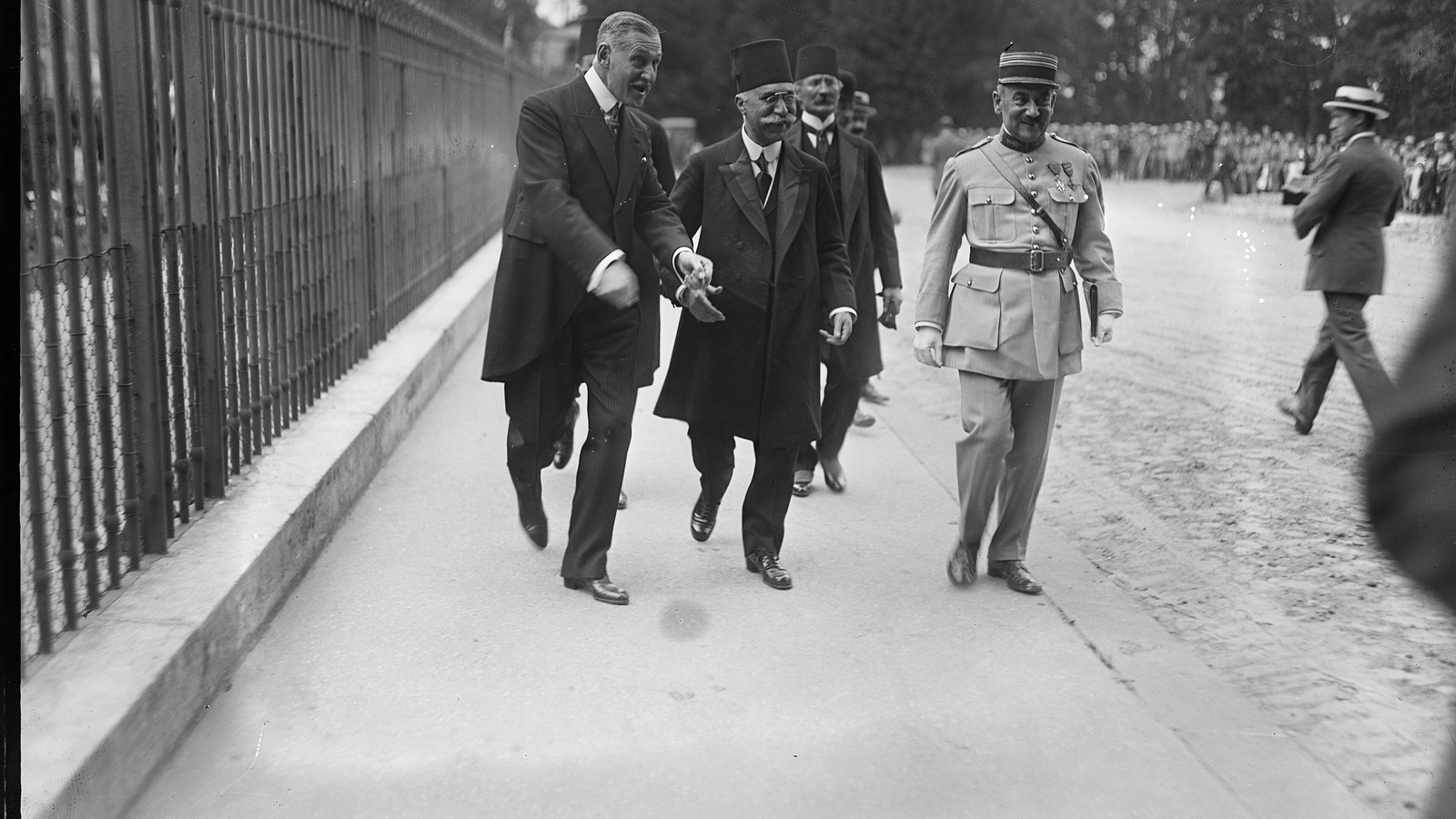
The Allied Powers and the Ottoman Empire signed at the Manufacture nationale de Sèvres, on 10 August 1920, the Treaty of Peace with Turkey: 433 articles, Cmd. 964, French as the principal language. Ottoman signatories: Hâdî Pasha, Rıza Tevfik Bölükbaşı, Reşat Halis. Damat Ferid Pasha, Grand Vizier, led the talks but does not sign. For the principal Allies: George Dixon Grahame (British Empire), Alexandre Millerand (France), Count Lelio Longare (Italy). The United States is not a party. The Grand National Assembly at Ankara, led by Mustafa Kemal, stripped the signatories of citizenship. Condition of entry into force: Ottoman ratification and that of the four principal Powers. It never came.
Article 36: the capital remains at Constantinople, with an Allied reservation if Turkey fails to observe the treaty. Article 37: the Straits (Dardanelles, Marmara, Bosphorus) open, in peace and in war, to vessels and aircraft, without distinction of flag; no blockade, no act of hostility except by decision of the Council of the League of Nations. The Commission of the Straits controls them. Eastern Thrace, to the Chatalja line, plus Imbros and Tenedos, to Greece.
Articles 65–83, Smyrna: Turkish sovereignty, the Ottoman flag on a fort; Greek administration; a local parliament; after five years the majority may ask the Council of the League for incorporation in Greece, with a possible plebiscite; Turkey then renounces. Articles 88–89: Armenia recognised as a free and independent State; the frontier in the vilayets of Erzerum, Trebizond, Van and Bitlis, plus access to the sea, to the arbitration of the President of the United States. Articles 62–64: local autonomy for the predominantly Kurdish areas east of the Euphrates; within a year a majority may ask the Council of the League for independence; voluntary adhesion of the Kurds of the Mosul vilayet.
Articles 152 and 155: the armed force, gendarmerie and special elements, not more than 50,000 men; the Sultan’s bodyguard, Article 154, another 700. No air force. Article 230: handover of persons responsible for the massacres during the war, on Ottoman territory as of 1 August 1914. Finances under an Allied commission; the capitulations restored. On the same day, a British–French–Italian tripartite agreement on concessions, a separate instrument.
This is not Mudros 1918, not San Remo (April, the mandates), not Ankara 1921 and not Lausanne, 24 July 1923, which supersedes Sèvres. The Chanak crisis, 1922; the Armistice of Mudanya. The cover is the Ottoman delegation arrived at Sèvres to sign.
Sources: Treaty of Sèvres; Treaty of Sèvres (Wikisource; Cmd. 964).











0 Comments
No comments on this article yet. Be the first!