


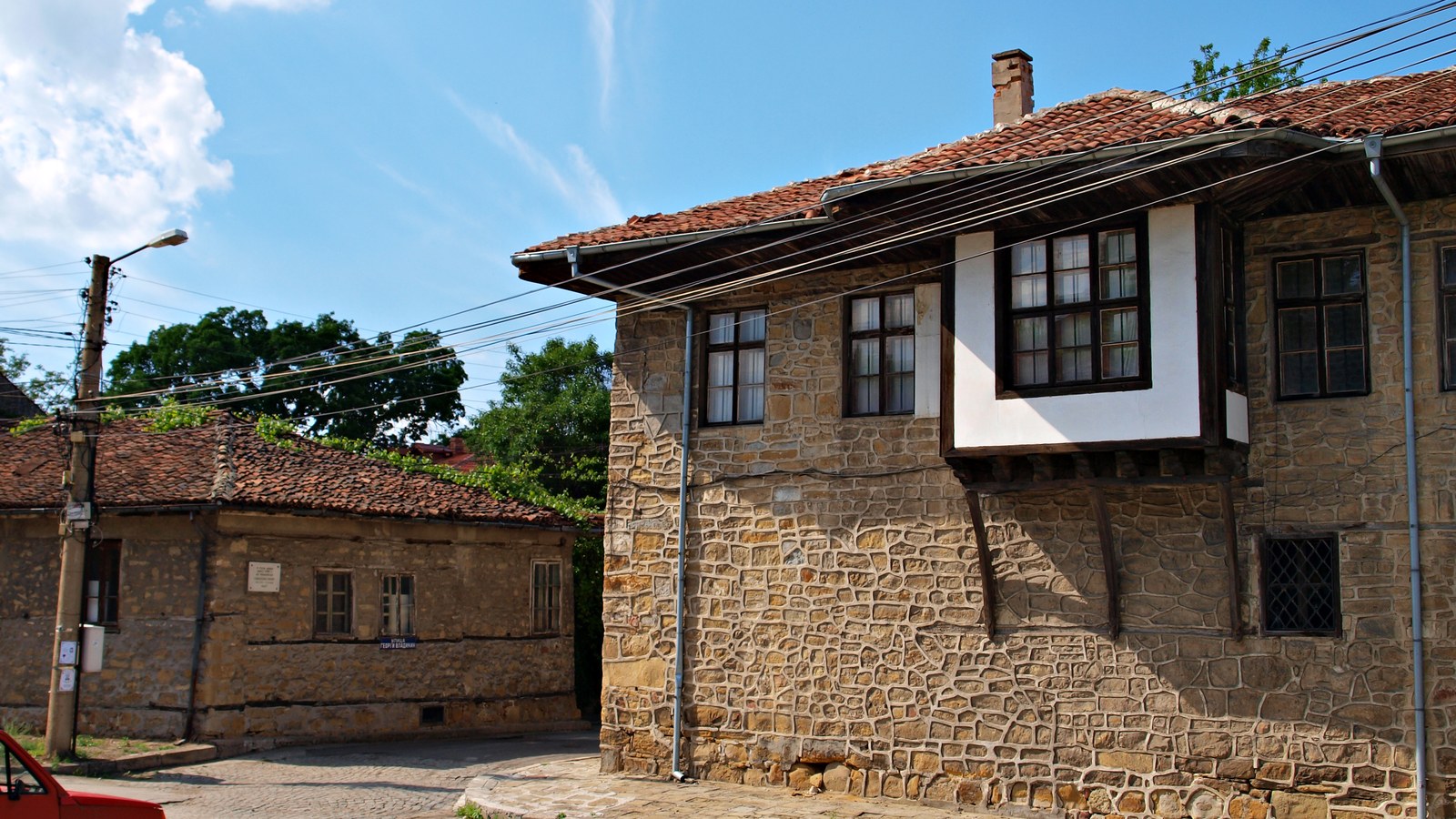
On 4 August 1791, at Sistova (today Svishtov), Peter Philipp Herbert, Baron von Rathkeal, signed for Leopold II the treaty of peace with the Sublime Porte. For Selim III the reis-efendi Abdullah Berri, İbrahim İsmet Bey and Mehmed Dürrî Efendi set their seals. The authentic texts are French and Turkish.
Marquis Girolamo Lucchesini, Sir Robert Murray Keith and Baron Reinier van Haeften guaranteed the act for Prussia, Great Britain and the Netherlands. The signing was delayed three days after the articles were settled, because of the copies and the alternation of titles between the two mediating kings.
Article I proclaims a perpetual peace, renews friendship and grants a full amnesty to subjects, in particular the inhabitants of Montenegro, Bosnia, Serbia, Moldavia and Wallachia. Article II places the peace on a strict status quo and confirms the Treaty of Belgrade of 18 September 1739, the acts of 1739–1747, the cession of Bukovina of 7 May 1775 and the delimitation of 12 May 1776.
Article III renews the sened of 8 August 1783, the commercial act of 24 February 1784 and the firman of 4 December 1786. Article IV: the Emperor restores to the Porte all conquered lands; fortresses, castles and palankas are to be handed back in the state in which they were taken, with the artillery found there.
Article V leaves Khotyn, with its raia, in Austrian hands until the Russo-Ottoman war is concluded. Article VI: evacuation of Wallachia and of five Moldavian districts within thirty days of the exchange of ratifications, the remaining territories within two months. Article XIV provides for the exchange within forty days.
Articles VII–XIII regulate the surrender of Austrian prisoners without ransom, amnesty for those who changed allegiance in the war, the resumption of trade, order on the frontier, the passage of German merchants and recognition of the Emperor as protector of the Catholic religion in the Ottoman Empire, plus the sending of ministers of the second rank.
On the same day, without the delegates of the three mediating courts, a separate convention of seven articles was signed. Austria retains Old Orșova with its district, without fortifications, and a Croatian strip to the Una, including Cetingrad, Drežnik, Lapac and Srb.
This is distinct from the Giurgiu armistice of September 1790, from the Peace of Jassy of 9 January 1792, which closed the Russo-Ottoman war, and from the Declaration of Pillnitz of 27 August. It is not the Treaty of Belgrade of 1739, which Article II confirms.
Image: the house on the left, in Svishtov, where the 1791 peace was signed; Todor Bozhinov, 3 May 2015; CC BY-SA 4.0, Wikimedia Commons. Cropped to 16:9.
Source consulted: Treaty of Sistova. Treaty text: Traité de paix, Sistow, 4 August 1791.











0 Comments
No comments on this article yet. Be the first!