


On 7 September 1625, at Southampton, commissioners of Charles I and ambassadors of the States General concluded an offensive and defensive league against the King of Spain. The French text, preserved in the Dutch ratification, states the aim: to attack him “in all his realms, lands, subjects and rights, in all places, on this side and beyond the line, by sea and by land.” The line, Davenport notes, is the equator.
The United Provinces sent François van Aerssen, lord of Sommelsdijk, Albert Joachimi and Rienck van Burmania. England’s commissioners included the lord treasurer James Ley, the Duke of Buckingham, the earls of Pembroke, Carlisle and Holland, Conway, Brooke, Naunton and Richard Weston. The alliance of 5/15 June 1624 had been defensive only; after James I’s death Charles wanted the Palatinate of his brother-in-law Frederick restored.
Article 2 holds the league so long as Spain makes war on the liberty of the United Provinces or occupies the Palatinate, and for at least fifteen years. In that term, no peace, truce or suspension of arms without common consent. Article 4 invites other princes; the Hague treaty of 29 November/9 December brought in Denmark, a different instrument from that of 2 August, which added twenty Dutch ships to an English fleet of eighty-two.
Article 6 requires yearly fleets to cut European commerce, the trade of the two Indies and the return of the treasure fleets. Article 7 stations English ships at Lisbon, Sanlúcar and Cadiz; the Dutch keep the Flemish ports shut. Article 8: for a great common fleet the States contribute a quarter of the ships the king arms. Command belongs to the English admiral; the Dutch keep a second banner and a voice in the council of war.
Prizes taken by the common fleet are shared by the number and burthen of ships actually furnished. Land conquests remain the king’s; the Dutch share only in movable booty. Article 20, which Davenport calls the first treaty definition of contraband, makes good prize munitions of food and war, ships, arms, sails, cordage, gold, silver, copper, iron, lead and the like, carried into Spain or to its adherents, together with the ships and men that carry them.
The States General ratified on 14 December; Charles on 20/30 December. This is not the defensive alliance of 1624, not the Hague fleet convention of 2 August and not Madrid of 1630, by which Charles left the league. The common fleet did not sail for Cadiz until October and failed. Davenport links the maritime articles to later trade between New Amsterdam and Plymouth.
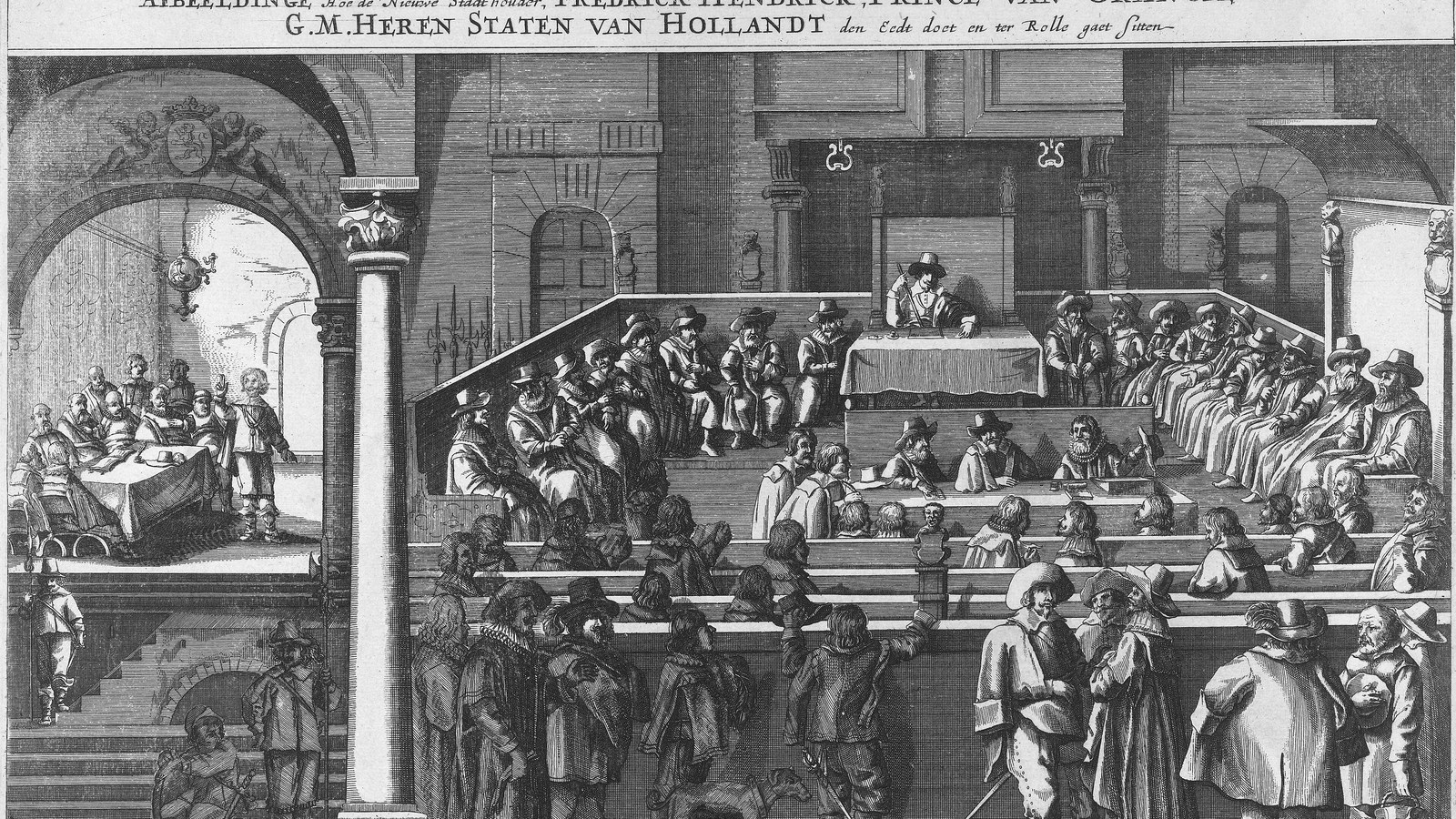
The States of Holland, 1625, the year of the league. Print: Wikimedia Commons, public domain.
For context: Treaty of Southampton. The French text, Doc. 33: European Treaties bearing on the History of the United States (Davenport).











0 Comments
No comments on this article yet. Be the first!