


On 13 February 1462, in London, the commissioners of Edward IV and the envoys of John of Islay, earl of Ross and Lord of the Isles, seal the indenture. For England: Laurence, bishop of Durham; John, earl of Worcester; Robert Botill, prior of St John of Jerusalem in England; John, Lord Wenlock; Robert Stillington, keeper of the privy seal. For the Isles: Ranald of the Isles and Duncan, archdeacon of the Isles. The king’s commission: Westminster, 8 February, the first year. The king’s ratification, on 17 March, has seen and understood the articles and confirms them. The text, in the Foedera, also prints the indenture in English.
Scotland, in the minority of James III, had taken the Lancastrian side: Henry VI is with Mary of Guelders. The banished Douglas and his brother, John Douglas of Balvenie, carry Edward’s proposals west. At Ardtornish, on 19 October 1461, the highland lords give their assent. The indenture is not a peace with the Scottish crown. It is an agreement of liege homage and of conquest.
First: at Whitsuntide next, John, earl of Ross, Donald Balagh and John, son and heir of Donald, with all the subjects, men, people and inhabitants of the earldom of Ross and of the Isles, shall become liegemen and subjects of Edward IV, his heirs and successors, kings of England, of the line of Lionel, son of Edward III. Sworn homage, at Whitsuntide or after. The heirs remain liegemen for ever. True obedience, as a liege owes his sovereign.
Next: after Whitsuntide, upon convenient warning, diligent service with all their might in such wars as Edward shall move in Scotland, against the Scots in Ireland, or against the king’s enemies and rebels. They remain in the wars as long as it shall please him. Fees, from the same Whitsuntide, for life: the earl, a hundred marks sterling a year in peace, two hundred pounds in war, after the rate of the time occupied; Donald, twenty pounds in peace, forty in war; Donald’s son, ten and twenty. Good and sufficient payment, peace and war.
If Scotland, or the more part thereof, is conquered, subdued and brought to the obedience of Edward, by the assistance of the earl of Ross, of Donald and of James, earl of Douglas, the peace fees cease. The same earls and Donald shall have all the possessions beyond the Scottish sea, that is north of the Firth of Forth, departed equally between them; each to hold his part of the crown of England, by homage and fealty, for evermore. If, by the aid of Douglas, the realm is so conquered, he shall enjoy his own possessions on this side of the Scottish sea, between the Forth and England, likewise of the crown of England, by homage.
If, after Whitsuntide and before the conquest, the king takes truce or abstinence of war with the king of Scots, the earl of Ross, Donald and John, their men, lands, including the Isle of Arran, shall be comprised within the truce, unless before Whitsuntide the earl signifies that he will in no wise be comprised. The articles, under their seals of arms, to the king or the chancellor of England before 1 July; in return, like letters of ratification under the Great Seal.
In 1462–1463 the earl of Ross strikes crown lands near Inverness. In 1464 the Scottish crown draws near Edward by the treaty of York. In 1475 the English court reveals the 1462 league; John is summoned for treason, leagues and bands with Edward and the banished Douglas. He quitclaims Ross, with Skye. This is not the Treaty of Westminster of 1674, which ends the Third Anglo-Dutch War.
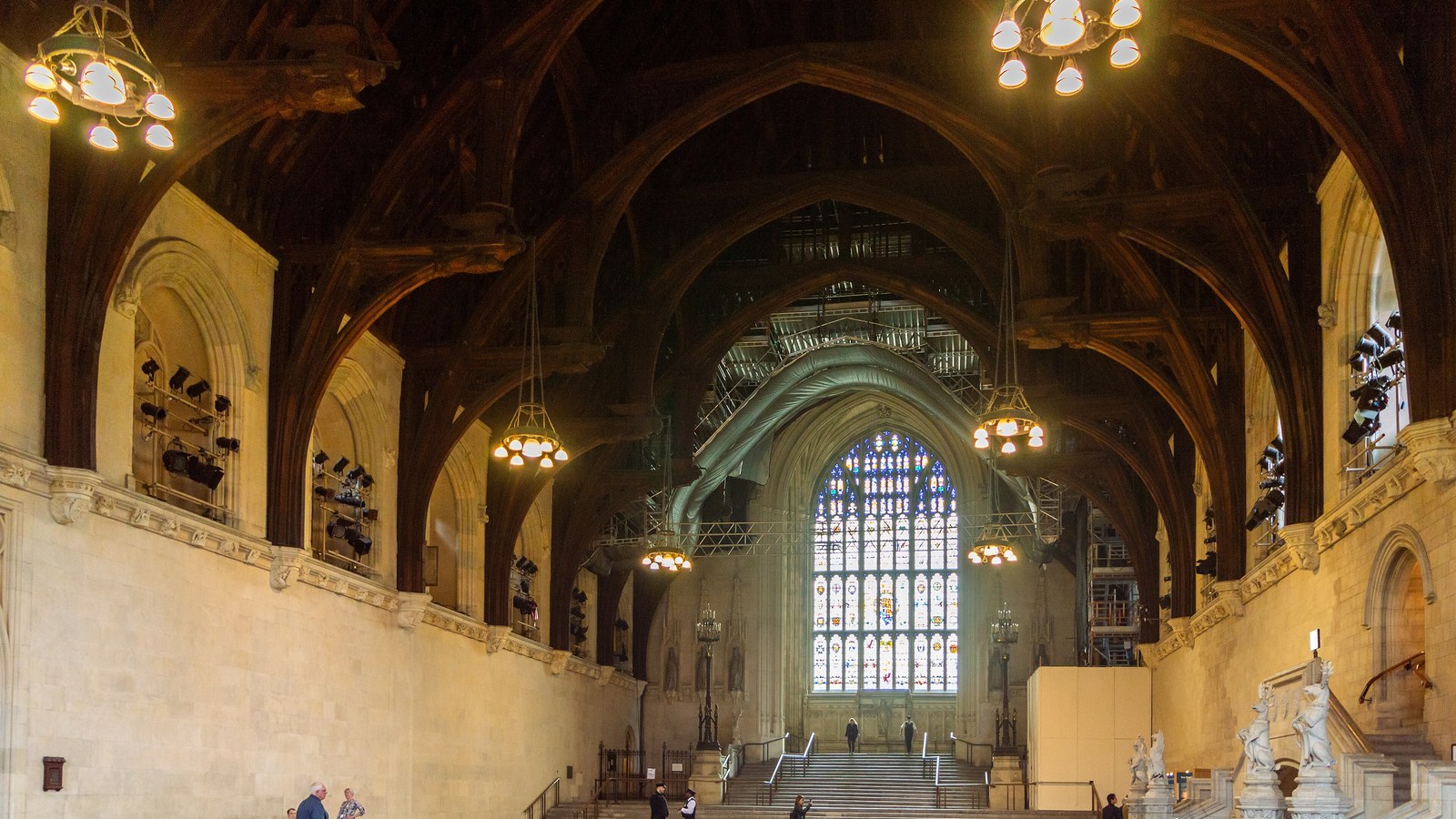
Image: Tristan Surtel, interior of Westminster Hall, Palace of Westminster, 23 April 2018, CC BY-SA 4.0, Wikimedia Commons. Cropped to 16:9. Not the 1462 sealing.
Source consulted: Treaty of Westminster (1462). Treaty text: Rymer, Foedera, vol. 11, pp. 484–486 (indenture at London, 13 February 1462).











0 Comments
No comments on this article yet. Be the first!