


On 19 February 1674, New Style, at Westminster, peace is concluded between Charles II of England and the States General of the United Provinces. The date on the act: 9/19 February 1673/4. For England: Heneage Finch, keeper of the Great Seal; Thomas, viscount Latimer, high treasurer; James, duke of Monmouth; James, duke of Ormonde; Henry, earl of Arlington; Henry Coventry. For the Dutch, with full powers: Pedro Fernández de Jovar y Velasco, marquis of Fresno, ambassador extraordinary of Spain. The English ratification: 10/20 February. The exchange, 24 February / 6 March. Publication at The Hague within 24 hours of the exchange. The Third Anglo-Dutch War closes. This is not the Westminster indenture of 1462.
The war, from 1672, with France alongside. Parliament refuses further supply. Spain threatens. The States, on 24 January / 3 February, lay a draft on the table; the fourth article of that draft offers the restitution of New Netherland, without hoping for anything in exchange. Temple and Fresno agree in three days. The text, in Davenport, from the copy of the English ratification in the Rijksarchief.
Article 1: from this day, a true, sincere and inviolable peace, union and amity, within and without Europe, in all territories. Article 2: immediately after promulgation, all acts of hostility shall cease; no writ, commission or instruction, public or private, to molest, attack or despoil the possessions, dominions or subjects of the other. Subjects everywhere shall behave peaceably and amicably.
Article 3, because of distances: after the twelve days next following publication, no hostility from the western limit of the Channel, the Soundings, to the Naze in Norway; after six weeks, from there as far as Tangier; after ten weeks, between Tangier and the Equator, Ocean or Mediterranean; after eight months, in any other part of the world. Whatever is done after those terms, under pretext of former commissions or letters of reprisal, shall be deemed illegal; the authors to make reparation, punished as violators of the public peace.
Article 6: whatsoever lands, islands, towns, ports, castles or forts have been or shall be taken by one party from the other, within Europe or elsewhere, from the time the late unhappy war broke out and before the terms for cessation, shall be restored to the former lord and proprietor in the same condition they shall be in when this peace is proclaimed. After that time, no plundering of the inhabitants, no demolition of fortresses, no carrying away of guns, powder or other military stores that belonged to the place when it was taken. New Netherland, retaken by the Dutch in 1673, returns to England. Surinam, taken by the Dutch in 1667, remains theirs, by Breda.
Article 7: the treaty of Breda, 1667, and the preceding treaties confirmed by it, are renewed, so far as they do not contradict the present treaty. Article 8: the marine treaty of The Hague, 1668, continues nine months, unless a later treaty provides otherwise; a new marine treaty, to the same commissioners as for the East Indies. Article 9: the regulation of trade, especially in the East Indies, to six commissioners a side, in London, within three months of publication; if they do not agree, arbitration by the Queen Regent of Spain, eleven commissioners, a majority, six months. Article 11: ratifications, by letters patent, signed, with great seals, within four weeks. Article 12: after the exchange, publication at The Hague within 24 hours.
The peace does not reach everywhere at once. On 14 March, in Ronas Voe, Shetland, Wapen van Rotterdam is taken by English ships. Monmouth’s brigade stays with the French army. New Netherland passes, for good, to the English crown.
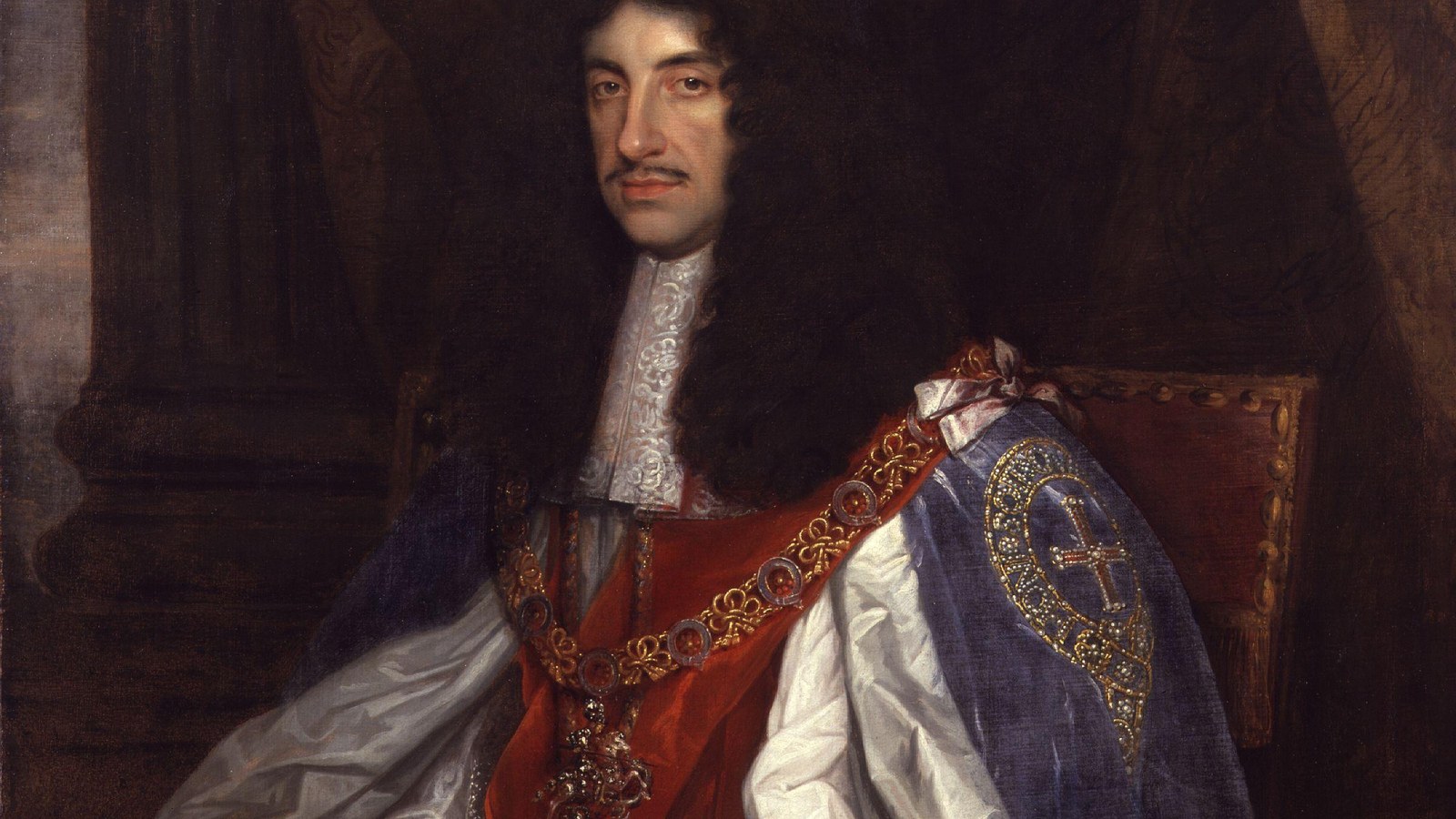
Image: John Michael Wright (or studio), Charles II in Garter robes, c. 1660–1665, public domain, National Portrait Gallery / Wikimedia Commons. Cropped to 16:9. Not the 1674 signing.
Source consulted: Treaty of Westminster (1674). Treaty text: Davenport, European Treaties, vol. 2, no. 69 (Westminster, 9/19 February 1673/4).











0 Comments
No comments on this article yet. Be the first!