


In Tripoli, on 23 December 1976, the Government of the Republic of the Philippines and the Moro National Liberation Front sign the agreement on autonomy for Muslims in the southern Philippines, with the participation of the Quadripartite Ministerial Commission of the Organization of the Islamic Conference and the Secretary General of the Organization. The text, signed by Carmelo Z. Barbero, Nur Misuari, Ali Abdussalam Treki and Amadou Karim Gaye, is done in three original copies in the Arabic, English and French languages, all equal in legal power.
The first point establishes Autonomy in the Southern Philippines within the realm of the sovereignty and territorial integrity of the Republic of the Philippines. The second lists the thirteen areas of the autonomy: Basilan, Sultan Kudarat, Sulu, Lanao del Norte, Tawi-Tawi, Lanao del Sur, Zamboanga del Sur, Davao del Sur, Zamboanga del Norte, South Cotabato, North Cotabato, Palawan and Maguindanao.
The third point places foreign policy within the competence of the Central Government of the Philippines and national defence affairs with the Central Authority, provided that arrangements for the joining of MNLF forces with the Philippine Armed Forces be discussed later. In the areas of the autonomy, the Muslims shall have the right to set up their own Courts which implement the Islamic Shariah laws; they shall be represented in all Courts including the Supreme Court, upon recommendation from the authorities of the Autonomy and the Supreme Court, by presidential decrees of appointment.
Authorities of the autonomy shall have the right to set up schools, colleges and universities, the relationship with the general education system of the State to be discussed later. The Muslims shall have their own administrative system, and the authorities of the autonomy their own economic and financial system, each in relation to the corresponding central system, likewise to be discussed later. They shall enjoy representation and participation in the Central Government and in all other organs of the State, the number and ways of participation to be fixed later.
Special Regional Security Forces are to be set up in the area of the Autonomy, their relationship with the central security forces to be fixed later. A Legislative Assembly, constituted through a direct election, and an Executive Council, appointed by the Assembly, shall be formed by decree of the President of the Republic. Mines and mineral resources fall within the competence of the Central Government, and a reasonable percentage of the revenues shall be fixed for the benefit of the areas of the autonomy.
A Mixed Committee of representatives of the Central Government and of the Front shall meet in Tripoli from 5 February to a date not later than 3 March 1977 to study in detail the points left for discussion. A cease-fire shall be declared immediately after signature, provided that it come into effect not later than 20 January 1977; a Joint Committee, with the help of the Organization of the Islamic Conference represented by the Quadripartite Ministerial Commission, shall supervise the cease-fire, a complete amnesty in the areas of the autonomy, the release of political prisoners related to the events in the South, the return of refugees and the guarantee of freedom of movements and meetings.
A joint meeting in Jeddah during the first week of March 1977 is to initial what the Mixed Committee has concluded. The final agreement concerning the setting up of the autonomy is to be signed in Manila among the Government, the Front and the Islamic Conference. Immediately after the Manila signature, a Provisional Government appointed by the President of the Philippines shall prepare elections for the Legislative Assembly and administer the areas until a Government is formed by the elected Assembly. The Government of the Philippines shall take all necessary constitutional processes for the implementation of the entire Agreement. The fourth point provides that this Agreement shall come into force with effect from the date of its signature. The text is not the 2006 Tripoli Agreement and not the 2014 Comprehensive Agreement on the Bangsamoro.
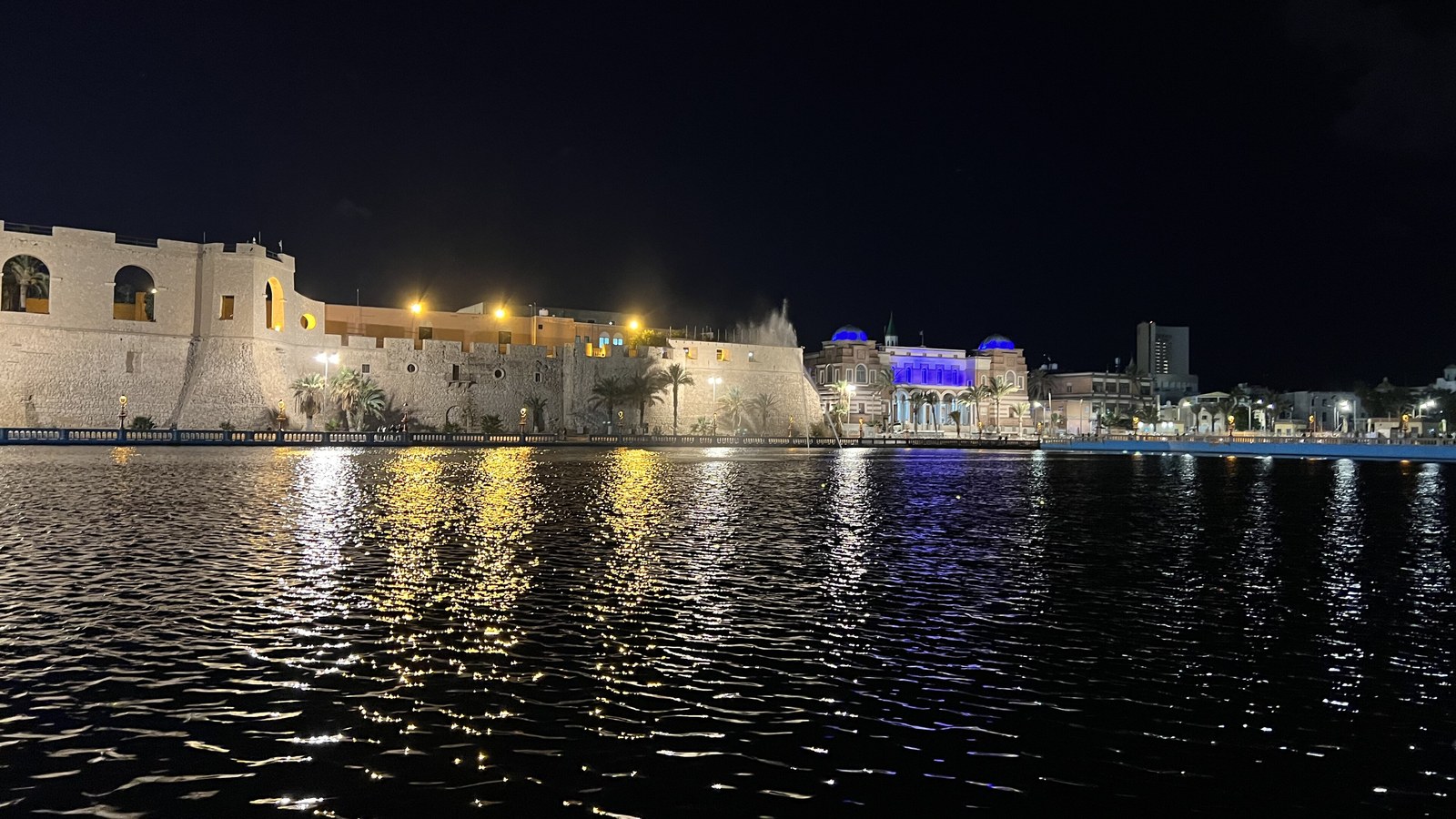
Image: Red Castle, Tripoli; Mohamed Tailamun, 23 December 2022; CC BY-SA 4.0, Wikimedia Commons. Cropped to 16:9.
Source consulted: 1976 Tripoli Agreement. Treaty text: The Tripoli Agreement, 23 December 1976.











0 Comments
No comments on this article yet. Be the first!