


On 12 January 1998, at United Nations Headquarters in New York, the International Convention for the Suppression of Terrorist Bombings was opened for signature. The text had been adopted by the General Assembly in resolution 52/164 on 15 December 1997, at the 72nd plenary meeting. Signature remains open to all States until 31 December 1999. Depositary: the Secretary-General. Authentic languages: Arabic, Chinese, English, French, Russian and Spanish.
Article 2(1): a person commits an offence who unlawfully and intentionally delivers, places, discharges or detonates an explosive or other lethal device in, into or against a place of public use, a State or government facility, a public transportation system or an infrastructure facility, with intent to cause death or serious bodily injury, or extensive destruction likely to result in major economic loss. Article 1 defines the terms legally, not technically. This is not a device handbook. Article 2(2)–(3): attempt, complicity, organising or directing, and intentional contribution by a group acting with a common purpose.
Article 3: the Convention does not apply where the offence is committed within a single State, the alleged offender and the victims are nationals of that State, the alleged offender is found there and no other State has a basis of jurisdiction under Article 6(1) or 6(2); articles 10 to 15 may still apply. Article 4: domestic criminalisation and penalties reflecting the gravity of the offences. Article 5: acts within the Convention’s scope, in particular those intended to provoke a state of terror, are under no circumstances justifiable by political, philosophical, ideological, racial, ethnic, religious or similar considerations.
Article 6: mandatory jurisdiction on territory, flag vessel or registered aircraft, and nationality; optional jurisdiction on the victim, a State facility abroad, a habitual-resident stateless person, an attempt to compel the State, or a government-operated aircraft; plus jurisdiction if the alleged offender is present and is not extradited. Article 8: aut dedere aut judicare, without exception. Article 11: the offences are not to be regarded as political for extradition or mutual legal assistance. Article 12: refusal if the request is made for the purpose of prosecuting on account of race, religion, nationality, ethnic origin or political opinion. Article 14: fair treatment and human-rights guarantees.
Article 15: cooperation in prevention — prohibiting illegal encouragement, organisation or financing, exchange of verified information, consultations on standards for marking explosives so as to identify origin after an event. This is not a detection handbook. Article 19(2): the activities of armed forces during an armed conflict, as understood under international humanitarian law, and those of a State’s military forces in the exercise of official duties governed by other rules of international law, are not governed by this Convention. Article 20: disputes not settled by negotiation go to arbitration and then to the International Court of Justice, with a permitted reservation.
Article 21: ratification, acceptance, approval or accession; instruments with the Secretary-General. Article 22(1): entry into force on the thirtieth day after deposit of the twenty-second instrument; that date was 23 May 2001. Wikipedia notes the first signatures on the opening day: Belgium, Canada, France, Russia, Sri Lanka, the United Kingdom and the United States.
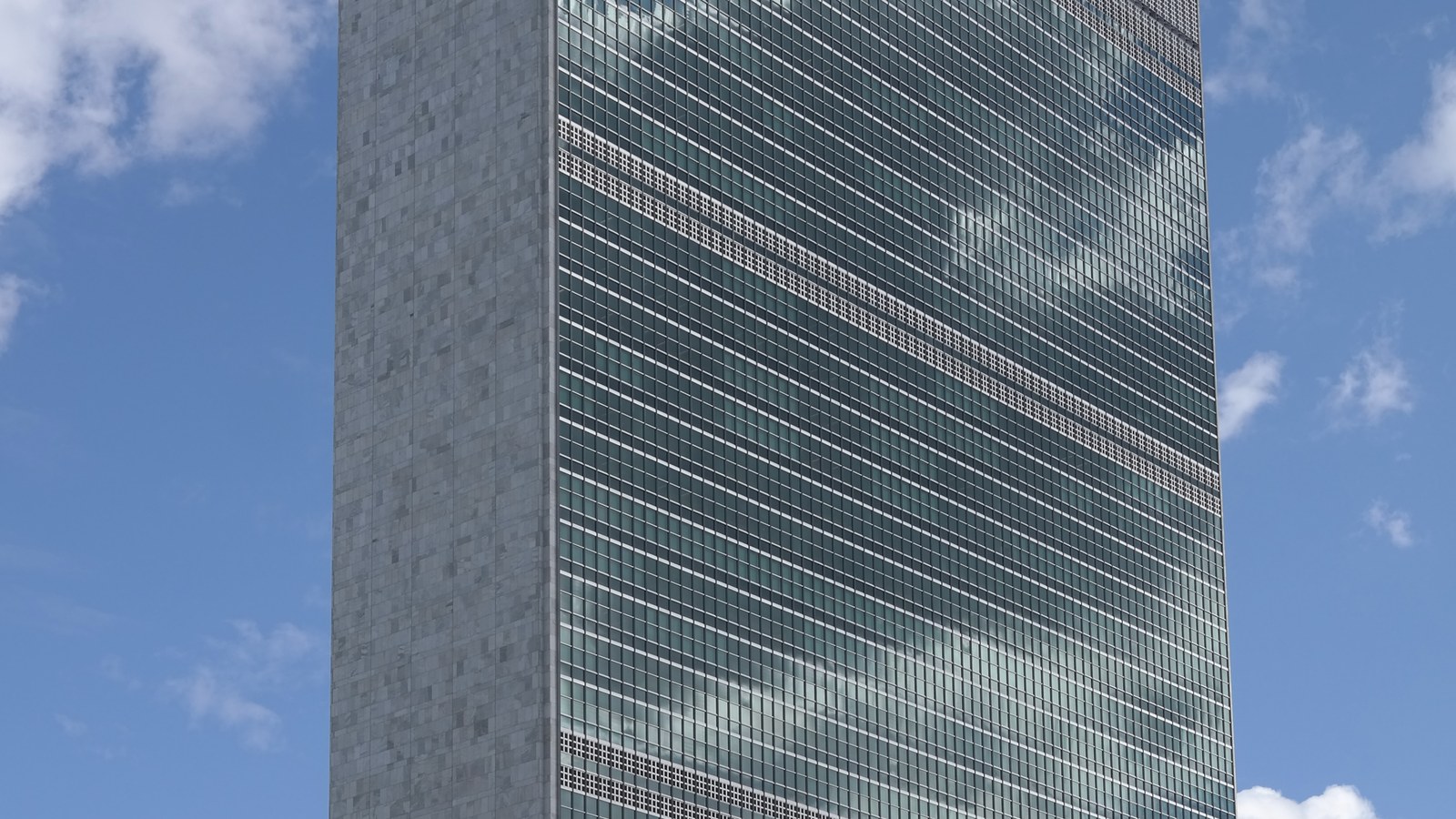
The United Nations Secretariat Building, New York, the place of opening for signature. Wikimedia Commons, free licence.
For context: Terrorist Bombings Convention. The text: International Convention for the Suppression of Terrorist Bombings.











0 Comments
No comments on this article yet. Be the first!