


On 22 November 2006, at Washington, District of Columbia, the United States of America and the Republic of Colombia signed the United States–Colombia Trade Promotion Agreement. English and Spanish, equally authentic. Signatories: Deputy United States Trade Representative John Veroneau and Colombian Minister of Trade, Industry and Tourism Jorge Humberto Botero. Article 23.4: the Agreement enters into force 60 days after the Parties exchange written notifications that they have completed their respective legal requirements, or on such other date as they may agree. Entry into force: 15 May 2012. Termination takes effect six months after written notification. It is not the Protocol of Amendment of 28 June 2007, and not CETA or USMCA.
The preamble: to strengthen the special bonds of friendship and co-operation and promote regional economic integration; broad-based economic development in order to reduce poverty and generate sustainable alternatives to drug-crop production; new employment opportunities and improved labor conditions; clear and mutually advantageous rules governing trade; a predictable legal and commercial framework for business and investment. Foreign investors are not hereby accorded greater substantive rights with respect to investment protections than domestic investors under domestic law where, as in the United States, those protections equal or exceed those set forth in the Agreement. Recognition of Article 226 of the Colombian Constitution (reciprocity) and of Articles 13 and 100 (equality of treatment). Protect, enhance and enforce basic workers rights; implement the Agreement in a manner consistent with environmental protection. Colombia is a member of the Andean Community; Decision 598 requires preservation of the Andean Legal System. Contribute to hemispheric integration and provide an impetus toward establishing the Free Trade Area of the Americas.
Article 1.1: the Parties establish a free trade area, consistent with Article XXIV of the GATT 1994 and Article V of the GATS. Article 1.2: they affirm their existing rights and obligations under the WTO Agreement. Article 2.2: national treatment to the goods of the other Party, with Article III of the GATT 1994 incorporated, mutatis mutandis. Article 2.3: no Party may increase any existing customs duty, or adopt any new customs duty, on an originating good, except as otherwise provided; each Party shall progressively eliminate its customs duties on originating goods in accordance with its Schedule to Annex 2.3. Paragraph 2 shall not prevent Colombia from granting identical or more favorable tariff treatment under the legal instruments of Andean integration, provided that the goods meet the rules of origin under those instruments.
Article 23.1: annexes, appendices and footnotes constitute an integral part. Article 23.2: amendments agreed and approved in accordance with each Party’s legal requirements. Article 23.5: accession, including in particular Latin American countries, on agreed terms. Chapters 17 (Labor) and 18 (Environment) form part of the Agreement signed that day.
DONE, at Washington, District of Columbia, in duplicate, this 22nd day of November, 2006.
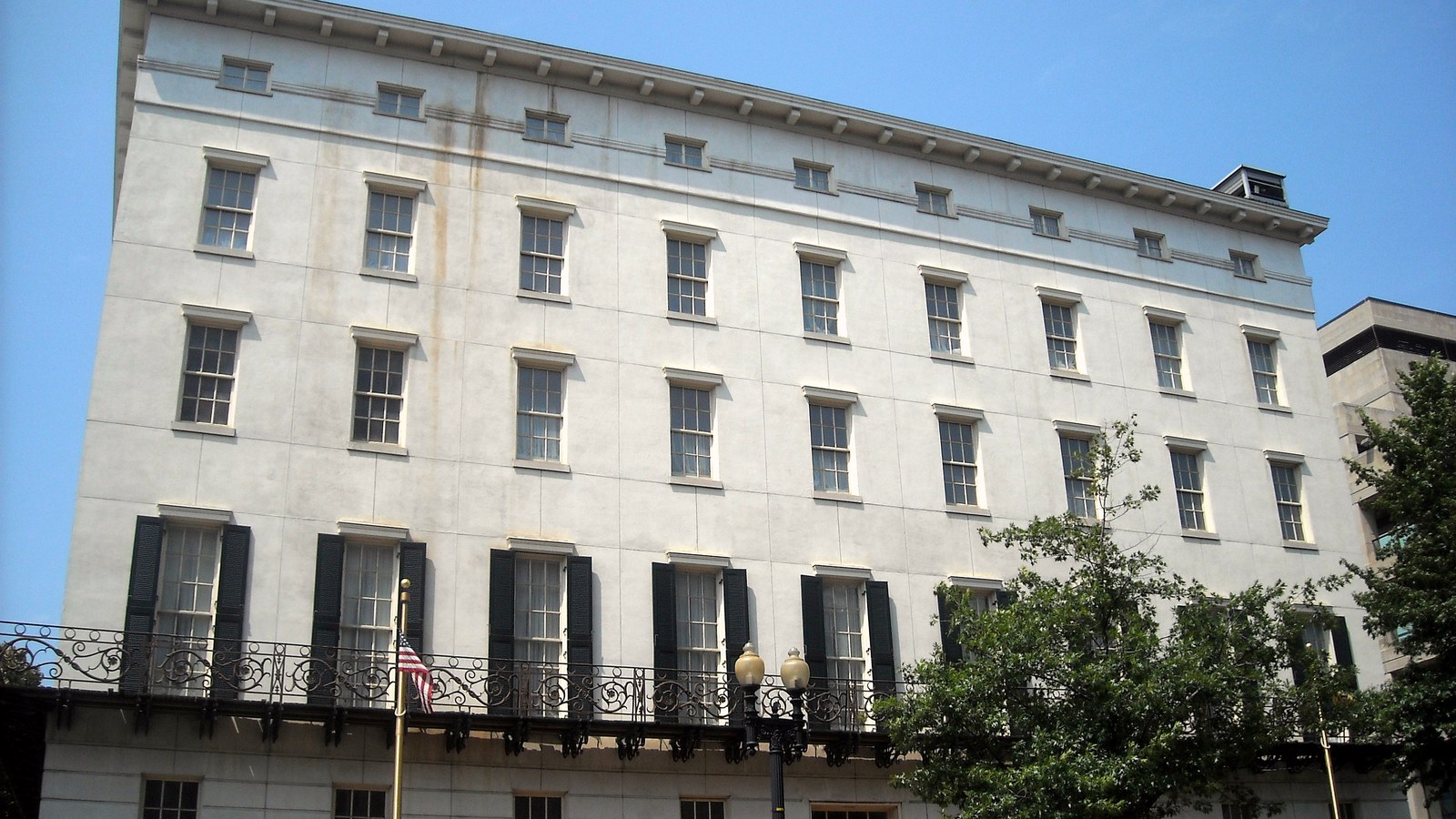
Winder Building, Washington. USTR headquarters, the city of signing, not the confirmed hall. Wikimedia Commons, CC BY-SA 3.0.
For context: United States–Colombia Free Trade Agreement. The text: USTR, United States–Colombia Trade Promotion Agreement.











0 Comments
No comments on this article yet. Be the first!