


On 24 October 2000, in Washington, the United States and the Hashemite Kingdom of Jordan signed the Agreement on the Establishment of a Free Trade Area, in duplicate, in English; the date corresponds to 26 Rajab 1421. An Arabic text is to follow, equally authentic after diplomatic notes; in the event of a discrepancy, English prevails. Bill Clinton and King Abdullah II witnessed the signing, in the East Room of the White House. It is not the FTA with Israel of 1985, nor NAFTA, nor the Greater Arab Free Trade Area of 1997. It is America’s fourth free trade agreement and the first with an Arab state. The White House noted that, for the first time, labor and environment obligations sit in the body of the text, not in a side protocol.
The preamble recognizes Jordan’s still-developing economy, sustainable development, intellectual property, labor standards and the effective enforcement of environmental and labor law. Article 1 establishes the area, consistent with GATT 1994 Article XXIV and GATS Article V, and reaffirms the WTO; it does not derogate from more favorable treatment under other instruments. Article 2: each Party shall progressively eliminate customs duties on originating goods of the other, in accordance with Annex 2.1 and the schedules; national treatment under GATT Article III; no new customs duty or quantitative restriction except as the Agreement permits. USTR: virtually all industrial goods and agricultural products, within ten years. Entry into force, 17 December 2001; full implementation, 1 January 2010.
Article 3: services under the schedules in Annex 3.1, on the GATS model. Article 4: intellectual property — WIPO well-known marks, UPOV 1991, the WCT and WPPT (with noted exceptions), best efforts to accede to the PCT and the Madrid Protocol; patents, regulatory data, border measures. Jordan undertakes to ratify the WCT/WPPT within two years of entry into force and UPOV within one year. Article 5: environmental laws are not to be relaxed as an encouragement to trade; each Party keeps its own level of protection; a Party shall not fail to enforce those laws through a sustained course affecting trade, subject to reasonable discretion over resources. Article 6: ILO membership and the 1998 Declaration; the same formulae for labor law — association, collective bargaining, prohibition of forced labor, a minimum age, conditions of work. Article 7: electronic commerce, no customs duties on electronic transmissions, on existing practice. Article 8: trader and investor visas (E-1 and E-2 on the American side). Article 9: negotiations on Jordan’s accession to the WTO Government Procurement Agreement, after the application of 12 July 2000.
Article 10: a bilateral safeguard of up to four years, not beyond the 15-year transition, with compensation; a provisional measure of at most 200 days. Article 15: a Joint Committee, headed by the USTR and Jordan’s trade minister, at least once a year, alternately, by consensus. Consultations; a three-member panel, non-binding report; if the Committee does not resolve the dispute within 30 days of the report, the affected Party may take any appropriate and commensurate measure. No private right of action against the other Party in domestic law. Entry into force: two months after the exchange of notifications that domestic procedures are complete. Termination: six months after written notice. Congress passed the implementing act (Pub. L. 107–43) on 31 July and 24 September 2001; Bush signed it on 28 September.
It is not the Israel–Jordan peace treaty of 1994. Later reports on garment-factory conditions are not in the 2000 text.
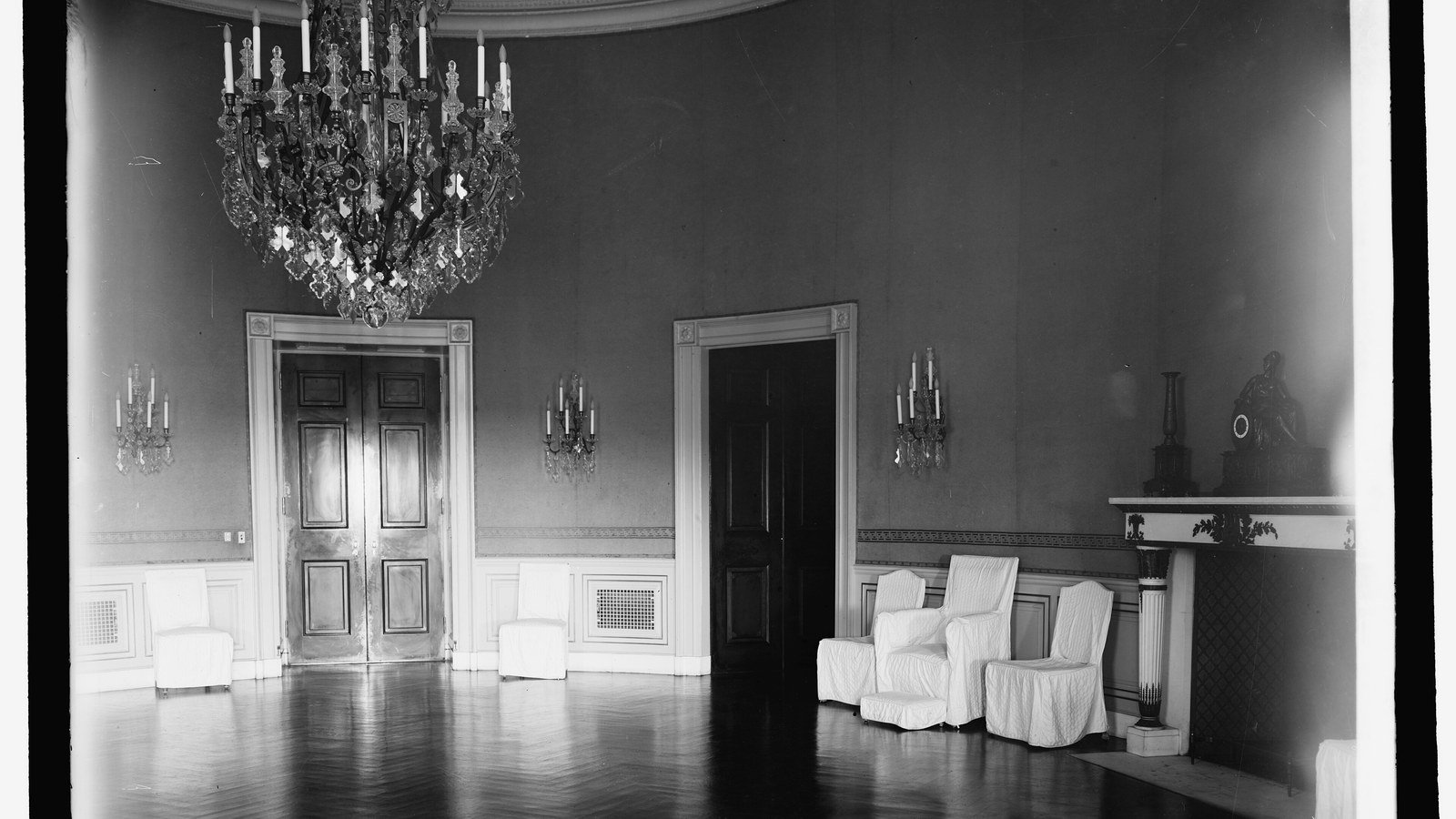
The East Room, White House, the place of the ceremony. Early twentieth-century photograph, public domain, not the table of 2000.
For context: Jordan–United States Free Trade Agreement. The text: Jordan FTA Final Text (USTR).











0 Comments
No comments on this article yet. Be the first!