


On 2 December 1954, in Washington, John Foster Dulles and George K. C. Yeh signed the Mutual Defense Treaty between the United States of America and the Republic of China. The authentic texts are English and Chinese, in duplicate. It is not the security treaty between the United States and Japan.
The preamble reaffirms the Charter of the United Nations, recalls the common fight in the last war against imperialist aggression, and declares a common determination to defend against external armed attack, so that no potential aggressor could be under the illusion that either Party stands alone in the West Pacific Area. Article I: the Parties undertake to settle any international dispute by peaceful means and to refrain from the threat or use of force in any manner inconsistent with the purposes of the United Nations.
Article II: the Parties separately and jointly by self-help and mutual aid will maintain and develop their individual and collective capacity to resist armed attack and communist subversive activities directed from without against their territorial integrity and political stability. Article III: they undertake to strengthen their free institutions and to cooperate in the development of economic progress and social well-being. Article IV: the Parties, through their Foreign Ministers or their deputies, will consult together from time to time regarding the implementation of this Treaty.
Article V: each Party recognizes that an armed attack in the West Pacific Area directed against the territories of either of the Parties would be dangerous to its own peace and safety and declares that it would act to meet the common danger in accordance with its constitutional processes. Any such armed attack and all measures taken as a result thereof shall be immediately reported to the Security Council of the United Nations; such measures shall be terminated when the Security Council has taken the measures necessary to restore and maintain international peace and security. Article VI: for the purposes of Articles II and V, "territories" shall mean, in respect of the Republic of China, Taiwan and the Pescadores, and in respect of the United States of America, the island territories in the West Pacific under its jurisdiction; Articles II and V will be applicable to such other territories as may be determined by mutual agreement.
Article VII: the Government of the Republic of China grants, and the Government of the United States of America accepts, the right to dispose such United States land, air and sea forces in and about Taiwan and the Pescadores as may be required for their defense, as determined by mutual agreement. Article VIII: this Treaty does not affect the rights and obligations of the Parties under the Charter of the United Nations or the responsibility of the United Nations for the maintenance of international peace and security.
Article IX: the Treaty shall be ratified in accordance with the respective constitutional processes of the Parties and will come into force when instruments of ratification have been exchanged at Taipei, on 3 March 1955. Article X: it shall remain in force indefinitely; either Party may terminate it one year after notice has been given to the other Party. It is not the Taiwan Relations Act of 1979.
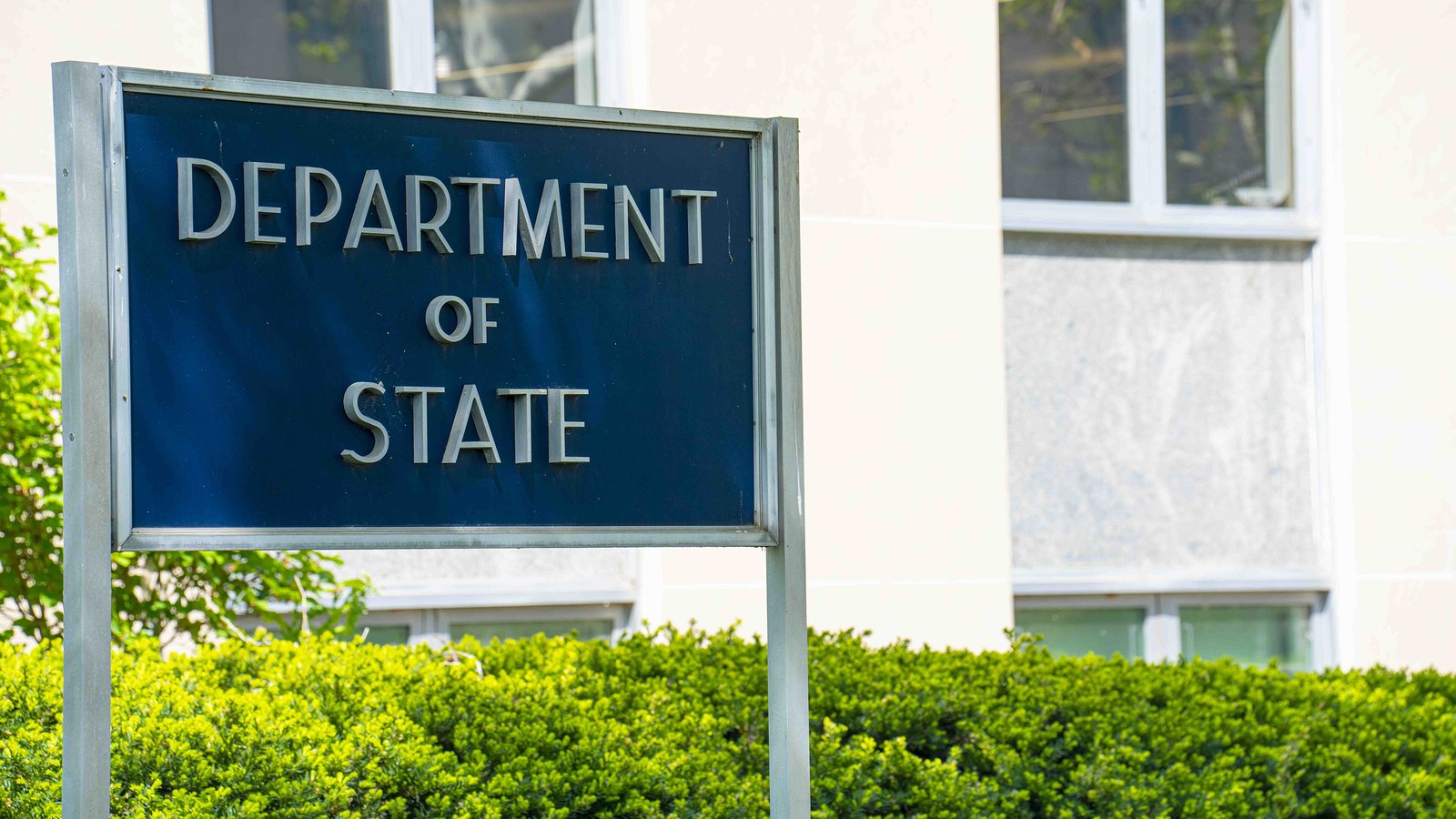
Image: Harry S. Truman Building, Department of State, Washington; U.S. Department of State, 24 April 2024; public domain, Wikimedia Commons. Cropped to 16:9.
Source consulted: Mutual Defense Treaty between the United States and the Republic of China. Treaty text: Mutual Defense Treaty between the United States and the Republic of China, Washington, 2 December 1954.











0 Comments
No comments on this article yet. Be the first!