


At Beit Jala, the only government hospital in the Bethlehem governorate, Khaldoun Atwan does not know, in the morning, whether he will reach oncology, whether the patients will, or whether the drug will be on the shelf. The Nabi Yunis checkpoint at Halhul feels “always closed”. He leaves the car and takes a taxi from Hebron. He has found the mirror smashed, the wiper smashed. Inside the hospital, he says, there is no complete protocol left. Not even in the second Intifada, he recalls, was supply the problem. Now it is.
The Palestinian Authority is out of money. International aid has thinned. For three years Israel has held back the tax and customs receipts it collects on the PA’s behalf — the clearance revenues. Al Jazeera ties the freeze to Finance Minister Bezalel Smotrich. Without them the Health Ministry cannot pay suppliers. Suppliers have stopped delivering. Staff take about half their salaries and, says dialysis doctor Iyad Dari, come in two or three days a week: they cannot afford a full roster. The hospital is left, in practice, on emergencies.
Oncologist Hisham Amle says the lack of chemo drugs is old, but that about 90% of what mattered used to be in stock. Now immunotherapies and biologics are gone too. A broken chain of sessions is a treatment lost. Pharmacy director Khuloud Dweib has had eight missing oncology drugs and four biologics from the ministry — enough, she hopes, for six to eight weeks. The rest is still out. The central warehouse is in Nablus: an hour-and-a-half drive can take six to ten hours when the roads close.
Milena Ansari, of Physicians for Human Rights Israel, says the crisis was foreseeable. Israel was already withholding Palestinian tax revenues before October 2023. Unlike Gaza, she notes, medicines are not blocked from entering the West Bank. The problem is “strictly” that the PA has no money to buy them. As occupying power, she adds, Israel has the primary duty to ensure care. That is the organisation’s position, not a court finding.
Money is one problem. The road is the other. A dialysis patient from Nahalin sat four or five hours at a checkpoint, went the long way through Jaba, Surif, Halhul and Hebron, and reached a morning slot at four in the afternoon. The usual fare is about 10 shekels; the detour, more than 100. Some need dialysis four times a week. Treatments split with Augusta Victoria Hospital in East Jerusalem need permits that, Atwan says, more and more patients no longer get. A young man, Sayed Ayyad, waited three weeks for ankle surgery; one day they had neither painkillers nor anaesthetic.
The World Medical Association, in an October resolution from Rotterdam, called for the release of tax revenues meant for public services, especially health, and for a clear road for patients, ambulances and stocks. At Beit Jala, Dweib puts it another way: there is no political security, nor health security, nor financial security. Atwan leaves at three in the afternoon, hoping to catch a taxi toward Hebron. “When a patient gets sick, it’s his luck if the medicine’s there. We’ve got no future.”
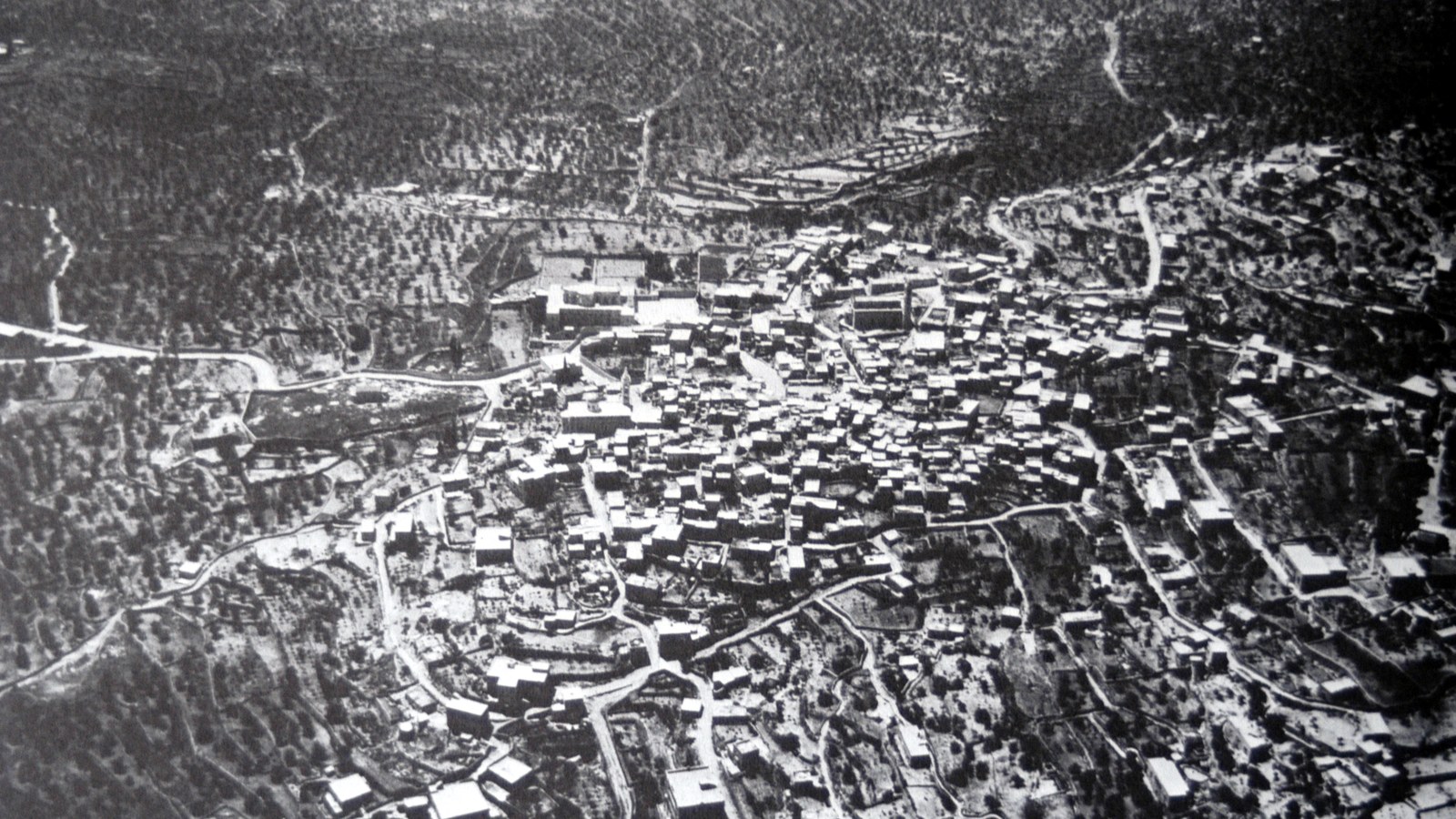
Image: from Before their Diaspora (Walid Khalidi / Institute for Palestine Studies, 1984), Beit Jala before 1948, public domain, Wikimedia Commons. The photograph shows the town then, not the hospital in October 2026.
Sources consulted: As Israel blocks PA funding, the West Bank’s healthcare system is failing — Al Jazeera; WMA Resolution on the Critical Deterioration of the Healthcare System in the West Bank — World Medical Association.











0 Comments
No comments on this article yet. Be the first!