
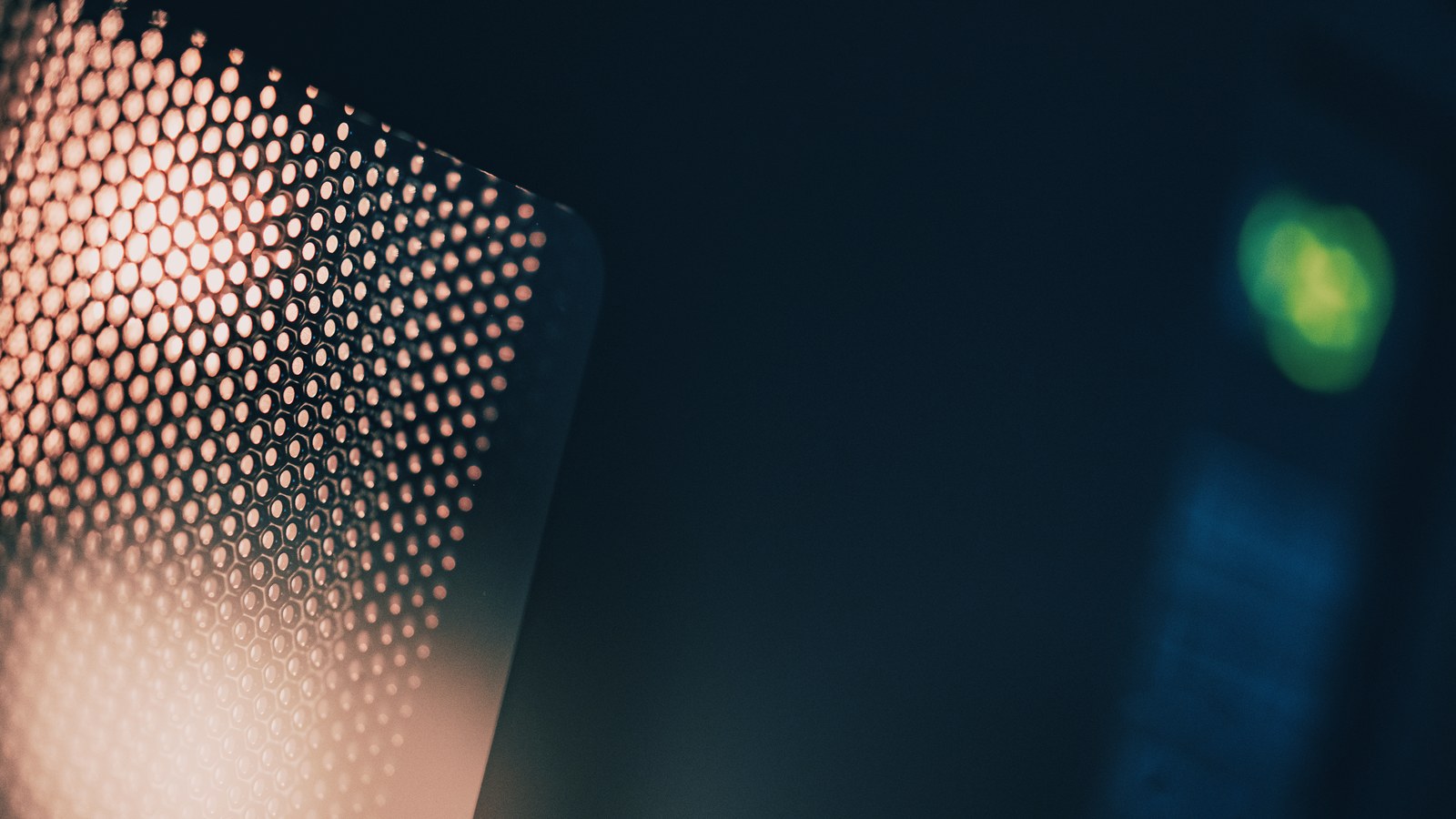
A microwave door looks like glass, but behind it sits a mesh with thousands of holes. You need to see the food and, at the same time, keep electromagnetic energy in the cavity. The magnetron usually works near 2.45 GHz. The field sets polar molecules in food in motion; internal friction produces heat. Heating is not uniform, which is why ovens use turntables and instructions often say to stir.
The metal chamber and mesh form a screen. Microwave wavelengths are measured in centimetres, and the holes are much smaller. Energy cannot pass efficiently and is reflected inside. Visible light has wavelengths of hundreds of nanometres, far smaller than the openings, so it gets through.
Interlocks stop generation when the door opens. Seals, frame and alignment matter as much as the mesh. An oven with a bent door, a weak latch or one that stays on with the door open should not be used until a qualified technician has checked it. Do not remove the casing: dangerous voltages are present.
Microwaves are non-ionizing: they do not ionize atoms as X-rays can. The risk from a damaged oven is tissue heating, not food becoming “radioactive”. A compliant appliance, used as instructed, is designed to limit leakage.
The FDA requires two independent interlock systems and tracks reports of ovens that appear to run with the door open. In that case, stop using the appliance at once.
The mesh is not decoration: it is the visible part of an enclosure that lets light through and keeps microwaves inside.
Image: Tony Webster, microwave oven mesh. Wikimedia Commons, CC BY-SA 2.0. Cropped to 16:9. Licence. Original file.
Sources consulted: U.S. FDA — Microwave Ovens; World Health Organization — Microwave ovens.








0 Comments
No comments on this article yet. Be the first!