
The earthy smell after a summer shower seems to come from the water itself. The drop, however, has almost no aroma. What we recognise is a mixture of molecules that sat on and in the soil, set in motion when a dry surface is wetted again.
Australian researchers Isabel Joy Bear and Richard Grenfell Thomas named the phenomenon “petrichor” in 1964. The term links stone to “ichor,” the mythical fluid of the Greek gods. They described plant oils that settle on rocks and particles in dry spells and are redistributed when moisture returns.
A second, sharper ingredient is geosmin, produced by soil microorganisms including bacteria in the genus Streptomyces. The human nose detects it at very low concentrations, which is why the scent can appear before the rain becomes heavy.
High-speed cameras, in experiments reported by MIT researchers, show how a drop striking a porous surface can form tiny bubbles. When they burst they release aerosols that carry the molecules into the air. Light or moderate rain is often more effective than a downpour that immediately washes the surface.
The “smell of a storm” before the rain is something else. Ozone brought toward the ground by air currents can add a sharp note, distinct from the warm petrichor after drops meet the soil. The two should not be folded into a single explanation.
Petrichor is therefore a meeting of soil chemistry, microbial biology and droplet physics. Intensity varies with surface, dryness and the type of precipitation; it is not the same recipe in every shower.
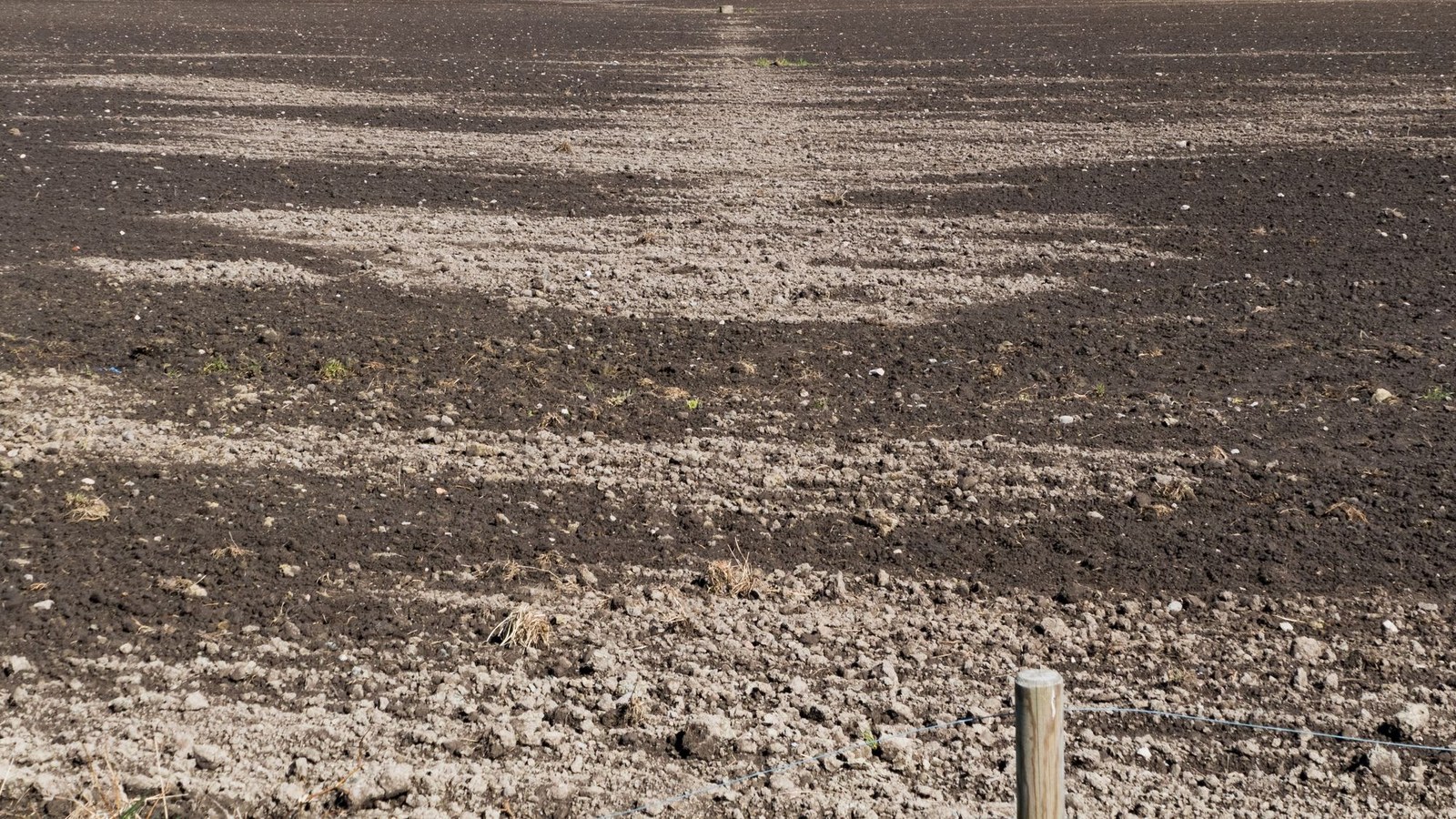
Image: plowed field after rain / Wikimedia Commons. Wet soil, not a laboratory photograph of geosmin. Cropped to 16:9.
Source consulted: Isabel Joy Bear | CSIROpedia; Rainfall can release aerosols | MIT News.










0 Comments
No comments on this article yet. Be the first!