
River water usually tastes almost neutral; seawater is salty. Not because rivers carry no salts, but because they carry little, and the oceans collect the ions over long geological spans.
Rain dissolves carbon dioxide and becomes mildly acidic. Flowing over rock, it speeds chemical weathering and frees ions. Sodium and chloride dominate sea salt; magnesium, sulfate, calcium and potassium complete the list. NOAA and the USGS describe the same circuit: from slope to basin.
The seafloor adds a second source. Water enters cracks, is heated, reacts with the crust and returns through hydrothermal vents. Submarine volcanism takes part in the chemical exchange.
On evaporation, water molecules leave for the atmosphere; most salts stay. Rain returns the water to land and sends it seaward again. The oceans do not grow saltier without limit: ions enter minerals, organisms, sediments and evaporite deposits. Inputs and outputs tend toward a dynamic balance.
The global average is about 35 grams of salts per kilogram of seawater. Strong evaporation raises it locally; rain, rivers and meltwater lower it. It is not a constant of every bay.
The salty taste is the archive of this process, not a kitchen recipe. Each river brings a little; time and the water cycle do the rest.
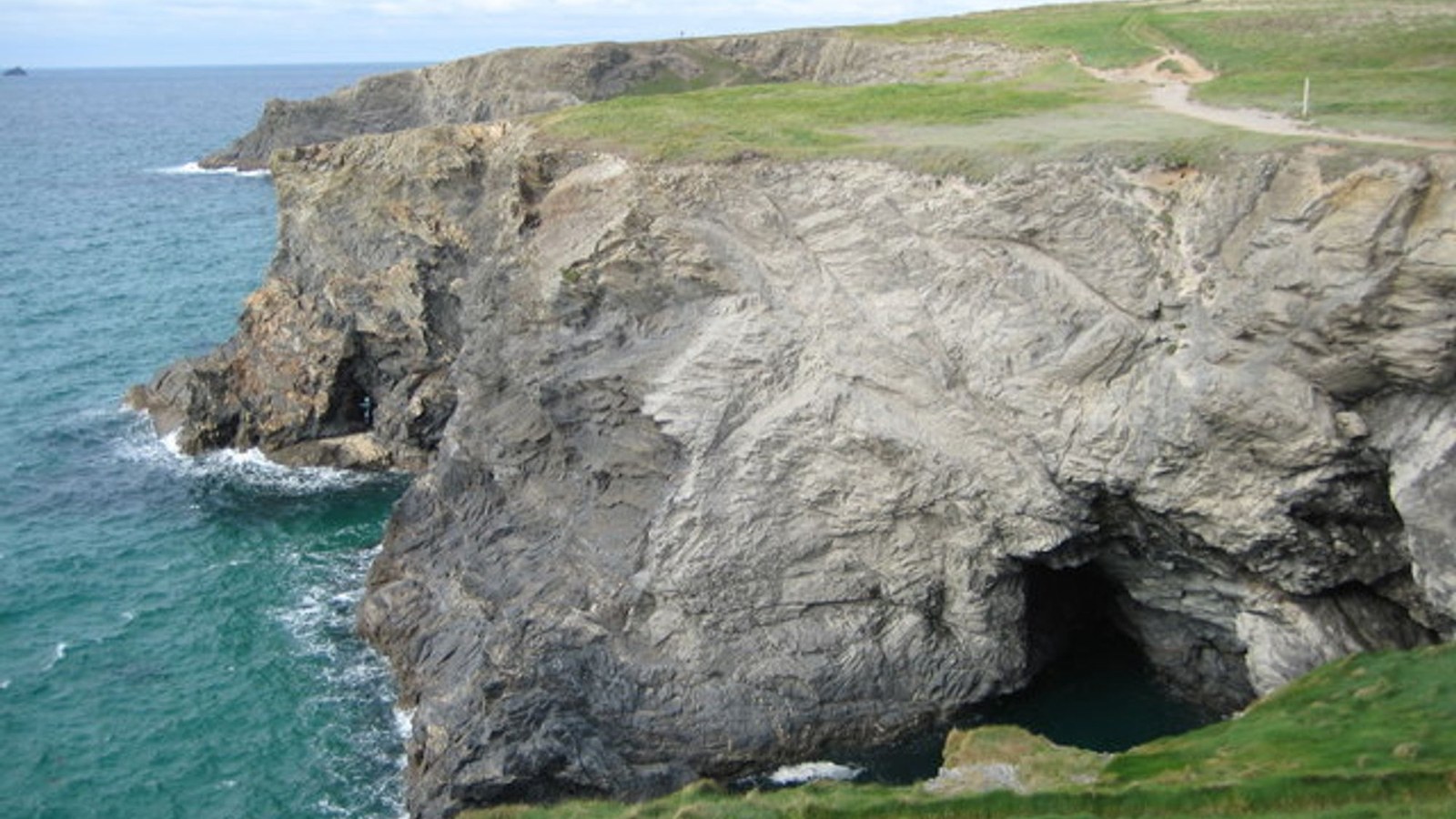
Image: rocky coast at Treyarnon Bay / Wikimedia Commons, geograph.org.uk. A shoreline, not a salinity diagram. Cropped to 16:9.
Source consulted: Why is the ocean salty? | NOAA Ocean Service; Why is the ocean salty? | U.S. Geological Survey.







0 Comments
No comments on this article yet. Be the first!