
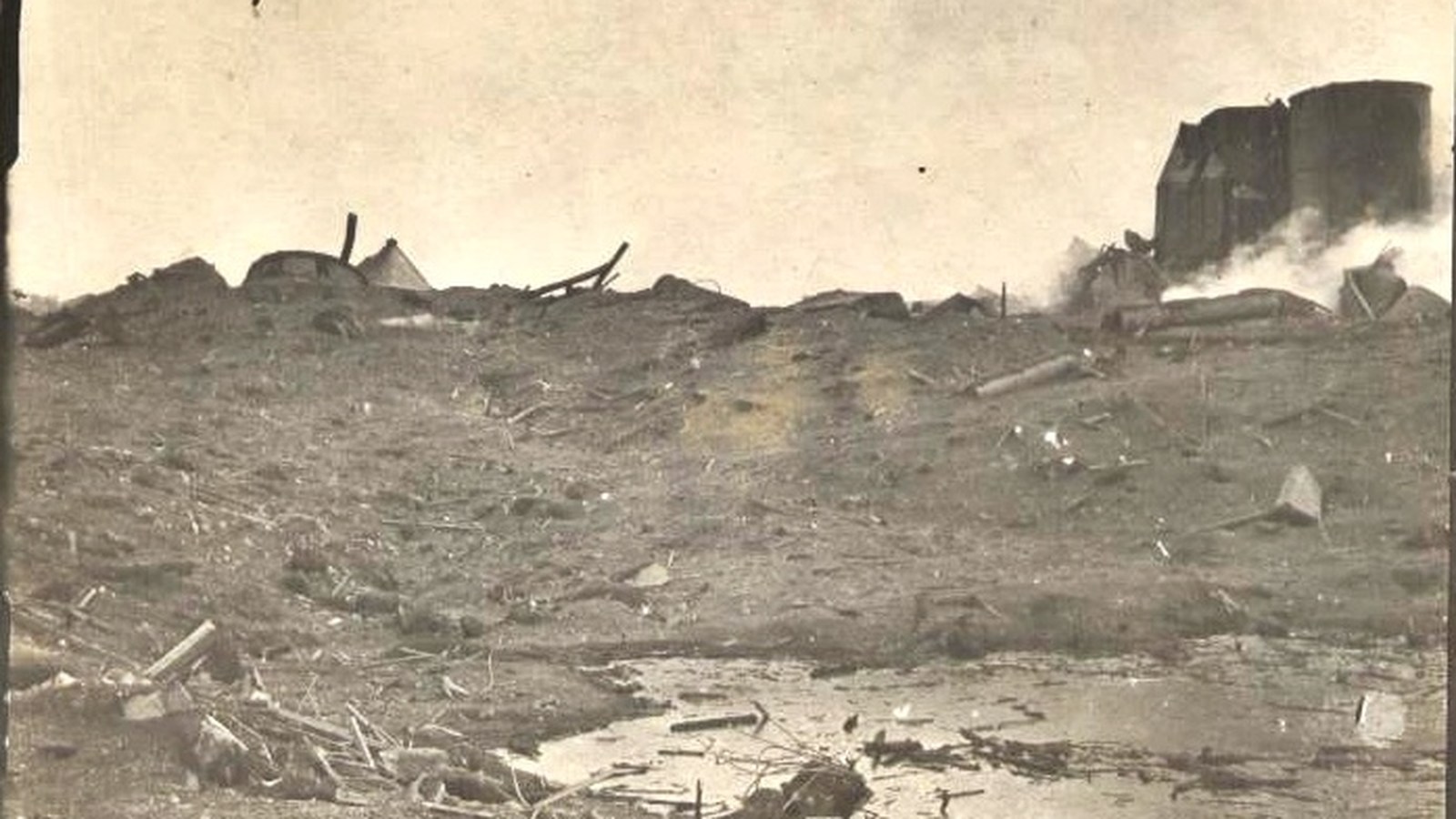
21 September 2026 marks 105 years since the explosion at BASF’s Oppau plant, now part of Ludwigshafen. The 1921 catastrophe is described by the company as one of the worst disasters in modern industrial history.
At 7:32 a.m., blasting work used to loosen hardened fertiliser in silo Op 110 triggered a massive explosion. The silo held about 4,500 metric tons of ammonium sulfate nitrate, a 50/50 mixture of ammonium nitrate and ammonium sulfate, a seasonal product that compacted until it was as hard as rock.
BASF records more than 500 people killed and around 2,000 injured, some severely. Figures differ among archives and later studies; this article keeps the company’s commemorative wording of “over 500” rather than selecting a single unreconciled total.
The pressure wave shattered windows in Heidelberg, Worms, Darmstadt and, in some cases, Frankfurt, more than 80 kilometres away. Shock waves were registered at the seismological station in Munich, some 300 kilometres from Oppau. A crater later filled with groundwater marked the site of the blast.
At the time, thousands of such loosening blasts had been treated as safe. Later research linked the risk to a 1921 change to spray-drying and to deposits with a higher nitrate content; the precise interaction of factors was not fully settled then or later.
On 25 September 1921 a memorial service was held at Ludwigshafen’s main cemetery, attended by President Friedrich Ebert. Anniversary coverage preserves the dignity of the victims and avoids graphic detail.
The disaster remains a reference point for analysing chemical-industry risk. No criminal cause or unstated negligence is invented beyond the source consulted.
Image: Martin Leick, Oppau explosion crater (1921), public domain, Wikimedia Commons.
Source consulted: 100th anniversary of the Oppau explosion — BASF.





0 Comments
No comments on this article yet. Be the first!