
Today, 15 September 2026, marks 136 years since the birth of Agatha Christie, one of the most famous writers in the history of detective fiction. The creator of Hercule Poirot and Miss Marple produced a body of work that has endured far beyond her lifetime. Guinness World Records recognises Christie as the world’s best-selling fiction writer, while her play The Mousetrap holds an extraordinary record for longevity on the London stage.
On 15 September 1890, in Torquay, in the county of Devon, England, Agatha Mary Clarissa Miller was born. The world would later know her as Agatha Christie. Her name became almost synonymous with the detective novel, with mystery, with fictional murder and with one of the best-known questions in popular literature: who is the killer?
Childhood in Devon
Agatha Christie was born into a well-to-do family. Her father was Frederick Alvah Miller, an American who had settled in England, and her mother Clara Miller. Agatha was the youngest of three children. Much of her childhood was spent at Ashfield, the family home in Torquay. Unlike many children of the period, she did not at first follow a conventional school education: she was largely taught at home. The official website notes that her father taught her in those early years, and that Clara did not want Agatha to learn to read until she was eight — but the child taught herself by the age of five.
The First World War, the dispensary and poisons
The outbreak of the First World War would change her life. Christie worked as a volunteer in a Red Cross hospital in Torquay and later in a dispensary. In 1917 she completed the examination of the Worshipful Society of Apothecaries. Work in the dispensary gave her knowledge of medicines, chemicals, doses and poisons. That knowledge appears frequently in her books: in many Christie mysteries, poison is not merely a dramatic device but is described with striking pharmacological precision. The official site records that after her first novel appeared, The Pharmaceutical Journal reviewed it — an unusual honour for a writer of fiction.
Archibald Christie and the first novel
In 1914, on Christmas Eve, Agatha Miller married Archibald Christie, an officer in the Royal Flying Corps. From that marriage came the name under which she would become famous. They had a daughter, Rosalind, born in 1919. Her first published novel was The Mysterious Affair at Styles, which appeared in 1920. With it came one of the best-known detectives in literary history: Hercule Poirot.
Hercule Poirot, the Belgian of the “little grey cells”
Poirot is Belgian, a former policeman, meticulous, obsessed with order and extremely confident in his powers of deduction. One of his principal weapons is not force but the observation of human behaviour. He frequently speaks of the “little grey cells”. The character would appear in a very large number of novels, short stories, television adaptations, films and radio plays.
The choice of a Belgian detective was also bound up with the First World War. Many Belgian refugees had reached Britain after the invasion of Belgium. Christie thus imagined a former Belgian policeman who had taken refuge in England — an idea the official website explicitly links to the welcome given to refugees in Torquay.
Miss Marple and the village of St Mary Mead
Poirot was not the only great detective Christie created. Miss Jane Marple first appeared in a 1927 short story; then, in The Murder at the Vicarage (1930), readers met her in her first novel. Miss Marple is an elderly woman, apparently harmless, who lives in the fictional village of St Mary Mead. She has no forensic laboratory, no weapon and no official police rank. What she does have is an extraordinary understanding of human nature. Having watched for years the conflicts, secrets, jealousies, lies and relationships of a small community, she recognises the same patterns in murder cases.
1926: The Murder of Roger Ackroyd and the disappearance
In 1926 Christie published one of her most important novels, The Murder of Roger Ackroyd. The book became famous for its narrative construction and for the way it manipulates the reader’s expectations. The official website describes it as the book that defined her career. The same year brought one of the most mysterious episodes in the writer’s life. In early December, Agatha Christie disappeared. Her car was found abandoned. The disappearance triggered a massive search, extraordinary press attention and numerous theories.
Christie was found 11 days later, in Harrogate, Yorkshire. She was staying at the Swan Hydropathic Hotel, now known as The Old Swan Hotel. Amnesia, stress, trauma, a personal crisis and a deliberate act have all been suggested. There is no unanimously accepted explanation. An intensely private person, Christie did not speak publicly about that interval. RoAdevăr does not assert a certain motive.
Divorce, Max Mallowan and the Middle East
The marriage to Archibald Christie deteriorated. They divorced in 1928. Agatha kept the name Christie, under which she was already known as a writer. In 1930 she married Max Mallowan, a British archaeologist. The relationship would strongly influence her life, her travels and her literature. Christie accompanied him on numerous archaeological expeditions in the Middle East, including Iraq and Syria. Those experiences became a source of inspiration for several novels.
Murder on a train, on the Nile and in an isolated place
In 1934 came Murder on the Orient Express, one of the best-known Hercule Poirot stories. The action unfolds around the famous Orient Express: a passenger is found dead, the train is blocked by snow, and Poirot must discover the killer. In 1937 Death on the Nile was published: Poirot investigates a murder during a journey on the Nile, in Egypt. The novel combines mystery, personal relationships, jealousy, travel and the atmosphere of Egypt. We do not reveal the solutions.
In 1939 Christie published the novel known today in English as And Then There Were None. Ten people are gathered in an isolated place. Then they begin to die, one by one. The novel is one of her best-known and best-selling titles. The modern title is the one used here; this article does not reproduce an older British title, later abandoned, that contained a racist term.
The Second World War, thallium and Mary Westmacott
During the Second World War Christie again worked in a dispensary, including at University College Hospital in London. Her knowledge of medicines and poisons continued to shape her plots. A later episode, not from the war years, involves the novel The Pale Horse (1961), which describes the symptoms of thallium poisoning. The description was accurate enough for the book to be associated with the recognition of real cases. In 1977 The New York Times reported, citing the British Journal of Hospital Medicine, that a nurse at Hammersmith Hospital in London recognised the symptoms of an infant from Qatar after reading the novel; tests confirmed thallium poisoning, and the child survived.
Agatha Christie did not write detective novels exclusively. Under the pseudonym Mary Westmacott she published six novels, closer to psychological fiction, relationships and personal drama. The identity behind the name was made public in 1946, to the author’s disappointment, according to the official biography.
The Mousetrap and the longevity record
One of her most extraordinary achievements is not a novel but a play: The Mousetrap. It premiered in 1952, first in Nottingham, then in the West End in London. Guinness World Records recognises it as the longest-running continuous theatrical production. The COVID-19 pandemic caused a temporary interruption of performances; the official website notes an enforced hiatus. It is therefore not accurate to say, literally, that the play has been performed without any interruption since 1952. More correctly: it holds the record for the longest-running continuous theatrical production, despite the extraordinary interruption caused by the pandemic. At the end of the performance, the audience is asked not to reveal the identity of the murderer. We do not reveal the ending.
A vast body of work, sold around the world
Agatha Christie’s oeuvre includes, according to her official website, 66 detective novels, 14 short-story collections and numerous plays. To these are added the six Mary Westmacott novels, the autobiography and other texts. Guinness World Records recognises her as the best-selling fiction writer. Sales are estimated at about two billion copies: the official site speaks of more than a billion copies in English and a billion in translation. The figure should not be read as an exact accounting total. The books have been translated into many languages. Poirot and Miss Marple have become familiar far beyond British literature.
Why the mysteries still work
One of Agatha Christie’s great skills was the construction of clues. The reader is given information, suspects, motives, alibis and apparently trivial details. The important information is hidden among distractions. Many of the novels use the principle associated with classic detective fiction: the reader should have the chance to discover the truth from the clues provided. Reading becomes an intellectual game between author and reader — “fair play”, without this article revealing who won the game in any particular title.
Adaptations, David Suchet and honours
Her work has generated films, television series, stage plays, radio productions, games and international adaptations. Actors who have played Hercule Poirot include David Suchet, Albert Finney, Peter Ustinov and Kenneth Branagh. For millions of viewers, the image of Poirot is associated with David Suchet. The British actor played him in the series Agatha Christie’s Poirot for 24 years, from 1989 to 2013. The series adapted the full major collection of Poirot cases published by Christie.
In 1971 Agatha Christie received the title Dame Commander of the Order of the British Empire — DBE. She became Dame Agatha Christie. Her husband, Max Mallowan, had been knighted earlier, so Christie also held the social title Lady Mallowan.
Poirot’s last case, Greenway and 136 years later
In 1975, shortly before Agatha Christie’s death, Curtain: Poirot's Last Case was published, the last chronological adventure of Hercule Poirot. We do not reveal essential details of the ending. The fictional death of the character produced an extraordinary phenomenon: on 6 August 1975 The New York Times published an obituary for Hercule Poirot, by Thomas Lask, under the headline “Hercule Poirot Is Dead; Famed Belgian Detective”. It is often cited as a case in which a fictional character received the editorial treatment reserved for a real person.
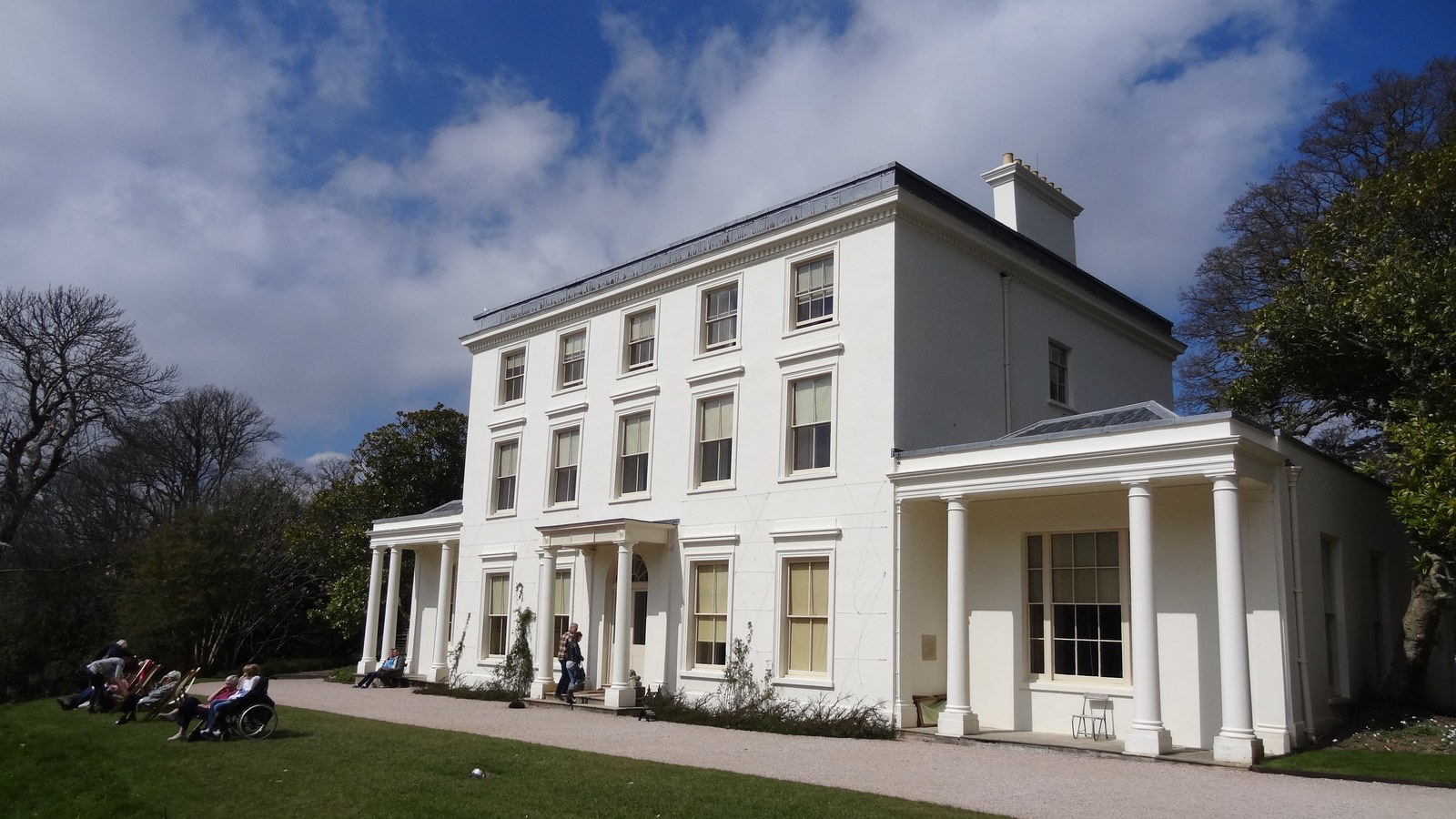
Agatha Christie died on 12 January 1976, aged 85, at her home, Winterbrook House, in Oxfordshire. She was buried in St Mary's Churchyard, Cholsey. One of the properties most strongly associated with her is Greenway, in Devon, used as a holiday home. It is now managed by the National Trust and preserves objects, collections and the atmosphere of the Christie family. Her native town of Torquay still keeps a strong link with the writer. Literary and cultural anniversaries from the same British world also appear in other RoAdevăr pieces, from 110 years since the birth of Roald Dahl to the effort to keep an important Stanley Spencer painting in the United Kingdom.
Forensic technology has changed. Policing has changed. Society has changed. But the fundamental mechanism of her stories remains powerfully attractive: there is a crime; there is a group of suspects; each is hiding something; there are clues; and the reader tries to solve the mystery before the detective does. Agatha Christie perfected a narrative device that is extremely simple in appearance and extremely difficult to execute: to show the reader almost every piece of the puzzle, yet make them look in the wrong direction. One hundred and thirty-six years after her birth — and 50 years after her death in January 1976 — millions of readers still open her books with the same question: who did it?
Source consulted: About Agatha Christie (official Agatha Christie website). Confirmations: Agatha Christie (Encyclopaedia Britannica); Best-selling fiction writer (Guinness World Records); Greenway (National Trust); Hercule Poirot Is Dead; Famed Belgian Detective (The New York Times, 6 August 1975).






0 Comments
No comments on this article yet. Be the first!