
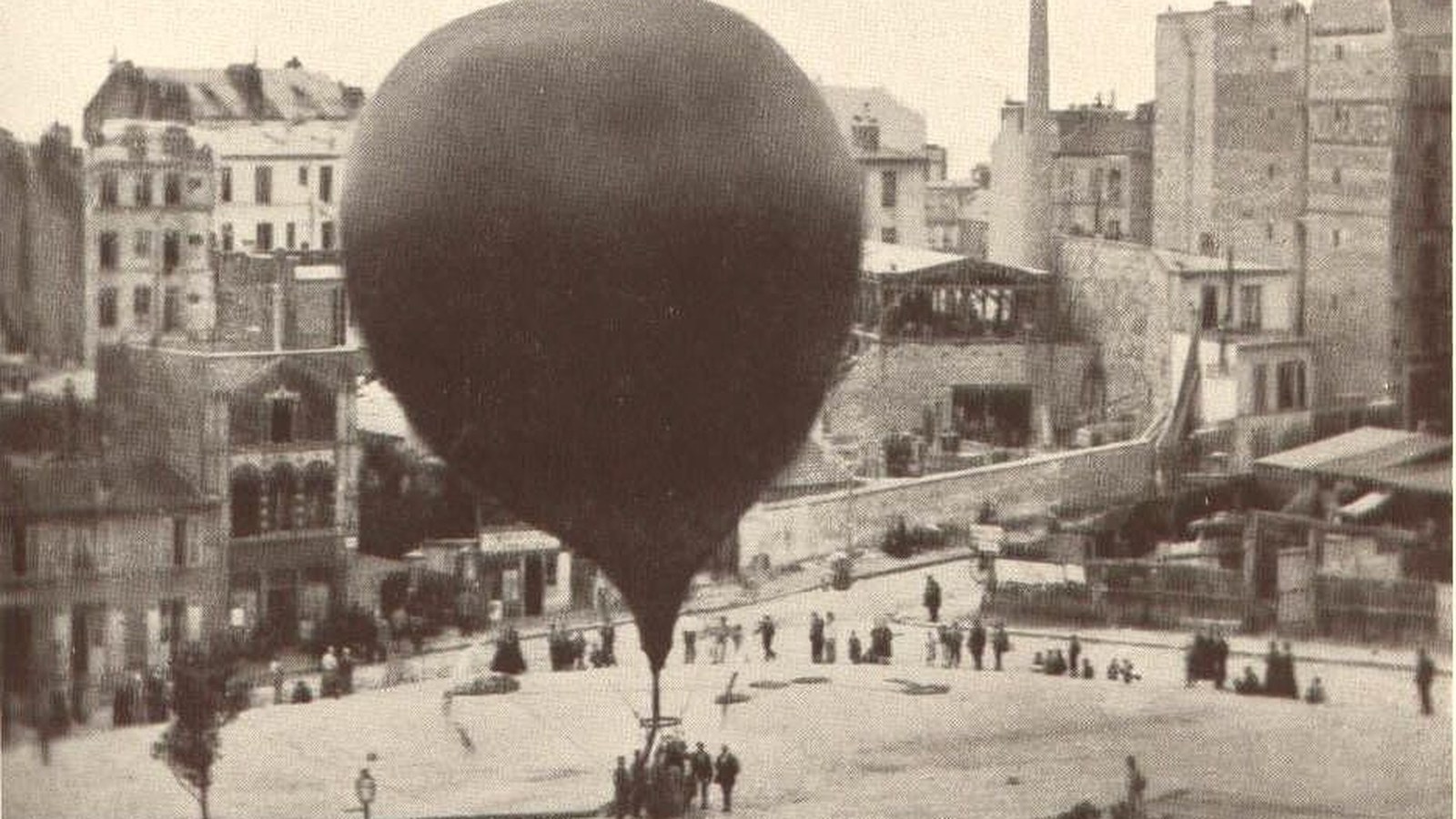
On 19 September 1870, Prussian armies and troops from allied German states closed the roads and railways into Paris. The siege lasted until the capitulation of 28 January 1871 — more than four months in which the still-fortified capital was cut off from the rest of the country.
The Franco-Prussian War had already brought severe defeats. Napoleon III had been captured at Sedan, and a republic was proclaimed in Paris. The new Government of National Defence chose to continue the fight, even though encirclement made supply, not only the front line, the central problem.
Ordinary communications vanished. Balloons left the city carrying mail, dispatches and, often, pigeons; photographically miniaturised messages tried, via the birds, to come back in. Exact flight counts vary between studies; what is clear is that balloon post became one of the few remaining threads to the provinces.
Winter worsened hunger and the shortage of fuel. Prices rose, rations shrank and residents turned to unusual food sources. German artillery bombardment began late, in the final phase of the siege, after months of encirclement.
The January surrender did not close the political chapter. Discontent in the capital, the cost of the war and the rift between the population and the government contributed, in March 1871, to the Paris Commune — a different episode, not an automatic extension of the siege.
The 156th anniversary is a marker of urban and military history, not a single casualty ledger. Figures for defenders and the dead differ from one work to another; this text stays with the calendar, the encirclement and the consequences, without unattributed estimates.
Image: balloon during the Siege of Paris, 1870 / Wikimedia Commons, public domain. A period print, not a photograph of the 1871 surrender. Cropped to 16:9.
Source consulted: Siege of Paris | Encyclopaedia Britannica; Musée Carnavalet — Paris during the Siege and the Commune.


0 Comments
No comments on this article yet. Be the first!