
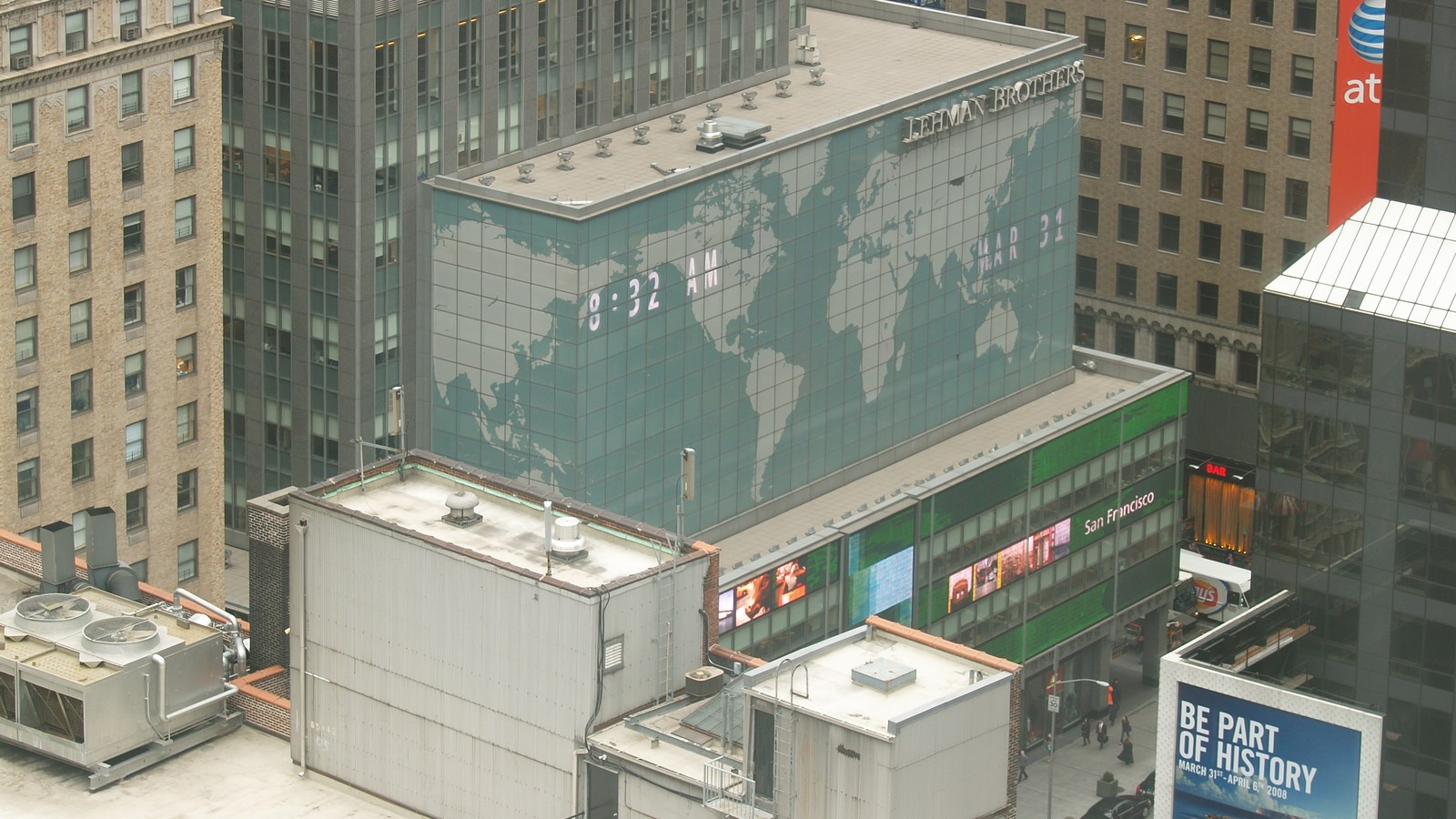
Today, 15 September 2026, marks 18 years since the bankruptcy of Lehman Brothers. Early on 15 September 2008, after a weekend in which US authorities and major financial institutions failed to find a private-sector solution for the firm, Lehman Brothers Holdings Inc. filed for Chapter 11 bankruptcy protection. The event did not create the 2008 financial crisis, which was already under way, but it dramatically intensified panic and disruption across global financial markets.
Lehman Brothers was not a new firm. Its origins go back to 1844, when Henry Lehman, a German immigrant, opened a store in Montgomery, Alabama; his brothers Emanuel and Mayer later joined him. From the cotton trade the business expanded into commodities, finance, investment and banking. By the 2000s Lehman Brothers was a global investment bank, active in investment banking, trading, bonds, asset management, capital markets and property finance — one of Wall Street’s important institutions.
The collapse has to be read against the US housing market. House prices had risen sharply, and mortgage lending had expanded, including to borrowers of weaker credit quality — loans known as subprime mortgages. Banks did not always keep the loans to maturity: many were packaged into mortgage-backed securities (MBS) and into structures such as collateralised debt obligations (CDOs), which could be sold and traded through the international financial system. When house prices began to fall and more borrowers struggled to meet payments, the value of many mortgage-related assets deteriorated. Lehman had built a significant exposure to property and to those assets and had used a high level of leverage: a large part of its activity was financed by debt, which can amplify losses.
In 2007 the problems of the subprime market became ever clearer, and trust among institutions deteriorated. In March 2008 Bear Stearns came close to collapse; the Federal Reserve intervened to facilitate its acquisition by JPMorgan Chase. In the months that followed, market attention focused increasingly on Lehman Brothers. The share price collapsed and creditors’ confidence eroded. Fannie Mae and Freddie Mac had been placed into conservatorship only a few days before 15 September. The crisis was therefore already visible. Over the weekend of 13–14 September 2008 the Federal Reserve, the U.S. Treasury and the Securities and Exchange Commission took part in talks with the leaders of major institutions, seeking — according to Federal Reserve History — a private-sector solution. None was reached. Among the firms associated with discussions of a possible takeover were Bank of America and Barclays. Bank of America ultimately chose instead to acquire Merrill Lynch. A Lehman–Barclays transaction was not completed before the bankruptcy.
On the morning of Monday 15 September 2008, Lehman Brothers Holdings Inc. filed a voluntary Chapter 11 petition in the United States Bankruptcy Court for the Southern District of New York, as recorded in the Form 8-K filed with the SEC. The company was to continue as a debtor-in-possession. The initial bankruptcy did not mean that every Lehman entity in the world entered the same procedure at once. The firm’s statement and the SEC documents made clear that the US broker-dealers and certain other subsidiaries were not included in the initial filing. In the United Kingdom several entities, including Lehman Brothers International (Europe), were placed into administration. The SEC stressed the same day the protections for customers of the US broker-dealer. Federal Reserve History also notes that, although Lehman did not receive an institution-specific rescue comparable to those for Bear Stearns or AIG, its primary dealer subsidiary did participate in general credit facilities set up earlier in 2008.
For the public, one of the images that remained was of employees leaving the offices with boxes. Markets reacted with shock and a sudden re-pricing of risk. The financial system runs on trust: if a major institution can fail abruptly, every participant begins to ask whether its counterparties will be able to pay. Credit became harder to obtain, more expensive and riskier, and the problem did not stay confined to Wall Street. The next day, 16 September, American International Group (AIG) received support from the Federal Reserve Bank of New York. That afternoon a prominent money market fund announced that it could no longer maintain the usual value of $1 a share because of losses on Lehman commercial paper — the phenomenon known as breaking the buck. Withdrawals from certain money market funds put pressure on the commercial paper market, a source of short-term finance for companies.
In the months that followed the Federal Reserve expanded liquidity and lending programmes, including for primary dealers, money market mutual funds and commercial paper. The US government later adopted the Troubled Asset Relief Program (TARP). TARP was not created to save Lehman: the firm had already gone bankrupt; the programme was part of the subsequent response to a systemic crisis. The strains passed into the real economy: reduced investment, output and hiring, higher unemployment, and falling trade. The episode became associated with the Great Recession. Lehman did not cause the crisis on its own, but the bankruptcy acted as an accelerator: it showed that a huge institution could be allowed to fail and it amplified fear among institutions. That is why 15 September 2008 is regarded as one of the crisis’s defining dates. The crisis put the phrase too big to fail at the centre of debate and, with it, the problem of moral hazard: if investors believe the state will always rescue large institutions, those institutions may be encouraged to take excessive risks. The decision, and the authorities’ ability, to prevent Lehman’s bankruptcy have remained subjects of historical and economic debate.
After the bankruptcy, substantial parts of Lehman’s operations were sold, reorganised or liquidated. Barclays later bought certain North American broker-dealer operations, with SEC support and court approval. Nomura announced, also in September 2008, the acquisition of some of Lehman’s operations in Asia-Pacific, Europe and the Middle East. The financial crisis produced major changes in regulation, supervision, capital requirements, stress tests and the management of systemic risk. In the United States one of the most important reforms was the Dodd–Frank Wall Street Reform and Consumer Protection Act, adopted in 2010.
Eighteen years on, the Lehman name continues to be used as a symbol of systemic risk. When a large financial institution runs into trouble, the question “Is this a new Lehman?” returns in markets, the press and economic analysis. The bankruptcy showed how interconnected the global financial system had become — and how easily risk can remain hidden in periods of optimism. The company did not create the financial crisis on its own. But it changed the pace, the scale and the perception of that crisis. Within a few days the problem could no longer be seen merely as a crisis of American mortgages. It had become a crisis of confidence in the international financial system.
Photo: Arnoldius / Wikimedia Commons, CC BY-SA 3.0. The Lehman Brothers building at 745 Seventh Avenue, Manhattan, photographed on 31 March 2008, months before the bankruptcy. This is not a photograph from 15 September 2008. The image was cropped to 16:9.
Sources consulted: Lehman Brothers Holdings Inc. Form 8-K (15 September 2008) | SEC; Statement Regarding Recent Market Events and Lehman Brothers | SEC; Support for Specific Institutions | Federal Reserve History; The Great Recession and Its Aftermath | Federal Reserve History; SEC Acts To Support Swift Court Approval of Barclays Acquisition of Lehman Brothers, Inc..




0 Comments
No comments on this article yet. Be the first!